
When Should I Call Pest Control for Heating-Related Pests?
The trigger to call is the risk a pest poses to your heating system and household, not anything the heat itself does — evidence of rodents or damage is the signal, and it warrants a prompt call.
Call promptly for evidence of activity or damage; call urgently only for safety symptoms like electrical warning signs or a carbon monoxide alarm.
At a glance
- The mechanism: Damages the system
- Who fixes it: A licensed pest pro
- The rest lives at: Can pests cause short circuits or fires?
The trigger to call is the risk a pest poses to your heating system and household, not anything the heat itself does — evidence of rodents or damage is the signal, and it warrants a prompt call.
Call promptly for evidence of activity or damage; call urgently only for safety symptoms like electrical warning signs or a carbon monoxide alarm.
Heat doesn't spawn pests — it changes what you notice
The season and the building set the stage before the thermostat ever comes on. Here's the honest chain of events, spelled out.
What's really happening
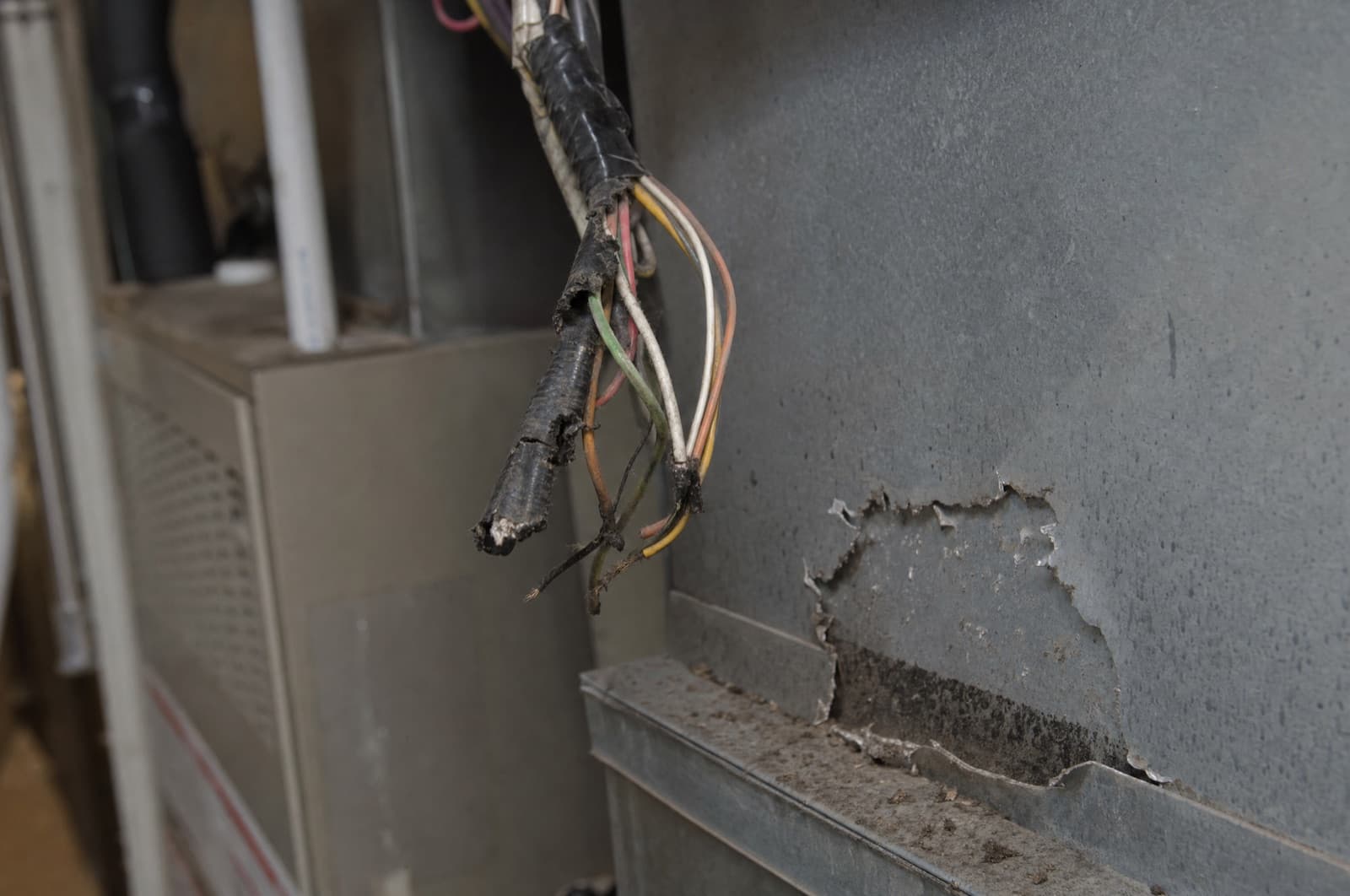
Signs of infestation — droppings, gnaw marks, scratching, nesting debris, or odors near heating equipment — indicate an established presence, and the longer rodents stay, the more wiring, insulation, and equipment damage and contamination accumulate. UNH Extension advises acting on evidence rather than waiting for a direct sighting, since mice that nest indoors for winter rarely leave on their own and the damage only compounds the longer they're left undisturbed.
Source:UNH Cooperative Extension— How Can I Get Rid of the Mice in My House? — act on evidence, mice stay for the winter once established
Is this an HVAC problem or a pest problem?
Who actually fixes it
A licensed pest pro
A licensed pest professional is the primary call for confirming and controlling rodent activity near heating equipment, since that's a control and exclusion job outside a homeowner's typical scope.
Chewed or energized wiring, or any electrical symptoms — call a licensed electrician; equipment damage or a blocked flue — call an HVAC technician or chimney professional; a carbon monoxide alarm or gas odor — call 911 or the gas utility first, before anyone else.
This hub owns the heating-system angle
General winter behavior, rodent control, and equipment-damage severity live in siblings that already earn them. Here's exactly where.
This hub owns the 'when to call for heating-related pests' decision specifically. The full damage-and-risk severity picture, including the fire-statistic correction, lives on our pest damage & risks FAQ, and general rodent-control timing is owned by our mice & rats FAQ.
How this calibrates for NH
Because New Hampshire mice enter homes in fall and typically stay through the whole winter once established, the best time to call in New Hampshire is at the first evidence, in fall or early winter, rather than waiting until spring — Anchor Pest Services offers a free quote and same-day service across Southern and Central New Hampshire.
NH-licensed applicator #782664 (NHDAMF, RSA 430) · NEPMA member · family-owned since 2017.
Frequently asked
Sources(3)
- [1]UNH Cooperative Extension
How Can I Get Rid of the Mice in My House? — act on evidence, mice stay through winter once nested
- [2]CDC
Controlling Wild Rodent Infestations — health rationale for prompt action
- [3]NFPA
Electrical warning signs and safety escalation criteria
Written & reviewed by
VerifiedDaniel Brady
NH-Licensed Pesticide Applicator · License #782664 (NHDAMF, RSA 430)
Daniel Brady is the New Hampshire–licensed applicator behind Anchor Pest Services, a family-owned pest control company serving the Manchester area since 2017.
Anchor Pest Services
Worth a professional pest inspection?
We've protected Southern New Hampshire homes since 2017. Free inspection, same-day service — we tell you what's actually there before we treat anything.
- NH-licensed applicator
- Same-day service
- Pet & family-conscious
NH License #782664 · No obligation · We answer in person