
Skip to content
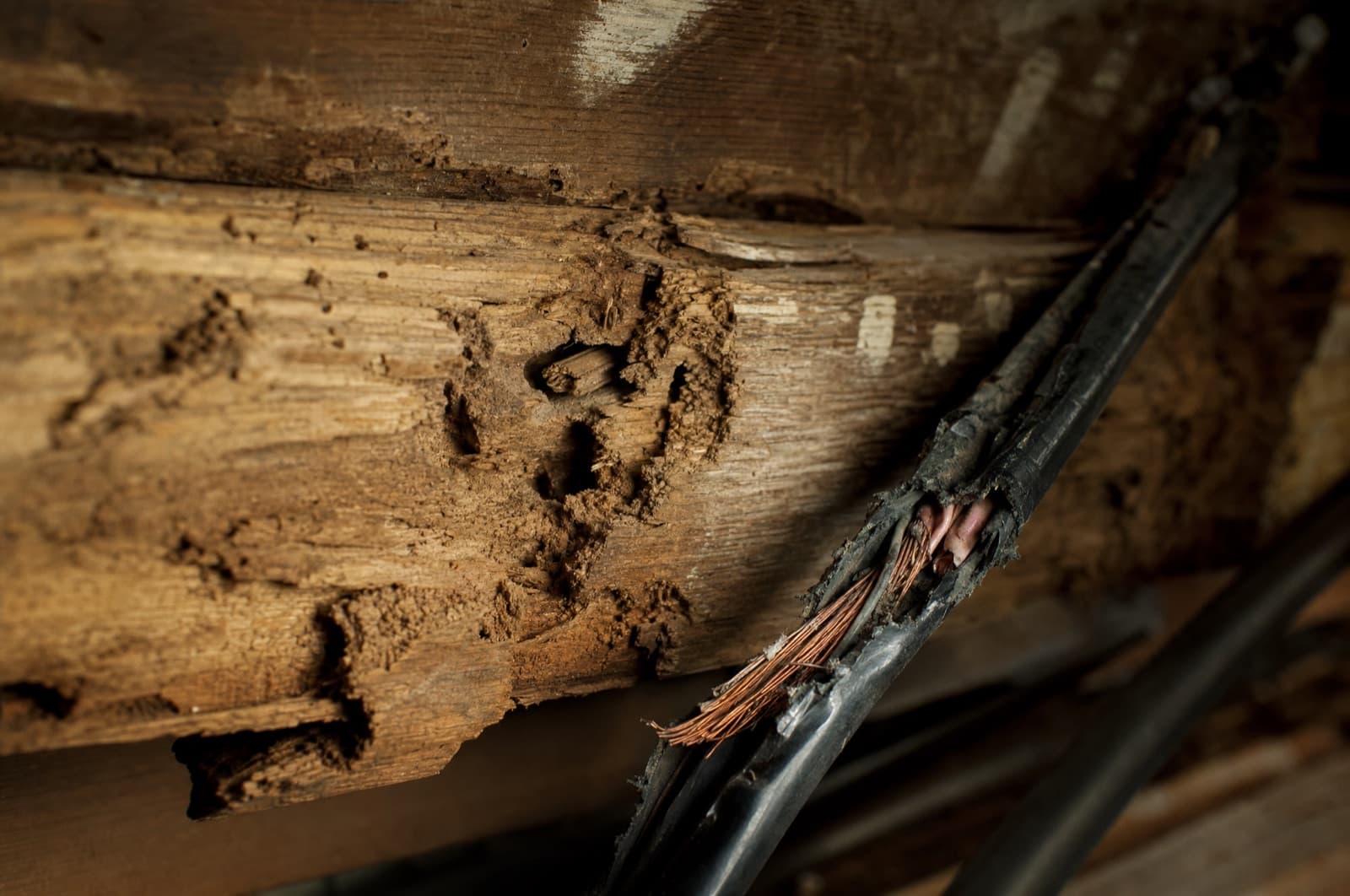
Pest damage evidence — a gnawed structural beam and a chewed electrical wire
Daniel Brady · NH-Licensed Pesticide Applicator · License #782664
Reviewed by Daniel Brady

Can pests cause short circuits or fires?

Functional damage — the mechanism is real, the number is not
Yes — rodents gnawing wire insulation can expose a conductor that arcs and ignites nearby combustible material, and that mechanism is genuine and recognized in fire investigation. Cockroaches and ants can also occasionally bridge contacts or disable low-voltage equipment by nesting inside it. What is not documented is the widely repeated claim that pests cause 20 to 25 percent of house fires — no fire authority publishes that figure, and it traces to an uncited 2012 pest-industry article. Treat exposed or chewed wiring as a real hazard for a licensed electrician to evaluate, and treat the statistic as marketing.

At a glance

  • Can it?: Yes, but
  • How common: Rare
  • Hype: Wildly overstated
  • Evidence: Debunked
  • about 750 per year

    NFPA's actual figure for U.S. home fires involving all pets and wild animals combined — not the invented '20-25%' claim

    NFPA — Animals Fact Sheet

The honest answer

The short of it

The verdict
Functional damage — the mechanism is real, the number is not

Yes, gnawed wire insulation can expose a conductor that arcs and ignites nearby material — that mechanism is real and documented. What is not real is the widely repeated "20-25% of house fires" figure, which appears in no NFPA, USFA, or NFIRS fire-cause data.

The correction

What they claim vs. what the evidence supports

One shared severity track, two markers. The span between them is the hype delta — named out loud.

The claim — rodents, and occasionally roaches or ants, causing house fires by damaging wiring or nesting in electrical equipment

It's widely repeated across pest-control and wildlife-removal sites, and often attributed to "the NFPA" or an unnamed 2012 study, that rodents cause 20 to 25 percent of all house fires, especially those of undetermined origin, framing pests as one of the top hidden causes of home fires.

Where the claim comes from: Pest-control and wildlife-removal marketing copy that has repeated this figure, largely uncritically, for over a decade.

Severity, 0–100
Hype says92
37Evidence says
Hype delta55point gapDebunked
The evidence

No fire authority publishes a rodent-specific fire percentage. NFPA's only animal-related home-fire figure is that pets and wild animals combined have a part in roughly 750 U.S. home fires a year — all animals, not rodents alone, and far below what the popular claim implies. NFIRS, the federal database fire departments use to code causes, has no rodent or animal ignition-cause code at all, and "undetermined cause" fires by definition have no assigned cause, so any percentage attributed to rodents is an extrapolation, not tabulated data. What IS well documented is the mechanism: gnawed insulation exposing a conductor to arc, and arcing is the leading ignition factor identified in NFPA's research on home electrical-failure fires generally.

The gap

The mechanism is real. The number is invented. Rodents can absolutely strip insulation off a live wire, and that's worth fixing, but no fire authority has ever measured them at a quarter of house fires.

Correction
The claim
Pests, usually stated as rodents, cause 20 to 25 percent of house fires, especially fires of undetermined origin.
Why it is wrong
The earliest confirmable appearance of this figure is an October 2012 pest-industry trade-magazine article that introduced it with no citation, no methodology, and no primary dataset — it simply placed the number beside an unrelated NFPA electrical-fire statistic. No NFPA, USFA, or NFIRS fire-cause dataset contains a rodent-specific or animal-specific ignition-cause category, and by definition a fire of "undetermined" cause has no assigned cause, so any percentage attributed to rodents cannot come from tabulated fire data — it is an invented extrapolation that has simply been repeated for over a decade.
What is true instead
NFPA's genuine animal-related home-fire figure is that pets and wild animals combined have a part in roughly 750 U.S. home fires a year — all animals combined, not rodents alone, and orders of magnitude below what the 20-25% claim would imply across the tens of thousands of fires classified as undetermined each year. Separately, and just as truthfully, gnawed wire insulation exposing a live conductor to arc is a real, physically sound ignition pathway recognized in forensic fire investigation — the mechanism behind the myth is genuine even though the specific number is not.
Source
NFPA, Home Fires Caused by Electrical Failure or Malfunction (Campbell, 2019); NFPA Animals fact sheet; USFA NFIRS Complete Reference Guide
Damage assessment

What is actually harmed

Damage verdict
Functional damage — the mechanism is real, the number is not
FunctionalCan it?Yes, but
The specimen
Pest
Rodents (the primary and best-documented cause); German cockroaches and ants occasionally
What is in question
Electrical wiring, wire insulation, and electrical or electronic equipment
How common
Rare
Evidence
Well documented
Mechanism

Rodent gnawing strips the insulation off a wire to the point that bare conductor is exposed; if that wire is energized, the exposed conductor can arc, and arcing is identified as the leading ignition factor in NFPA's research on home fires caused by electrical failure generally. Arc-mapping and conductor forensics are an established part of fire investigation for exactly this reason. Roaches and ants occasionally nest inside warm electrical or electronic equipment and can bridge a contact with their bodies or droppings, causing a malfunction rather than an ignition event in most cases.

Actually at risk4
  • Concealed wiring in walls, attics, and crawlspaces that rodents can access and gnaw
  • Wire nuts, splices, and junction points along a rodent travel route
  • Appliance and equipment cords accessible to rodents
  • Low-voltage equipment roaches or ants can nest inside
Not at risk — despite the myth3
  • Wiring properly enclosed in conduit or behind sealed junction boxes rodents cannot reach
  • The great majority of "undetermined origin" house fires — no fire dataset attributes a defined share of these to rodents, despite the folklore
  • Properly functioning GFCI- or AFCI-protected circuits doing what they're designed to do
Worst realistic case
A fire that starts in a concealed space from an arc at a rodent-damaged conductor. This does happen and is genuinely serious, but it is an uncommon outcome of a common behavior (gnawing), not a routine one, and it is nowhere near a quarter of house fires.

Assessed from: NFPA, Home Fires Caused by Electrical Failure or Malfunction (Campbell, 2019); USFA TFRS electrical residential fire analysis; NFPA 921 / NIJ arc-conductor forensic research

The compounding clock

Does it get worse if you ignore it?

Over time
Compounds

It compounds while pests remain active and wiring stays unrepaired — the ignition risk isn't resolved until both are addressed.

The timeline
3 stages
  1. DaysReversible

    Gnawing begins at an accessible point on a wire's insulation, typically unnoticed unless someone is inspecting the space.

  2. WeeksReversible

    Repeated gnawing at the same point can fully strip insulation from a section of conductor; if that circuit is energized, an exposed conductor becomes capable of arcing.

  3. MonthsReversible

    An unrepaired, exposed conductor remains a latent ignition hazard indefinitely — it does not heal itself, and the risk persists for as long as the wire goes unrepaired.

What stops the clock
Excluding the pests so no new gnawing occurs, and having a licensed electrician inspect and repair any wire that's been exposed — the ignition risk isn't considered resolved until both steps happen.
Repair scope

Who actually fixes this

Scope, not dollars — the honest answer to “how expensive is it,” routed to the right trade.

Who fixes it
Pest pro first
Effort
A trade visit

Stopping new gnawing matters, but it doesn't make already-exposed wiring safe — that determination has to be an electrician's, every time, given what's at stake.

The right order
  1. 1
    Anchor: exclude and remove the pests so gnawing stops
  2. 2
    Licensed electrician: inspect any wiring the pests had access to and repair or replace anything exposed or damaged
  3. 3
    Homeowner: don't re-energize or use equipment with visibly chewed cords until it's been checked
Route by symptom
  • Licensed electricianAny wire shows exposed conductor, a breaker trips repeatedly, or you notice anything unusual near an outlet or panel
Do not
  • Don't ignore a wire with visible gnaw marks because the circuit "still works" — arcing is the leading ignition factor in home electrical fires and a chewed conductor is a candidate
  • Don't attempt to inspect, tape, or repair damaged wiring yourself
Where we help — and where we don't

Anchor stops the pests. We do not inspect or repair wiring, and we will never tell you a pest treatment alone makes exposed wiring safe — that call belongs to a licensed electrician, always.

In depth

The full picture

01

The mechanism that's actually real

Rodent incisors are hard enough and sharp enough to shear ordinary wire insulation, and once that insulation is gone, the bare conductor underneath is capable of arcing if it's energized. Arcing is not a fringe concept in fire science — NFPA's own research on home fires caused by electrical failure identifies arcing as the leading contributing factor, and the U.S. Fire Administration's analysis of electrical residential fires found arcing responsible for the large majority of heat sources in that category, with wire and cable insulation the item most often ignited first. A rodent-damaged conductor fits squarely into that documented pathway.

02

Where the 20-25% figure came from — and why it doesn't hold up

The earliest confirmable appearance of the rodent-fire percentage traces to an October 2012 pest-industry trade-magazine article. That article introduced the figure with a simple hedge — "it's estimated" — and no citation, no methodology, and no dataset behind it. It sat next to an unrelated, legitimate NFPA electrical-fire statistic, which is likely why the two got conflated in later retellings.

No fire authority has ever independently verified or reproduced the number. Fire departments code cause of ignition using NFIRS, the National Fire Incident Reporting System, and NFIRS simply has no rodent or animal-specific cause code — there is nothing in the coding system that could produce a rodent-attributable percentage of undetermined fires in the first place.

03

What fire authorities actually report

NFPA's genuine, sourced figure for animal involvement in home fires is that pets and wild animals combined have a part in roughly 750 fires a year nationwide. That's every animal category together, not rodents specifically, and it is a small fraction of the picture the 20-25% claim paints. Meanwhile, NFPA's broader electrical-fire research puts home fires caused by electrical failure or malfunction at an estimated tens of thousands per year, with arcing as the leading factor — a category the popular rodent statistic seems to have been loosely grafted onto without any actual attribution work being done.

04

Holding both truths at once

This is a case where the honest answer requires saying two things that sound contradictory but aren't: the ignition mechanism is completely real and worth taking seriously, and the specific statistic used to dramatize it is fabricated. Treating a chewed or exposed wire as a hazard and calling an electrician is the right response to the mechanism. Repeating the 20-25% figure as if it were measured data is not — it's marketing that happens to be built on a genuine underlying risk.

Key takeaways
5 points
  • The mechanism is real: gnawed wire insulation exposing a live conductor can arc and ignite nearby material.
  • The "20-25% of house fires" figure has no primary source — it traces to an uncited 2012 trade-magazine article.
  • NFPA's actual animal-related figure is about 750 home fires a year from all pets and wildlife combined — not a quarter of all fires.
  • NFIRS has no rodent or animal ignition-cause code, so the percentage cannot come from tabulated fire data.
  • Treat exposed wiring as a real hazard for an electrician — treat the statistic as marketing.
New Hampshire context

Fire safety in New Hampshire homes

As overnight temperatures drop toward Manchester's first hard frost, historically around October 19 to 29, rodents push indoors and gnawing complaints rise within weeks — which is exactly when an unnoticed, chewed wire is likeliest to have gone unaddressed the longest. Working smoke detectors on every level of the home and a working relationship with a licensed local electrician for anything electrical remain the two most useful, unglamorous safeguards regardless of what statistic is circulating.

  • NH-licensed #782664

    Southern New Hampshire

  • Family-owned

    Since 2017

  • Honest routing

    Even when it isn’t us

We serve these communities

ManchesterNashuaConcordDerryBedfordSalemHudsonAmherstAuburnGoffstownHooksettLitchfieldLoudonMilfordBristol

Service Area Map

Southern New Hampshire

BristolPop. 3,200LoudonPop. 5,500ConcordPop. 43,900HooksettPop. 14,800GoffstownPop. 18,000AuburnPop. 5,700ManchesterPop. 115,600BedfordPop. 23,300LitchfieldPop. 8,500AmherstPop. 11,300DerryPop. 34,500MilfordPop. 15,700HudsonPop. 25,600NashuaPop. 91,100SalemPop. 30,000HQCityHover for info

Pests active near your wiring? Stop the gnawing before it becomes an electrician's emergency.

Anchor excludes and removes the pests; a licensed electrician makes any exposed wiring safe.

Follow-up questions

Frequently asked

Sources & citations(5)
  1. NFPA Research — Home Fires Caused by Electrical Failure or Malfunction (R. Campbell, 2019)

    Arcing as the leading ignition factor in home electrical-failure fires; ~44,880 such fires per year; no rodent factor identified

    fireverified 2026-07-16
  2. NFPA — Animals Fact Sheet

    Pets and wild animals combined have a part in roughly 750 U.S. home fires a year

    fireverified 2026-07-16
  3. USFA/FEMA — NFIRS Complete Reference Guide

    No rodent- or animal-specific cause-of-ignition code exists in the National Fire Incident Reporting System

    fireverified 2026-07-16
  4. USFA — NFIRS Coding Help

    How cause-of-ignition and factors-contributing-to-ignition are coded in national fire data

    fireverified 2026-07-16
  5. NIJ/DOJ — Forensic Investigation Techniques for Inspecting Electrical Conductors

    Arc-bead and conductor forensics as an established fire-investigation discipline

    academicverified 2026-07-16

Written & reviewed by

Verified

Daniel Brady

NH-Licensed Pesticide Applicator · License #782664 (NHDAMF, RSA 430)

Daniel Brady is the New Hampshire–licensed applicator behind Anchor Pest Services, a family-owned pest control company serving the Manchester area since 2017.

Verify license

Last updated Jul 2026

Honest pest help for New Hampshire homes

We Stop the Pests. An Electrician Verifies the Wiring Is Safe.

We will never claim a pest treatment alone makes chewed or exposed wiring safe — that's a licensed electrician's determination, always. What Anchor Pest Services does is exclude and remove the pests damaging your wiring in the first place, so the electrician's repair actually holds. Family-owned since 2017, NH license #782664, serving Manchester, Nashua, Concord and nearby towns.

  • Honest advice — we route you to a licensed electrician for anything energized
  • NH-licensed applicators (#782664) — free inspection, same-day service
  • Rodent exclusion across southern and central New Hampshire

NH License #782664 · No obligation · We answer in person