
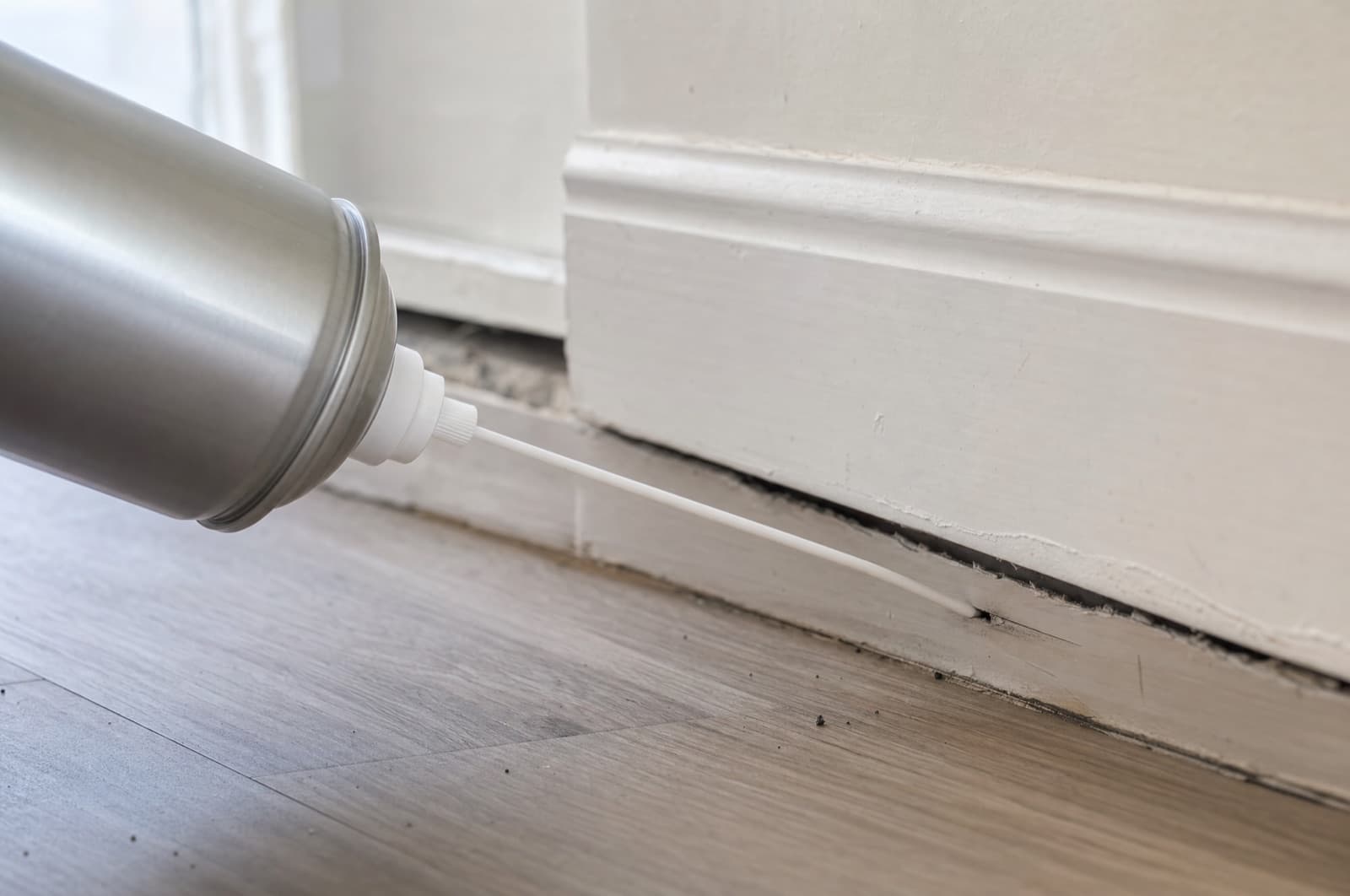
How to Use Ant & Roach Killer Spray by Black Flag
At a glance
- Efficacy: Workhorse
- Best job: Fast, direct-hit knockdown of ants and roaches you can see, plus a light residual on the cracks and harborage you actually spray
- Format: Ready-to-use (RTU) pressurized aerosol — no mixing. Black Flag sells more than one Ant & Roach SKU (a standard water-based aerosol and a separate 'Dry' formula with a different active/propellant), so confirm the printed active-ingredient panel and EPA Reg. No. on the can in hand before relying on an exact residual claim.
- Technique: Easy technique
Does this product actually work?
A solid workhorse for direct-hit knockdown and crack treatment — the same honest ceiling as every synthetic-pyrethroid contact aerosol.
Aimed into cracks, baseboards, and harborage rather than the open floor, this is a genuinely fast, reliable knockdown tool for visible ants and roaches — it behaves like every other synthetic-pyrethroid contact aerosol on the market. But the same 2024 University of Kentucky/Auburn research that grades Raid and Hot Shot's contact sprays applies here too: pyrethroid sprays killed under 20% of German cockroaches exposed to treated surfaces, and the colony behind the wall is never touched. Treat it as a spot tool for what you can see, not a cure, and pair it with baiting or professional treatment when sightings persist.
Best for
Killing the ants and roaches you can see and treating the cracks and harborage where they hide.
Skip it for
Ending an established German cockroach infestation or a hidden ant colony — comparable pyrethroid contact sprays kill fewer than 1 in 5 German cockroaches on treated surfaces in controlled testing.
What it is — and what it's really for
The label is the law. Here's the honest read on the format, the one job it does well, and the job people wrongly buy it for.
The technique walkthrough
Where DIY succeeds or fails is in the placement, patience, and the small pro moves the label never mentions. Follow the label; these are the technique details on top of it.
This is an easy can to use and an easy one to waste — the whole difference is aiming into the crack and the harborage, not the open room.
Confirm the SKU before you spray
Check the printed active-ingredient panel and EPA registration number on your specific can — Black Flag sells a standard aerosol and a separately-formulated 'Dry' version, and the residual claim differs between them.
Common mistakeAssuming every Black Flag Ant & Roach can is identical — a reasonable guess, but the label is the only source of truth for what's actually in your can.Identify the harborage, not just the bug
Locate where ants and roaches are actually hiding — behind and under appliances, under sinks, along baseboards, cabinet corners, and cracks around pipes — before you spray anything.
Pro moveRoaches cluster near moisture and food; check under the sink, behind the fridge, and along baseboard gaps first.Common mistakeSpraying only the open counter or floor where you saw a bug cross — that's not where the harborage is.Shake well and hold the can correctly
Shake the can, then hold it upright about 12 inches from the surface you're about to treat.
Treat the crack, not the room
Aim the nozzle directly into cracks, crevices, and harborage surfaces — behind appliances, under sinks, baseboard gaps — spraying until slightly wet, never to runoff.
Pro moveA pinpoint bead into a baseboard gap does more than fogging a whole kitchen — crack-and-crevice placement is what actually reaches where roaches live.Common mistakeBroadcast-spraying an open room 'just in case' — most labels restrict this use pattern and it wastes the can while doing little.Ventilate, and keep it separate from any bait
Let the room ventilate and treated surfaces dry fully before normal use resumes.
Pro moveIf you're also baiting for ants or roaches, treat spray zones and bait zones as separate territory — never overlapping.Common mistakeSpraying near or over a gel bait or bait station — the repellent residue drives roaches and ants away from bait they'd otherwise carry back to the colony.
Do & don't
- Check the active-ingredient panel on your specific can before trusting a residual claim.
- Treat cracks, crevices, and harborage — not the open floor.
- Hit visible ants or roaches directly for knockdown.
- Keep bait and spray zones physically separate.
- Don't fog an open room hoping to hit hidden pests.
- Don't spray over or near gel bait or bait stations.
- Don't treat food-prep or food-contact surfaces.
- Don't mistake a few dead roaches for the population being gone.
Where it works vs. where it fails
No product fixes everything. This is the honest boundary — the situations it genuinely handles, and the ones it simply won't.
Where it works
- A handful of visible ants or roaches need fast knockdown
- A specific crack, gap, or entry point needs spot-treating
- Occasional invaders — a stray roach, silverfish, or spider — show up indoors
- Light residual protection is useful on a treated crack between deeper treatments
Where it fails
- Nightly or daytime German cockroach sightings point to an established, reproducing population
- An ant trail keeps returning from a colony nesting outside or in a wall void
- The harborage is inside a wall void or other space the spray can't physically reach
- You're relying on the can alone instead of pairing it with baiting for real colony-level control
Mistakes that waste the product
Assuming your can matches a different Black Flag SKU's claims
Black Flag reformulates the Ant & Roach line by variant — a residual or active-ingredient claim you read online may not match the can in your hand.
Fogging the room instead of treating the harborage
Wastes the can, achieves little residual value where pests actually hide, and creates unnecessary occupant exposure.
Spraying over or near a gel bait or bait station
A repellent pyrethroid residue drives foragers away from bait before they can carry it back to the colony.
Treating only the roaches or ants you can see
Independent testing on comparable pyrethroid sprays found under 20% mortality against German cockroaches on treated surfaces — the reproducing population behind the wall is untouched.
What to expect — and when
This is a fast knockdown tool with a light, fading residual — judge it on what you see die today, not on whether pests ever come back.
Seconds to minutes
Direct hits on ants and roaches knock them down fast — this is the product's genuine strength.
First few days
Fewer visible pests crossing treated cracks and baseboards as the light residual keeps working.
1-3 weeks
If sightings continue or return, that's the signal the population is established and beyond what a contact aerosol can finish.
When to stop DIY & call a pro
A contact aerosol kills what the stream actually hits and does little for anything sheltered in a wall void or harborage. These are the honest signals the job has outgrown a spray can:
Roach sightings continue after 2-3 weeks of correctly aimed, harborage-focused spraying
Independent testing on this class of product shows well under 20% mortality against German cockroaches on treated surfaces — an established population needs baiting or professional treatment, not more aerosol.
An ant trail keeps returning to the same spot after multiple treatments
Recurring activity points to a large colony or satellite nests the spray can't reach — only a small fraction of foragers ever cross a treated surface.
You see large black ants indoors or notice rustling or frass near moisture-damaged wood
Those point to carpenter ants nesting in structural wood — a wood-destroying pest that needs professional inspection, not a spot spray.
Any suspected termite or carpenter-ant activity inside structural wood
A consumer aerosol cannot verify or eliminate a colony inside a wall or joist.
When correctly aimed spot-spraying isn't holding the line, Anchor's licensed NH technicians identify and treat the actual harborage, colony, or nest with targeted professional methods. Free inspection, same-day service across southern and central New Hampshire.
Still seeing roaches after spraying?
Is it safe for pets & kids?
The short version lives here; the full per-species verdict lives on this product's pet-safety page.
This is a pyrethroid aerosol — ventilate the room during and after use, and keep kids and pets out until treated surfaces are fully dry. Never treat a suspected exposure at home.
Re-entry: Keep children and pets out of the treated area until surfaces are fully dry and the room is ventilated.
German roaches and carpenter ants in NH homes
In southern and central New Hampshire, German cockroaches survive only inside heated structures, and carpenter ants — not fire ants, which aren't a NH problem despite what some national labels list — are the state's dominant structural ant. A can of Ant & Roach Killer is a fine spot tool for the odd roach behind the toaster or an ant trail on the counter, but nightly roach sightings or large black ants near moisture-damaged wood point to a bigger problem than a spray can solve. Anchor Pest Services treats the actual source across Manchester, Nashua, Concord, and the surrounding towns.
Service area
Southern New Hampshire
Anchor Pest Services · NH license #782664 · NEPMA member · family-owned since 2017.
Frequently asked
Sources & further reading(6)
- [1]EPA Registered Product Label — Black Flag Ant & Roach Killer, Unscented (Reg. No. 9688-246)
Verified actives (imiprothrin 0.100%, lambda-cyhalothrin 0.025%), listed target pests, aerosol format
epa_labelverified 2026-07-14 - [2]Gordon et al., Journal of Economic Entomology (2024) — common consumer residual insecticides vs. German cockroach
Pyrethroid liquid/aerosol sprays killed under 20% of German cockroaches exposed to treated surfaces
academicverified 2026-07-14 - [3]University of Illinois Extension — 'DIY spray and aerosol products likely to fail in German cockroach control'
Consumer pyrethroid sprays likely to fail against established German cockroach populations
extensionverified 2026-07-14 - [4]UC IPM — Cockroaches (Home & Landscape)
Insecticide sprays alone will not eliminate cockroaches; repellent residues undercut bait programs
extensionverified 2026-07-14 - [5]UNH Cooperative Extension — Carpenter Ants Fact Sheet
Carpenter ants nest in structural wood — a call-a-pro escalation, not a contact-spray target
extensionverified 2026-07-14 - [6]Black Flag — Ant & Roach Killer (Unscented Aerosol) product page
RTU aerosol format, application directions, labeled pest list (facts only, not the efficacy verdict)
manufacturerverified 2026-07-14
Written & reviewed by
VerifiedDaniel Brady
NH-Licensed Pesticide Applicator · License #782664 (NHDAMF, RSA 430)
Daniel Brady is the New Hampshire–licensed applicator behind Anchor Pest Services, a family-owned pest control company serving the Manchester area since 2017.
Last updated July 2026
Related products in this category
Same shelf, different jobs — the dot shows each product's honest efficacy verdict at a glance.
Professional Pest Control
When a Spray Can Isn't Enough
A contact aerosol kills what it touches, but it can't end an established roach or ant colony. Anchor Pest Services treats the actual source with targeted, licensed methods across southern and central New Hampshire. Family-owned since 2017, NH license #782664.
- Targeted source treatment, not just spot spraying
- NH-licensed applicators (#782664)
- Free inspection — same-day service across southern NH
NH License #782664 · No obligation · We answer in person
Your next step
- Book a NH pro
Cockroach Control
Book now - Book a NH pro
Pest Control Services
Licensed, family-owned pest control across southern NH.
Book now - What to do next
Is Black Flag Ant & Roach Killer Spray Safe for Pets?
Read the answer - What to do next
Is Flying Insect Killer Aerosol by Black Flag Safe for Pets?
Read the answer - What to do next
Is the Roach Motel Trap by Black Flag Safe for Pets?
Read the answer - Also relevant
Is Black Flag Ant & Roach Killer Spray Safe for Pets?
Read the answer