
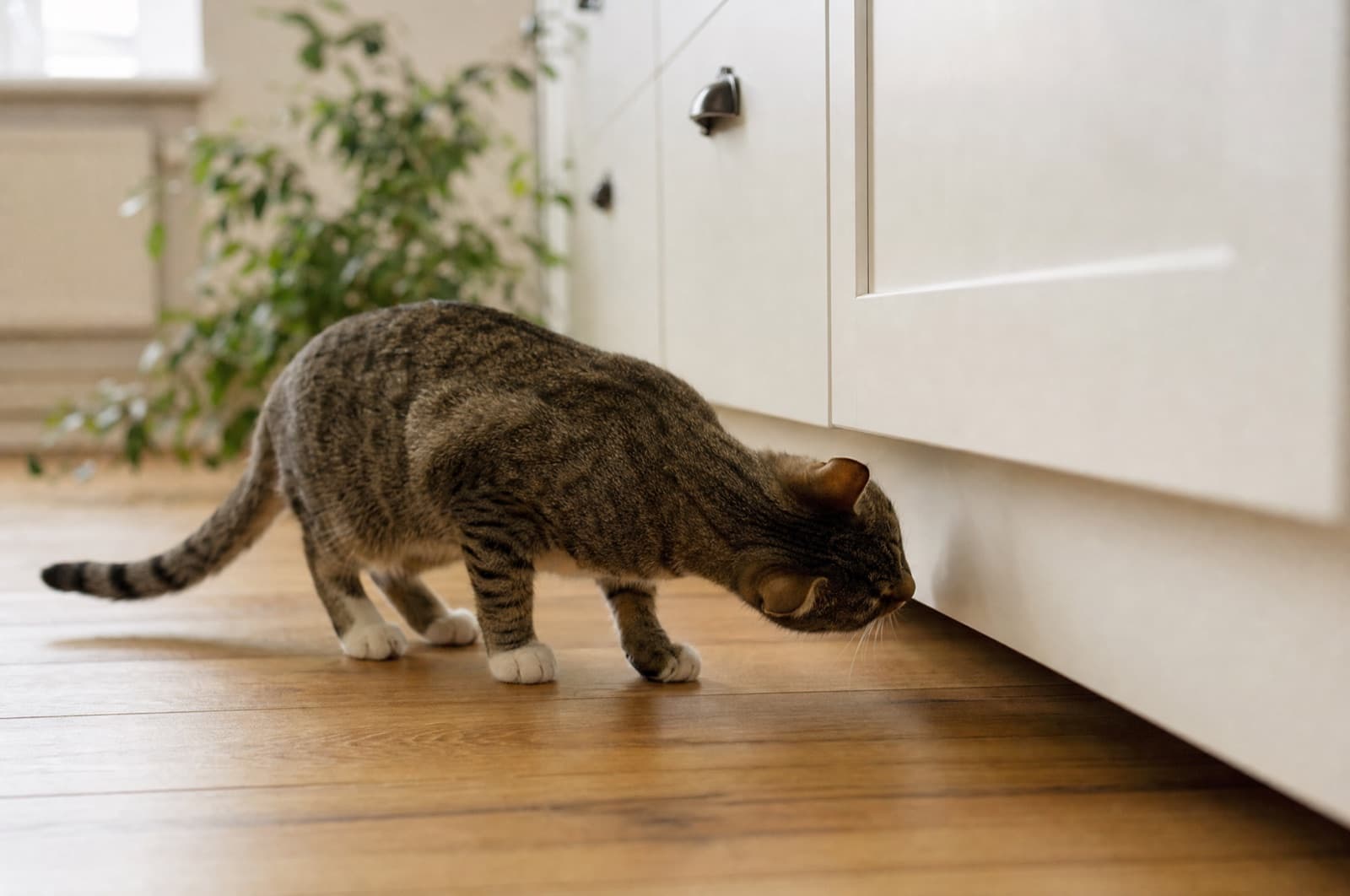
Is the Roach Motel Trap by Black Flag Safe for Pets?
At a Glance
- Product: Roach Motel Trap by Black Flag · Black Flag
- Active ingredient: No chemical toxicant
- Re-entry: Not applicable.
The short, honest answer
The score rolls up every per-species verdict below, weighted by the honest exposure that matters — a chewed-open tube, not a hidden dab — and is checked against the EPA label and veterinary toxicology.
No chemical toxicant — the only real risk is a pet's fur or paw sticking to the glue.
The Black Flag Roach Motel is a classic sticky-glue trap: the manufacturer states it "contains no pesticides and no pesticide odors," using an adhesive surface plus a non-pesticide food-type lure instead of an insecticide. That makes it one of the genuinely pet-safer products in this hub — there's no poisoning risk to grade. The real-world issue is physical: a curious cat or dog can step in the glue and get fur, whiskers, or a paw stuck, which is a nuisance to work loose, not a toxicity emergency.
General information, not veterinary advice. For a suspected exposure, contact your veterinarian or a pet-poison hotline. Verdict checked 2026-07-13 against the EPA label and veterinary toxicology.
It's not one answer — it's one per animal
Cats, birds, and fish routinely differ sharply from dogs. That contrast is the whole point of this scorecard, and no manufacturer page draws it.
- DogsSafe
- CatsSafe
- Small mammalsCaution
- BirdsCaution
- FishSafe
No toxicant — worst case is a stuck paw
There's no insecticide in this trap, so there's no poisoning risk to a dog. If a dog steps on it, fur or a paw pad may stick to the glue — a nuisance handled by loosening with oil, not a medical emergency.
Black Flag manufacturer product statement
Adhesive contact only — curious cats and kittens may step on it
No chemical toxicant means no poisoning risk. A curious cat or kitten stepping on the trap can get a paw or whiskers stuck; the fix is oil, not veterinary treatment for toxicity.
Black Flag manufacturer product statement
Very small pets could become physically stuck
A pet rodent or rabbit is small and light enough that contact with the glue surface can be more entrapping than for a larger pet. Keep the trap somewhere a loose small pet cannot reach.
General adhesive-trap safety guidance
Keep out of aviary or free-flight areas
A loose pet bird could contact the adhesive surface, which risks feather damage and entrapment. Site the trap away from any area a bird flies or lands.
General adhesive-trap safety guidance
No aquatic exposure route
There's no chemical toxicant and no water-contact pathway, so this product poses no risk to fish.
Black Flag manufacturer product statement
What's in it — and what it does to pets
This trap uses a sticky adhesive plus a non-pesticide food-type lure to catch roaches by entrapment — there is no insecticide for pets to be poisoned by. The only physical concern is fur, skin, or feathers sticking to the glue surface, which causes stress and possible minor skin irritation from a pet trying to free itself, not toxicosis.
Black Flag manufacturer product statement — "contains no pesticides and no pesticide odors"
How to use it safely around pets
Because there's no chemical toxicant, safe use is about placement to avoid physical entrapment, not drying time or dosage.
Place where pets don't roam
Set the trap in corners, under sinks, or behind appliances — spots roaches travel but pets generally don't.
Check regularly and discard when full
A trap loaded with roaches is more likely to attract pet curiosity; replace it before it becomes a bigger draw.
If fur or skin contacts the glue, don't pull
Pulling a stuck paw, fur, or whiskers free can tear skin or hair. Work in vegetable or mineral oil to loosen the adhesive, then wash the area with soap and water.
Keep away from very small or free-flying pets
Rodent pets, rabbits, and birds are light enough to be more thoroughly entrapped than a dog or cat — keep the trap out of their enclosures and flight paths.
No re-entry wait applies — there's no chemical to dry or off-gas, since the trap contains no pesticide.
Not applicable.
The only ongoing precaution is placement: keep it somewhere pets don't walk or land.
Roach activity heavier than a glue trap can handle?
Anchor's licensed NH technicians combine non-toxic monitoring with targeted treatment only where it's actually needed.
Symptoms to watch for
A sign, its urgency, and what to do — never a diagnosis. When in doubt, the emergency panel below is one tap away.
- Mild
Fur, paw, or whiskers stuck to the glue surface
A physical nuisance, not a sign of poisoning
- Moderate
Excessive licking or chewing at the stuck area
Pets may try to free themselves and cause minor skin irritation
- Moderate
Visible stress or agitation from being caught
- Mild
Minor skin redness after adhesive removal
Usually resolves after washing with soap and water
Act now — call a vet or a pet-poison line
Do not induce vomiting unless told to
This trap contains no chemical toxicant, so there's no poisoning scenario — but if your pet is stuck to it or seems distressed, act calmly and don't force a release.
What each situation calls for
Your pet's paw or fur is stuck to the trap
Do not pull the pet free — this can tear skin or fur. Apply vegetable or mineral oil to the stuck area to loosen the adhesive, then wash gently with soap and water.
Your pet seems distressed or has skin irritation after being freed
Contact your veterinarian for a check, especially if redness or irritation persists — this is a physical/skin concern, not a poisoning, but still worth a vet's look if it doesn't resolve.
In the next 60 seconds
- Keep your pet calm and avoid pulling on stuck fur, skin, or a paw.
- Apply vegetable or mineral oil to the adhesive to loosen it gradually.
- Once free, wash the area with mild soap and water.
- Watch for ongoing redness, irritation, or distress.
- Call your veterinarian if irritation persists or you're unable to safely free your pet.
ASPCA Animal Poison Control
(888) 426-4435
24/7; a consultation fee may apply — for any product-ingestion concern beyond adhesive contact
Pet Poison Helpline
(855) 764-7661
24/7; a per-incident fee applies
Northern New England Poison Center
(800) 222-1222
24/7 human poison control — for household/child exposure context; call a vet for pet guidance
Safer pet-friendly alternatives
Honest options that reduce or remove pet-toxicity — no affiliate hype, real caveats included.
This product itself
SaferNon-toxicant adhesive trap
It's already the pet-safer choice in this hub's roach category — no insecticide, only a physical-contact risk that's manageable with careful placement.
Adhesive strength and lure freshness vary; check and replace regularly.
Catchmaster professional glue boards
SaferMechanical / adhesive (no toxicant)
Same no-toxicant principle with a larger, professional-grade adhesive surface for heavier roach activity.
The stronger adhesive can grip fur more firmly — site away from pet traffic.
Sanitation and exclusion
SaferNon-chemical
Sealing entry points and removing food/moisture sources addresses why roaches are present at all, with zero pet risk of any kind.
Slower to show results than active baiting or trapping.
Professional monitoring and treatment (Anchor Pest Services)
SaferLicensed professional service
A licensed applicator can combine non-toxic monitoring with targeted, secured treatment only where genuinely needed.
A service, not a product — ask about pet-aware, low-toxicant options.
Pet-safe roach monitoring in New Hampshire
Because New Hampshire's cold winters keep cockroaches confined to heated structures, an NH roach sighting almost always means the German cockroach is already breeding indoors — so a no-toxicant sticky monitor like this is a genuinely pet-safe way to confirm activity early before reaching for anything stronger. One NH-specific caveat: an open glue surface can also catch non-target wildlife common in NH homes and garages, from chipmunks and red squirrels to small songbirds, so place it enclosed and out of reach. If activity is heavy, Anchor Pest Services provides licensed, pet-conscious treatment across Manchester, Nashua, Concord, and the surrounding towns.
NH-licensed applicator #782664 (NHDAMF, RSA 430) · NEPMA member · family-owned since 2017.
Service Area Map
Southern New Hampshire
Frequently asked questions
Sources(2)
- [1]Black Flag — Roach Motel Manufacturer Product Page
"Contains no pesticides and no pesticide odors" — non-toxicant adhesive trap format
manufacturerverified 2026-07-13 - [2]Catchmaster — Family & Pet-Safe Glue Trap Guidance
Safe adhesive-removal method (oil, not force)
manufacturerverified 2026-07-13
Written & reviewed by
VerifiedDaniel Brady
NH-Licensed Pesticide Applicator · License #782664 (NHDAMF, RSA 430)
Daniel Brady is the New Hampshire–licensed applicator behind Anchor Pest Services, a family-owned pest control company serving the Manchester area since 2017.
Last updated 2026-07-13
Pet-Safe Professional Pest Control
From Monitoring to Targeted Treatment
Glue traps are a great pet-safe first step, but a real infestation needs more. Anchor Pest Services treats roach problems with targeted, pet-aware methods across southern and central New Hampshire. Family-owned since 2017, NH license #782664.
- Pet-conscious targeted treatment
- NH-licensed applicators (#782664)
- Free inspection — same-day service across southern NH
NH License #782664 · No obligation · We answer in person
Your next step
- Book a NH pro
Cockroach Control
Book now - Book a NH pro
Pest Control Services
Licensed, family-owned pest control across southern NH.
Book now - Next step
Are Cockroaches Active at Night? NH Roach Timing Guide
Read the answer - What to do next
How to Use the Roach Motel Trap by Black Flag
Read the answer - What to do next
How to Use Ant & Roach Killer Spray by Black Flag
Read the answer - Also relevant
Mechanical Control for Roaches, Crickets & Everyday Pests
Read the answer