
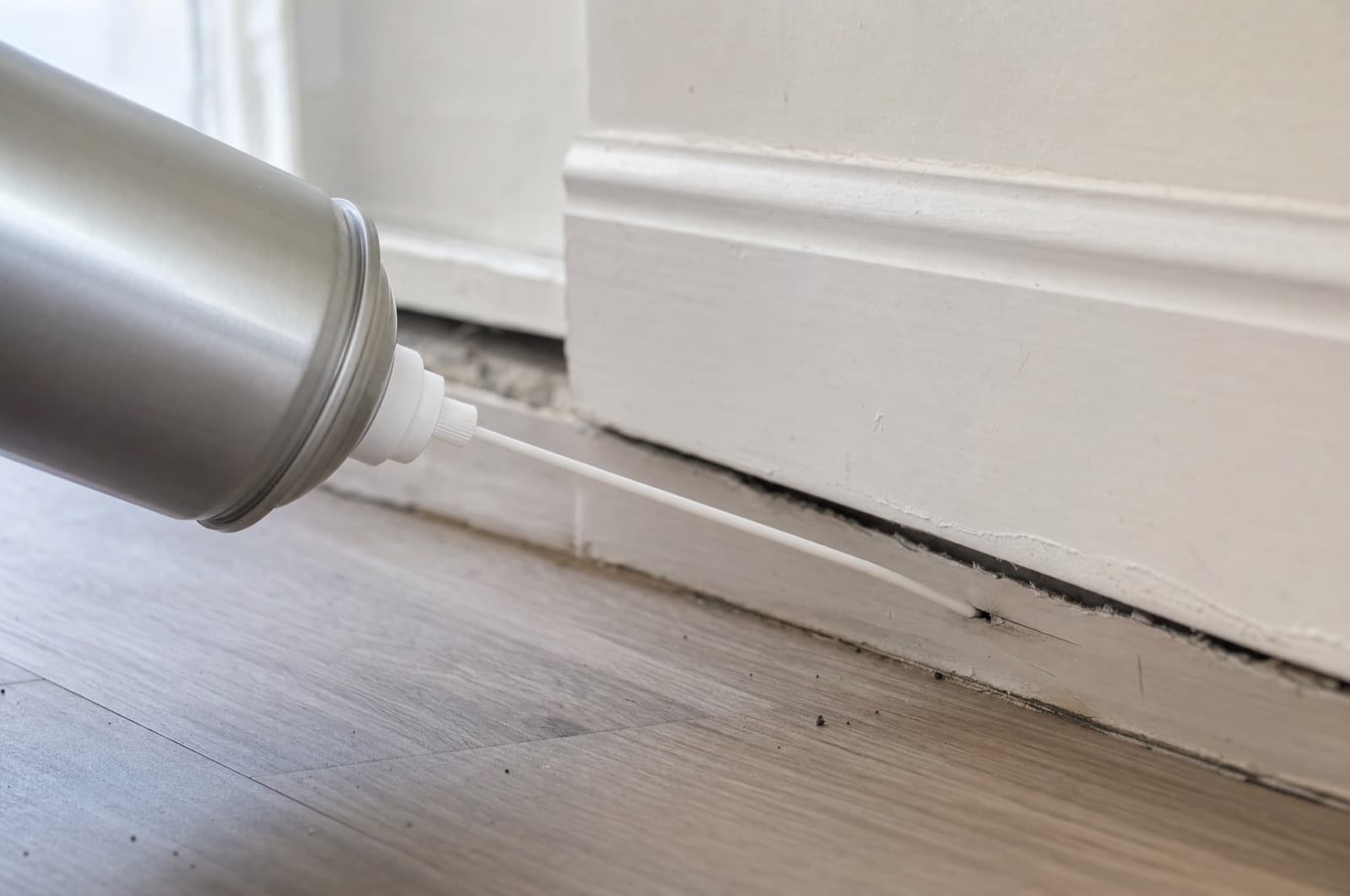
How to Use Phantom Aerosol Insecticide by BASF
At a glance
- Efficacy: Workhorse
- Best job: Patient, non-repellent crack-and-crevice treatment that pests walk through undetected and carry back to harborage — including pyrethroid-resistant populations
- Format: Ready-to-use professional aerosol with an injection straw for crack-and-crevice and spot treatment only — explicitly not a knockdown or broadcast product
- Technique: Moderate technique
Does this product actually work?
A genuine workhorse for patient, non-repellent crack-and-crevice control and resistant populations — but only if you set your expectations correctly first.
Because chlorfenapyr is non-repellent, insects walk through a treated crack without detecting it, then carry the active back to harborage and share it with nestmates — a real advantage over repellent pyrethroids, especially against pyrethroid-resistant roaches and bedbugs, and it won't drive foragers off a nearby bait the way a repellent spray does. The trade-off is patience: there's no dead-bug-on-contact moment, and judging it by that standard will make a genuinely effective product look like it failed.
Best for
Treating ant and roach harborage, including pyrethroid-resistant populations, with a non-repellent active that transfers through the colony instead of scattering it.
Skip it for
Anyone wanting to see bugs drop immediately, or any stinging-insect nest emergency — this product is not built for either.
What it is — and what it's really for
The label is the law. Here's the honest read on the format, the one job it does well, and the job people wrongly buy it for.
The technique walkthrough
Where DIY succeeds or fails is in the placement, patience, and the small pro moves the label never mentions. Follow the label; these are the technique details on top of it.
The technique here is entirely about patience and placement — treat the crack, leave it undisturbed, and wait. Expecting knockdown is the single fastest way to misjudge this product.
Inspect and mark harborage and travel routes
Identify baseboards, door and window frames, pipe and utility penetrations, and voids where ants, roaches, or other target pests travel.
Shake and attach the injection straw
Shake the can and fit the straw for precise crack-and-crevice or void placement.
Treat as crack-and-crevice or spot only
Move the straw along cracks and voids at a steady pace, treating harborage and travel routes — do not broadcast-spray open surfaces.
Pro moveUse it with baits, not instead of them — because it's non-repellent, it won't drive ants off a bait placed nearby, unlike a pyrethroid spray.Common mistakeBroadcasting it over open floors or counters — the label restricts it to crack-and-crevice/spot use, and broadcasting is both off-label and wasteful.Leave it undisturbed
Don't clean, spray, or otherwise disturb the treated crack — the non-repellent effect depends on pests walking through it normally and carrying it back to harborage.
CautionDon't spray a repellent product over or near where you've applied Phantom — that undercuts the exact advantage that makes it work.Wait for the delayed effect
Expect affected insects to die over hours to days, with colony- or harborage-level effects building over the following days to weeks as the active transfers through contact and shared food.
Common mistakeExpecting a dead roach in seconds and re-treating impatiently — the four-week minimum reapplication interval on the label exists because the product needs time to work.
Do & don't
- Treat cracks, crevices, and voids with the injection straw
- Combine it with a bait program — it won't undercut the bait
- Be patient; give it days, not seconds, to work
- Use it specifically where pyrethroid resistance is suspected
- Don't use it for instant knockdown or a stinging-insect emergency
- Don't broadcast-spray open surfaces
- Don't spray a repellent product over or near a Phantom-treated crack
- Don't re-treat more often than every four weeks
Where it works vs. where it fails
No product fixes everything. This is the honest boundary — the situations it genuinely handles, and the ones it simply won't.
Where it works
- Ant and roach harborage needs a non-repellent treatment that transfers through contact and shared food
- The population shows signs of pyrethroid resistance (persisting despite correctly applied contact sprays)
- You're running a bait program and need a spray that won't repel foragers off the bait
- Hard-to-reach voids and cracks need patient, undisturbed treatment
Where it fails
- You need instant knockdown of a visible pest
- The target is a wasp, hornet, or other stinging-insect nest — the manufacturer explicitly says not to use it this way
- It's applied as a broadcast surface spray rather than crack-and-crevice/spot treatment
- It's re-treated impatiently before the slow, transfer-based mechanism has had time to work
Mistakes that waste the product
Expecting knockdown
Phantom is slow by design — judging it against a fast pyrethroid's instant kill makes an effective product look like it failed.
Broadcasting it over open surfaces
The label restricts Phantom to crack-and-crevice, void, and spot treatment — broadcasting is off-label and wastes the product's targeted advantage.
Spraying a repellent product nearby
Chlorfenapyr's whole advantage is that pests don't detect and avoid it — a repellent pyrethroid sprayed nearby reintroduces the avoidance behavior Phantom is designed to bypass.
Re-treating too often
Re-treating more frequently than every four weeks is off-label and doesn't speed up a mechanism that depends on time and insect movement, not concentration.
What to expect — and when
There is no quick-knockdown moment with this product — patience is the mechanism, not a side effect of using it correctly.
First few hours after application
No visible knockdown — this is expected and does not mean the product isn't working.
Hours to a few days
Insects that contacted the treated crack begin dying as the active disrupts their cellular energy production.
Days to a couple of weeks
Colony- and harborage-level effects build as affected insects transfer the active to nestmates through contact and shared food — this is where the non-repellent advantage shows up.
When to stop DIY & call a pro
Phantom handles more than a typical pyrethroid can, but it still has a ceiling. These are the honest signals it's been reached:
Confirmed bedbugs anywhere in the home
Bedbug infestations typically require a coordinated multi-product, multi-visit plan that goes well beyond a single aerosol, even a non-repellent one.
Pyrethroid-resistant roaches persist after correct, patient Phantom application
A population resistant enough to defeat both pyrethroids and a non-repellent pyrrole needs professional-grade rotation and inspection.
Ant colonies persist despite combined baiting and Phantom crack treatment
A large or multi-satellite colony structure can outlast even a well-executed DIY combination approach.
Any wasp, hornet, or stinging-insect nest
BASF explicitly states this product should not be used for knockdown treatment of stinging insects — that's a different risk profile requiring different tools and, often, professional removal.
When a patient, correctly applied non-repellent treatment still isn't finishing the job, Anchor's licensed NH technicians bring a professional multi-product plan and inspection to the actual harborage or colony. Free inspection, same-day service across southern and central New Hampshire.
Patient treatment still not finishing the job?
Is it safe for pets & kids?
The short version lives here; the full per-species verdict lives on this product's pet-safety page.
Use only in cracks, crevices, and spot locations as directed — this is a professional-grade aerosol, not a general room spray. Treat when the area is vacated and keep kids and pets off treated areas until dry.
Re-entry: Keep children and pets off treated cracks and surfaces until fully dry.
Where a non-repellent like this fits in NH pest problems
Carpenter ants and German cockroaches are the structural and indoor pests that most challenge NH homeowners, and both can develop resistance or bait-avoidance behavior that makes a standard pyrethroid spray underperform. Phantom's non-repellent, transfer-based mechanism is a genuine step up for exactly those stubborn cases — but it requires patience most DIY searchers underestimate, and colonies nesting deep in structural wood are still beyond what any consumer aerosol can finish. Anchor Pest Services brings professional-grade, targeted treatment to those cases across Manchester, Nashua, Concord, and the surrounding towns.
Service area
Southern New Hampshire
Anchor Pest Services · NH license #782664 · NEPMA member · family-owned since 2017.
Frequently asked
Sources & further reading(4)
- [1]BASF — PT Phantom II Pressurized Insecticide product page
Verified active (chlorfenapyr 0.5%), non-repellent mechanism, 'not a quick knockdown agent' and stinging-insect caution, crack-and-crevice/spot use directions
manufacturerverified 2026-07-14 - [2]BASF Phantom — Safety Data Sheet
Confirmed chlorfenapyr concentration and product classification (facts only)
manufacturerverified 2026-07-14 - [3]NC State Extension — Tips for Effective Ant Baiting
Repellent vs. non-repellent insecticide distinction; spraying repellents near bait undercuts bait programs
extensionverified 2026-07-14 - [4]UC IPM — Cockroaches (Home & Landscape)
Pyrethroid resistance context and the value of non-repellent alternatives for established populations
extensionverified 2026-07-14
Written & reviewed by
VerifiedDaniel Brady
NH-Licensed Pesticide Applicator · License #782664 (NHDAMF, RSA 430)
Daniel Brady is the New Hampshire–licensed applicator behind Anchor Pest Services, a family-owned pest control company serving the Manchester area since 2017.
Last updated July 2026
Related products in this category
Same shelf, different jobs — the dot shows each product's honest efficacy verdict at a glance.
Professional Pest Control
When Even a Non-Repellent Isn't Enough
Phantom outperforms a standard pyrethroid against resistant populations, but a large or established colony can still outlast DIY. Anchor Pest Services brings a professional multi-product plan and licensed inspection across southern and central New Hampshire. Family-owned since 2017, NH license #782664.
- Professional-grade, targeted treatment plans
- NH-licensed applicators (#782664)
- Free inspection — same-day service across southern NH
NH License #782664 · No obligation · We answer in person
Your next step
- Book a NH pro
Pest Control Services
Licensed, family-owned pest control across southern NH.
Book now - What to do next
Is Phantom Aerosol Insecticide by BASF Safe for Pets?
Read the answer - What to do next
Is Cy-Kick Aerosol Insecticide Spray Safe for Pets?
Read the answer - What to do next
Is D-Force Insecticide Aerosol Spray Safe for Pets?
Read the answer - Also relevant
Is Phantom Aerosol Insecticide by BASF Safe for Pets?
Read the answer - Also relevant
Chemical Control for Roaches, Silverfish, Crickets & Termites
Read the answer