
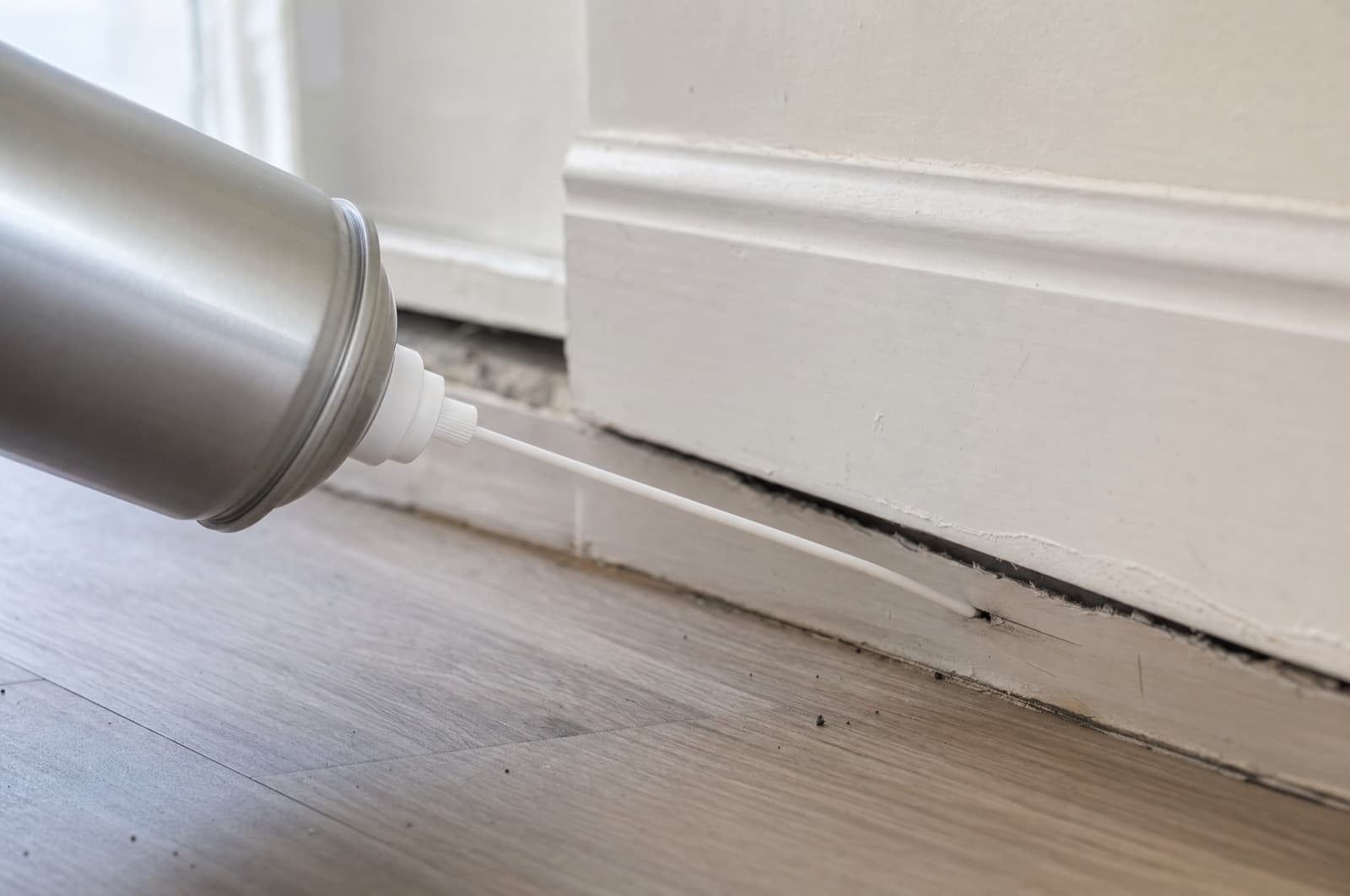
How to Use Tempo SC Ultra Premise Spray by Bayer
At a glance
- Efficacy: Situational
- Best job: Even, measured residual coverage over perimeters, foundations, and crack-and-crevice indoor sites when correctly diluted and applied with proper equipment
- Format: Dilutable suspension concentrate (SC) — mixed with water and applied through a pump, backpack, or professional sprayer; NOT a ready-to-use aerosol despite living alongside cans in this hub
- Technique: Finicky technique
Does this product actually work?
A workhorse residual in a trained applicator's hands — situational, and easy to misuse, for a homeowner expecting a point-and-shoot can.
Beta-cyfluthrin is a potent, university-recognized pyrethroid, and Tempo SC Ultra is a legitimate professional tool when it's measured to the label's dilution rate, agitated properly, and applied as an even, unbroken pass. That's exactly where most homeowner searches for this product go wrong: it's sold in a semi-pro channel that makes it easy to buy without the mixing/spraying equipment or experience the label assumes. Treat it as a workhorse for someone equipped to apply it correctly, and a situational, easy-to-misapply choice for a typical DIY searcher expecting a can.
Best for
Trained or diligent applicators who own or will rent proper mixing/spraying equipment and want an even, calibrated residual across a perimeter or crack-and-crevice sites.
Skip it for
Anyone who wanted a ready-to-use aerosol — this concentrate requires accurate dilution and even application to work at all, and getting that wrong wastes the product or violates the label.
What it is — and what it's really for
The label is the law. Here's the honest read on the format, the one job it does well, and the job people wrongly buy it for.
The technique walkthrough
Where DIY succeeds or fails is in the placement, patience, and the small pro moves the label never mentions. Follow the label; these are the technique details on top of it.
This is the one product in the aerosol cluster where the technique starts before you ever spray anything — get the dilution and equipment right first, or nothing else matters.
Read the label for your exact dilution
Confirm the correct mixing ratio for your target pest and site before opening the concentrate — mixing ratios are printed on the label, and that number is the law here, not a guideline.
Mix in the sprayer, in the right order
Add water to the sprayer first, then add the measured concentrate, then top off with more water and agitate thoroughly so the suspension is evenly mixed.
Apply as an even, continuous pass
Apply the diluted spray to perimeters, foundations, and harborage outdoors, or as a crack-and-crevice/spot treatment indoors, to the point of coverage — never to runoff.
Pro moveEven, calibrated coverage is everything with a concentrate like this — an uneven pass leaves gaps pests simply reroute through.Common mistakeTreating it like a ready-to-use product — spraying it undiluted or eyeballing the mix wastes product, risks staining or over-application, and is an off-label use.Re-agitate as you go
A suspension concentrate can settle in the tank during a long application — re-agitate periodically to keep the active evenly distributed in what you're spraying.
Let it dry and reapply on schedule
Keep kids and pets off treated surfaces until dry, and observe the label's reapplication interval rather than reapplying reactively whenever pests are spotted.
CautionThis concentrate is harmful if swallowed, inhaled, or absorbed and is extremely toxic to fish — wear the label's specified PPE and keep it out of storm drains and water.
Do & don't
- Measure and mix to the exact label dilution
- Agitate before and during application
- Apply as an even, unbroken pass with proper equipment
- Wear the label's specified PPE
- Don't apply it undiluted or guess the mix
- Don't broadcast indoors beyond the label's limits
- Don't spray it over or near ant or roach bait
- Don't skip agitation and let the suspension settle unevenly
Where it works vs. where it fails
No product fixes everything. This is the honest boundary — the situations it genuinely handles, and the ones it simply won't.
Where it works
- You have proper mixing and spraying equipment and will measure the dilution accurately
- An even, continuous residual band is needed across a perimeter, foundation, or indoor crack-and-crevice site
- Broad-spectrum coverage across many pest types in one product is genuinely useful
- The applicator is willing to follow label PPE and mixing procedures precisely
Where it fails
- You wanted a point-and-shoot can with no measuring or mixing
- The dilution is guessed rather than measured, or coverage is uneven with gaps
- You're hoping a residual barrier alone will end a hidden colony or established infestation
- It's sprayed over or near an ant or roach bait placement
Mistakes that waste the product
Wrong dilution
Too weak underperforms and wastes the trip; too strong wastes product, risks staining or damage, and violates the label.
No agitation
A suspension concentrate settles; an unmixed or under-agitated tank applies an uneven, unpredictable active concentration.
Spraying over or near bait
The repellent pyrethroid residue drives ants and roaches away from bait they'd otherwise carry back to the colony.
Expecting it to end a colony alone
Even a well-applied residual reaches only foragers crossing the treated surface, not the queen or nest.
What to expect — and when
This is a measured-application residual, not an instant can — judge the setup and mixing as part of the job, then judge the results on coverage, not on speed.
On contact
Insects crossing or contacting the freshly applied, correctly diluted surface knock down quickly.
Following days to weeks
The residual keeps working as pests contact treated surfaces, provided coverage was even and continuous.
Up to about 3 months
Marketed residual life on labeled surfaces; actual persistence depends on weather, surface type, and how evenly it was applied — plan to reapply per label, not by guesswork.
When to stop DIY & call a pro
If the equipment, measuring, or calibration this product demands feels like more than you want to take on — or the pest problem itself is bigger than a perimeter spray — these are the honest signals to call a pro:
Measuring, mixing, calibrating, and wearing the specified PPE feels out of scope
This product's efficacy depends entirely on getting the dilution and coverage right — if that's not realistic, a professional applicator gets the same active applied correctly.
Ants, roaches, or other target pests persist despite a correctly diluted, evenly applied treatment
Persistent activity after correct application points to a colony or source the residual can't reach, not an application error.
The pest problem is structural — carpenter ants or termite signs in wood
A perimeter or crack-and-crevice residual is not a structural-pest treatment; those need licensed inspection and targeted methods.
You're treating a large property and the mixing/coverage math is getting complicated
Scaling dilution and coverage accurately across a large area is exactly where DIY application errors compound.
Anchor's licensed NH technicians apply professional-grade residuals like this correctly every time — accurately mixed, evenly covered, and targeted at the actual source. Free inspection, same-day service across southern and central New Hampshire.
Don't want to measure, mix, and calibrate a sprayer?
Is it safe for pets & kids?
The short version lives here; the full per-species verdict lives on this product's pet-safety page.
This concentrate is harmful if swallowed, inhaled, or absorbed through skin, and it's extremely toxic to fish and aquatic life. Mix and apply exactly per label, wear the specified PPE, and keep kids and pets off treated surfaces until fully dry.
Re-entry: Keep children and pets off treated surfaces until the application is completely dry.
A professional-grade product in a consumer channel
Tempo SC Ultra is sold to homeowners through the same farm-supply and pest-control-supply retailers that stock it for licensed technicians, which means a New Hampshire homeowner can buy it without the mixing equipment, calibration experience, or PPE that make it work safely and effectively. If you want the residual coverage this active ingredient genuinely delivers without taking on the measuring and equipment yourself, Anchor Pest Services applies it — and comparable professional actives — correctly across Manchester, Nashua, Concord, and the surrounding towns.
Service area
Southern New Hampshire
Anchor Pest Services · NH license #782664 · NEPMA member · family-owned since 2017.
Frequently asked
Sources & further reading(4)
- [1]US EPA, Pesticide Product Label — Tempo SC Ultra Premise Spray (Reg. No. 101563-213)
Verified active (beta-cyfluthrin 11.8%), suspension-concentrate formulation, dilution and application directions, labeled pest list
epa_labelverified 2026-07-14 - [2]Envu (Bayer Environmental Science) — Tempo SC Ultra Insecticide product page
Concentrate format, mixing/application description, and broad pest-control claims (facts only)
manufacturerverified 2026-07-14 - [3]NPIC — Cyfluthrin General Fact Sheet
Cyfluthrin/beta-cyfluthrin pyrethroid class and behavior
npicverified 2026-07-14 - [4]University of Maine Cooperative Extension — Cockroaches Fact Sheet
Pyrethroid crack-and-crevice application guidance and residual behavior on hard surfaces
extensionverified 2026-07-14
Written & reviewed by
VerifiedDaniel Brady
NH-Licensed Pesticide Applicator · License #782664 (NHDAMF, RSA 430)
Daniel Brady is the New Hampshire–licensed applicator behind Anchor Pest Services, a family-owned pest control company serving the Manchester area since 2017.
Last updated July 2026
Related products in this category
Same shelf, different jobs — the dot shows each product's honest efficacy verdict at a glance.
Professional Pest Control
Let a Licensed Technician Handle the Concentrate
A professional-grade residual only performs as advertised when it's mixed and applied correctly. Anchor Pest Services applies targeted, professional treatments with the right equipment and calibration across southern and central New Hampshire. Family-owned since 2017, NH license #782664.
- Correctly mixed, evenly applied professional residuals
- NH-licensed applicators (#782664)
- Free inspection — same-day service across southern NH
NH License #782664 · No obligation · We answer in person
Your next step
- Book a NH pro
Pest Control Services
Licensed, family-owned pest control across southern NH.
Book now - What to do next
Is Tempo SC Ultra Premise Spray by Bayer Safe for Pets?
Read the answer - What to do next
Is Hot Shot Ultra Liquid Roach Bait Safe for Pets?
Read the answer - Also relevant
Is Tempo SC Ultra Premise Spray by Bayer Safe for Pets?
Read the answer - Also relevant
Chemical Control for Roaches, Silverfish, Crickets & Termites
Read the answer - Related guide
How to Use Ultra Liquid Roach Bait by Hot Shot
Read the answer