
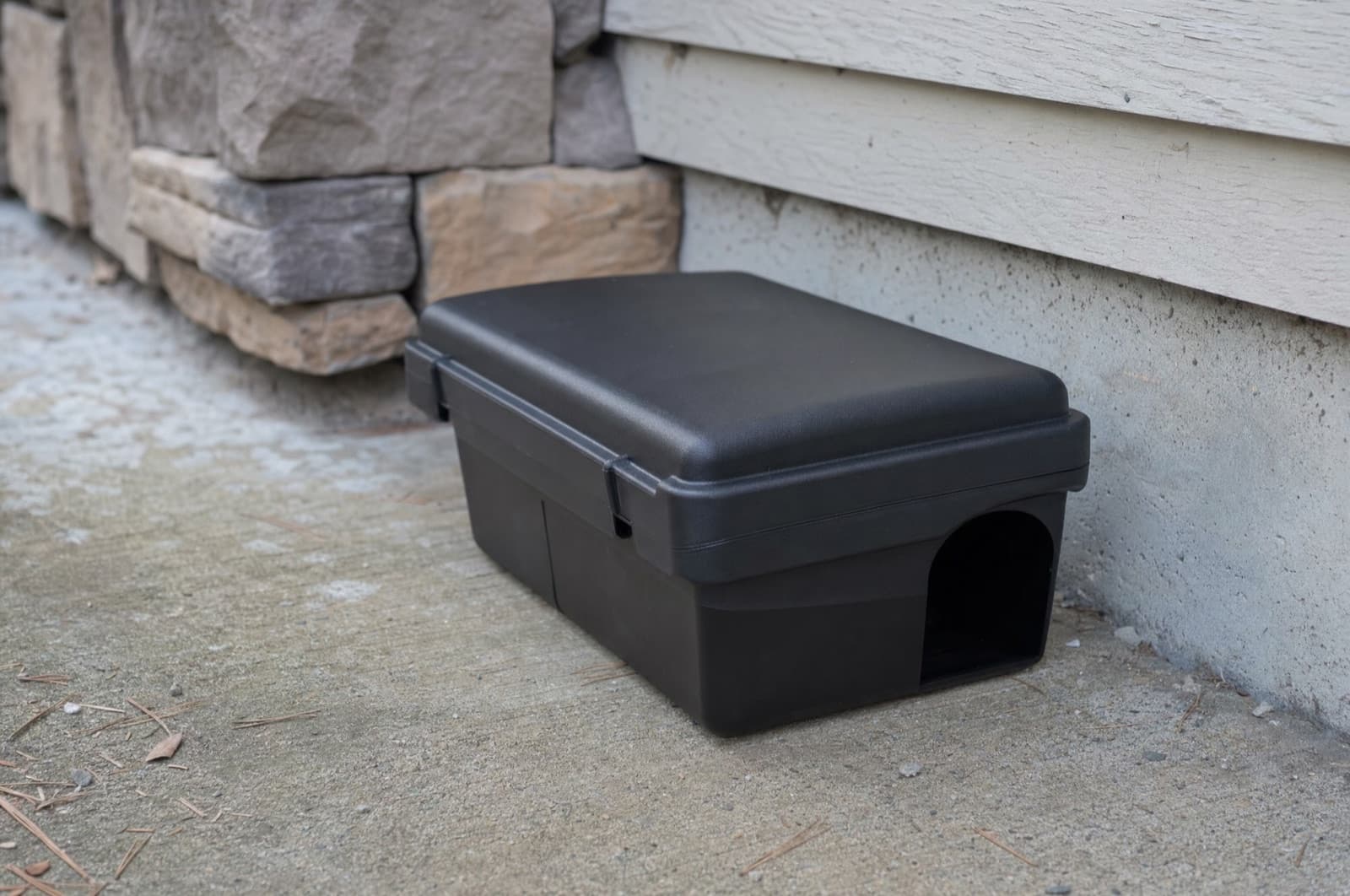
How to Use the Victor Quick-Kill Mouse Trap
At a glance
- Efficacy: Workhorse
- Best job: Fast, one-click, no-touch mouse trapping with the lowest collateral risk of any format in this cluster
- Format: Plastic snap trap (model M140) with a covered bait trough and a one-click 'Precision Strike' kill bar — a mechanical kill device with no toxicant
- Technique: Easy technique
Does this product actually work?
A genuine workhorse for a few mice — the covered trough and one-click set make the correct technique easy to execute.
University IPM guidance treats trapping as the safest and most effective way to control mice in and around structures, and the Quick-Kill delivers on that when it's set perpendicular to the wall on an active runway and deployed in multiples. The covered bait trough resists bait theft and the one-click bar makes it fast to arm — genuine conveniences, not just marketing. Like every snap trap, it kills mice one at a time, so it doesn't scale to a large population and it does nothing about the entry point letting mice in.
Best for
Killing a small number of mice quickly, with no poison in the house and immediate, visible confirmation of a kill.
Skip it for
Rats (it's undersized) and a large or recurring infestation that outpaces what homeowner-scale trap density can match.
What it is — and what it's really for
The label is the law. Here's the honest read on the format, the one job it does well, and the job people wrongly buy it for.
The technique walkthrough
Where DIY succeeds or fails is in the placement, patience, and the small pro moves the label never mentions. Follow the label; these are the technique details on top of it.
The covered trough and one-click bar strip most of the fumbling out of setting it, so the only variables left are the ones that always matter with snap traps: perpendicular placement on active runways and enough units to work a population, not a single mouse.
Fill the covered trough lightly
Add a small amount of peanut butter (or a similar high-affinity bait) to the covered bait trough — just enough to attract, not so much that it can be worked out without triggering the trap.
Common mistakeOverfilling the trough: the cover reduces, but doesn't eliminate, the risk of a mouse feeding without setting off the kill bar.Set the kill bar
Pull the 'Precision Strike' kill bar back until it locks into the set position with a single click.
Place it perpendicular to the wall, trough toward the wall
Set the trap so it sits perpendicular to the wall with the baited trough facing the wall, directly on an active runway marked by droppings, gnaw marks, or grease rub.
Pro moveSet traps in pairs with the troughs facing each other, so a mouse that skirts one trap runs into the other.Use several traps, closely spaced
Because house mice have small home ranges, place multiple traps along the runway rather than relying on one or two — more traps beats more bait.
Common mistakeSetting only one or two traps in the open, parallel to the wall, instead of several perpendicular placements on real runways.Pre-bait if mice are ignoring the trap
If a set trap goes untouched for a few nights, leave it unset and baited for a night or two so mice lose their wariness of the new object, then set it live.
Pro movePre-baiting is the single biggest fix for 'the trap didn't work' — a mouse that avoids a newly set trap will often feed freely once it's been present a couple of days.Check, reset, and address the source
Check traps daily, reset promptly, and pair trapping with sanitation (remove competing food) and exclusion (seal entry points).
CautionWear gloves when handling a triggered trap and dispose of the catch per local guidance.
Do & don't
- Place perpendicular to the wall, trough/trigger end toward the wall.
- Use several traps along the same runway, not one or two.
- Pre-bait unset for a night or two if mice are ignoring a live-set trap.
- Bait lightly — just enough to attract, not a mound.
- Wear gloves when handling and disposing.
- Don't use it for rats — it's sized and rated for mice.
- Don't overfill the covered trough; a mouse can sometimes feed around light bait without triggering it.
- Don't set in open floor space, parallel to the wall.
- Don't rely on one trap to cover a whole house.
- Don't skip sanitation and exclusion once catches slow down.
Where it works vs. where it fails
No product fixes everything. This is the honest boundary — the situations it genuinely handles, and the ones it simply won't.
Where it works
- You're dealing with a few mice, especially in kitchens, pantries, or utility areas
- You want a non-toxic, one-click option in a home with kids or pets
- Traps are placed perpendicular to the wall on real runway evidence and deployed in multiples
- Pre-baiting is used when mice show initial trap avoidance
Where it fails
- Rats, not mice, are the problem — the kill bar isn't rated for a rat-strength strike
- The infestation is large or established — a snap trap kills mice one at a time and can't outpace a fast-reproducing population
- It won't fix the entry point — mice keep entering regardless of how many are trapped, unless gaps are sealed
- It won't resolve a recurring, season-after-season infestation without exclusion alongside it
Mistakes that waste the product
Placing the trap in open floor space
Mice detour around open areas and stick to edges, so an out-of-runway trap goes untouched regardless of bait quality.
Setting too few traps
A single trap misses most of the runways an active mouse population actually uses.
Overfilling the covered trough
Even with the cover, a large amount of bait can sometimes be worked loose without triggering the mechanism, wasting the set.
Skipping pre-baiting on a wary population
A newly set live trap can be avoided for several nights, leading to the false conclusion that 'the trap doesn't work.'
What to expect — and when
This is a fast-acting mechanical tool — judge results by catches over the first few nights, then by whether sign keeps returning at all.
First night
With correct perpendicular placement on an active runway, a catch is common overnight.
First few nights to a week
Multiple traps along the runway typically account for most of a small, localized population.
Ongoing
Catches should taper off; continued nightly catches point to a larger population or an open entry point still feeding new mice in.
When to stop DIY & call a pro
A snap trap removes individuals one at a time, which loses to a breeding population you can't see behind the walls. These are the signals the job is no longer a trap-and-reset job:
Catches keep coming week after week despite correct, multi-trap placement
Persistent catches signal an established, reproducing population that homeowner-scale trap density can't outpace.
There's evidence of rats rather than mice
This trap is undersized and under-rated for rats — a different tool and typically professional-scale placement is needed.
Droppings or gnawing appear in multiple rooms or floors
That spread points to an established colony, not a single incursion, and needs inspection depth beyond what a homeowner can typically achieve.
You can't identify or seal the entry point
Trapping controls the mice already inside, but without exclusion, new mice keep replacing them — a professional inspection finds gaps homeowners often miss.
When trapping alone can't keep pace, Anchor's licensed NH technicians combine professional-density placement with a full exclusion inspection to close the entry points trapping can't touch. Free inspection, same-day service across southern and central New Hampshire.
Catching mice every night with no end in sight?
Is it safe for pets & kids?
The short version lives here; the full per-species verdict lives on this product's pet-safety page.
This is a mechanical, non-toxic device — there's no poisoning risk to worry about. The physical risk is the kill bar itself: it can pinch or injure small fingers, paws, or noses if triggered while handling.
Re-entry: Keep set traps out of areas pets or small children can freely access, and always check or reset with the bar facing away from your hand.
Mouse trapping timing in New Hampshire
House mice move into southern and central New Hampshire homes as fall cooling sets in, and because they breed indoors, a delayed response can turn a couple of mice into a drawn-out, one-a-week trapping grind. Setting several correctly placed, pre-baited traps at the first sign of activity — droppings, gnaw marks, a rustle in the wall — is what separates a quick clear-out from weeks of chasing. Anchor Pest Services handles both the trapping and the exclusion work across Manchester, Nashua, Concord, and the surrounding towns.
Service area
Southern New Hampshire
Anchor Pest Services · NH license #782664 · NEPMA member · family-owned since 2017.
Frequently asked
Sources & further reading(4)
- [1]Victor Pest — Quick-Kill Mouse Trap product page
Model M140 format, covered bait trough, one-click 'Precision Strike' kill-bar mechanism (facts only)
manufacturerverified 2026-07-14 - [2]University of Kentucky Entomology — House Mice (EF617)
Trapping as the recommended, safest DIY control method; perpendicular-to-wall placement and pre-baiting guidance
extensionverified 2026-07-14 - [3]Colonial Pest Control — How to Place Snap Traps for Mice
Correct perpendicular placement and multi-trap density guidance
independentverified 2026-07-14 - [4]PMP Magazine — Set a Profitable Mouse Snap Trap Program
Professional trap-density and placement practice
independentverified 2026-07-14
Written & reviewed by
VerifiedDaniel Brady
NH-Licensed Pesticide Applicator · License #782664 (NHDAMF, RSA 430)
Daniel Brady is the New Hampshire–licensed applicator behind Anchor Pest Services, a family-owned pest control company serving the Manchester area since 2017.
Last updated July 2026
Related products in this category
Same shelf, different jobs — the dot shows each product's honest efficacy verdict at a glance.
Professional Pest Control
When Trapping Alone Can't Keep Pace
Snap traps handle a few mice well, but an established or recurring population needs trap density and exclusion work most homeowners can't match. Anchor Pest Services treats the population and the entry points across southern and central New Hampshire. Family-owned since 2017, NH license #782664.
- Professional trap density + exclusion inspection
- NH-licensed applicators (#782664)
- Free inspection — same-day service across southern NH
NH License #782664 · No obligation · We answer in person
Your next step
- Book a NH pro
Rodent Control in New Hampshire
Mice and rats move indoors every fall. We trap, seal entry points and keep them out.
Book now - Book a NH pro
Pest Control Services
Licensed, family-owned pest control across southern NH.
Book now - What to do next
Is the Quick-Kill Mouse Trap by Victor Safe for Pets?
Read the answer - What to do next
Is the Victor Power-Kill Mouse Trap Safe for Pets?
Read the answer - Also relevant
Is the Quick-Kill Mouse Trap by Victor Safe for Pets?
Read the answer - Also relevant
Mechanical Rodent Control: Snap Traps + Exclusion That Works
Read the answer