
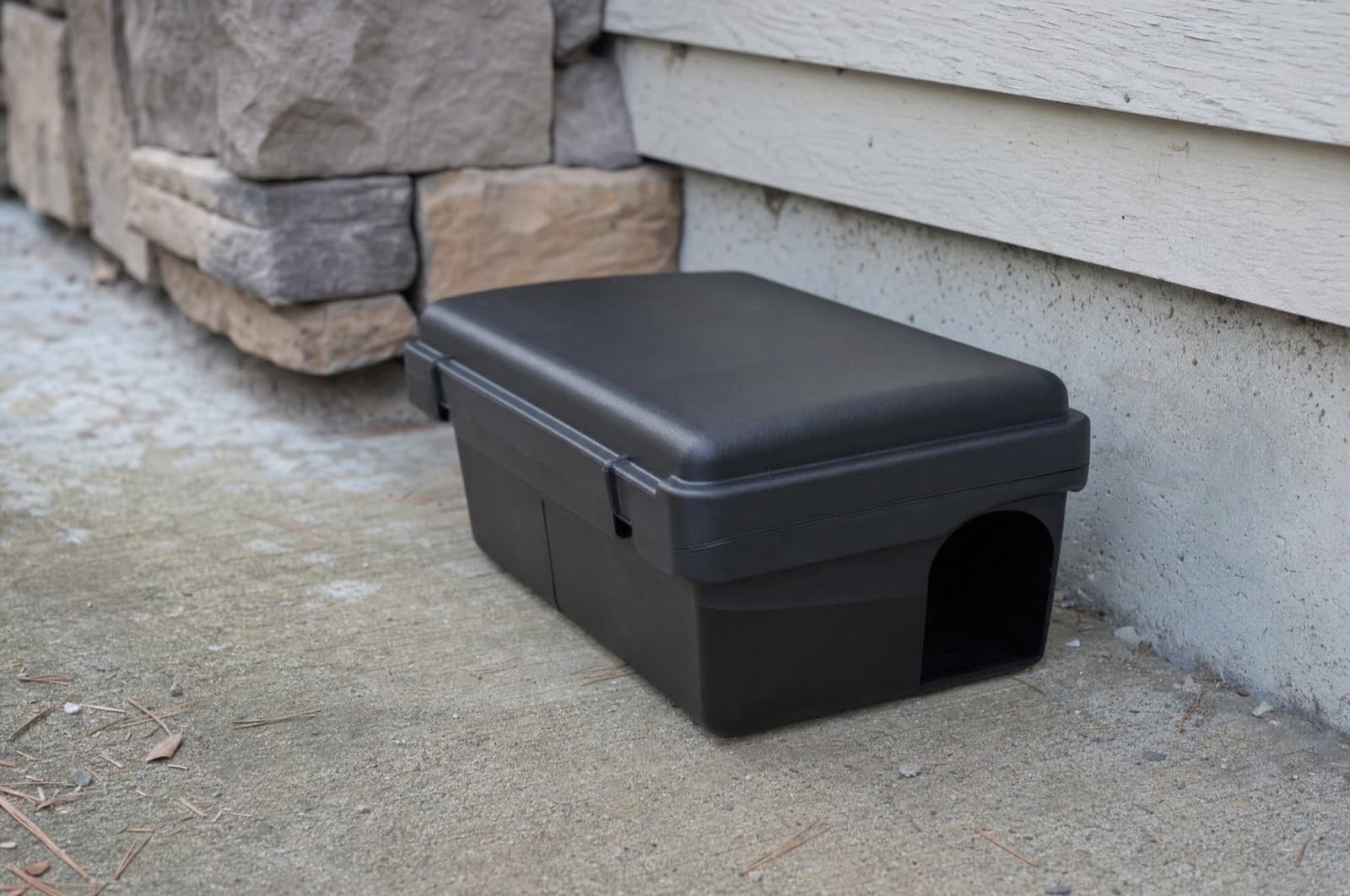
How to Use the Victor Electronic Mouse Trap
At a glance
- Efficacy: Workhorse
- Best job: Repeat, low-mess mouse kills indoors where you'd rather not see or handle the animal
- Format: Battery-powered electronic high-voltage kill trap with an enclosed chamber for no-see, no-touch disposal — a mechanical/electronic device with no toxicant
- Technique: Easy technique
Does this product actually work?
A genuine workhorse for indoor mice — clean and fast when kept dry, clean, and freshly powered.
When placed on an active indoor runway, kept clean and dry, and run on fresh batteries, an electronic trap kills quickly and disposes of the catch without ever requiring you to see or touch it — a real advantage over a snap trap for many households. The mechanism itself is reliable; nearly every failure traces back to a controllable factor: weak or old batteries, bait touching the plates and misfiring the circuit, or moisture and dust degrading conductivity. Like every trap in this cluster, it kills mice one at a time and does nothing about the entry point letting them in.
Best for
Repeat, low-mess mouse kills indoors, especially for anyone who'd rather not see or handle the animal.
Skip it for
Outdoors, damp or dusty areas (garages, basements with moisture), and rats — this is an indoor, mouse-only tool.
What it is — and what it's really for
The label is the law. Here's the honest read on the format, the one job it does well, and the job people wrongly buy it for.
The technique walkthrough
Where DIY succeeds or fails is in the placement, patience, and the small pro moves the label never mentions. Follow the label; these are the technique details on top of it.
This is an easy trap to operate, but the mechanism is unforgiving about two things — moisture and battery freshness — that decide whether it fires at all.
Install fresh batteries with the power off
Load 4 fresh AA alkaline batteries before baiting; keep the unit powered off while you handle it.
Pro moveUse quality fresh alkaline batteries, not rechargeables — conductivity and voltage are what decide the kill, and weak cells are the single most common cause of a failed strike.Bait the cup only
Add a small dab of peanut butter or similar bait into the designated bait cup — never let bait touch the metal contact plates.
Common mistakeBait on the plates instead of the cup causes a misfire or a weak, incomplete contact instead of a clean kill.Place lengthwise against the wall, entrance toward the wall
Set the trap on a dry, clean, level surface with its entrance facing the wall, directly on an active runway marked by droppings or grease rub.
Pro moveTreat this exactly like snap-trap placement — the runway evidence and wall orientation matter just as much for an electronic unit.Use several units along active runways
Deploy multiple traps rather than a single unit, spaced along the runways you've identified, and keep each chamber free of dust and debris.
Empty, clean, and dry after every catch
After a kill, empty the chamber, wipe the plates clean, and make sure the unit is fully dry before resetting.
CautionHandle the unit with dry hands and keep it away from moisture — both for reliable conductivity and for basic electrical safety.Pair with sanitation and exclusion
Remove competing food sources and identify/seal entry points alongside trapping — the trap controls mice already inside, not the ones still arriving.
Do & don't
- Use indoors only, on a dry, clean, level surface.
- Place lengthwise against the wall, entrance toward the wall.
- Keep fresh alkaline batteries in the unit at all times.
- Clean and dry the chamber after every catch.
- Use several units along active runways.
- Don't use it outdoors or in damp basements/garages — moisture disables it.
- Don't let bait touch the metal contact plates.
- Don't rely on old or rechargeable batteries.
- Don't use it for rats — it's a mouse-rated indoor device.
- Don't handle the plates while the unit is powered on.
Where it works vs. where it fails
No product fixes everything. This is the honest boundary — the situations it genuinely handles, and the ones it simply won't.
Where it works
- Mouse activity is indoors, on a dry, clean surface, and traceable to a specific runway
- You want a no-see, no-touch kill and disposal method
- The unit is kept clean, dry, and running on fresh batteries
- Several units are deployed along active runways rather than one
Where it fails
- The location is outdoors, damp, or dusty — moisture and debris are the two most common causes of a non-firing trap
- Rats, not mice, are the target — this is an indoor mouse-rated unit
- It won't fix the entry point — mice keep entering regardless of catches unless gaps are sealed
- The infestation is large or established — one-at-a-time kills can't outpace a fast-reproducing population without exclusion
Mistakes that waste the product
Using weak or rechargeable batteries
Conductivity and voltage decide the strike; underpowered batteries can produce an incomplete, non-lethal shock.
Letting bait touch the contact plates
Bait on the plates can cause a misfire or block clean contact, wasting the trap's charge on nothing.
Placing it in a damp basement or garage
Moisture disables the electrical contact the trap depends on, silently turning off its effectiveness.
Skipping exclusion work
Without sealing entry points, new mice keep replacing the ones the trap removes.
What to expect — and when
This is a fast mechanical/electronic tool — judge it by catches over the first nights, then by whether activity keeps returning at all.
First night
With correct placement, fresh batteries, and a dry runway, a catch is common overnight.
First few nights to a week
Multiple units along the runway typically account for a small, localized population.
Ongoing
Catches should taper off; continued nightly catches point to a larger population or an open entry point still feeding new mice in.
When to stop DIY & call a pro
A battery trap kills cleanly in a dry room but can't cover the damp basements and hidden voids where mice also travel. These are the signals the job has outgrown a DIY unit:
Catches keep coming week after week despite correct, multi-unit placement
Persistent catches signal an established, reproducing population that homeowner-scale trap density can't outpace.
There's evidence of rats rather than mice
This is an indoor mouse-rated device — rats need a different tool and typically professional-scale placement.
Droppings or gnawing appear in multiple rooms or floors
That spread points to an established colony, not a single incursion, and needs inspection depth beyond a homeowner's reach.
You can't identify or seal the entry point
Trapping controls mice already inside, but without exclusion, new mice keep replacing them — professional inspection finds gaps homeowners often miss.
When trapping alone can't keep pace, Anchor's licensed NH technicians combine professional-density placement with a full exclusion inspection to close the entry points trapping can't touch. Free inspection, same-day service across southern and central New Hampshire.
Still catching mice night after night?
Is it safe for pets & kids?
The short version lives here; the full per-species verdict lives on this product's pet-safety page.
This is a mechanical/electronic device with no toxicant — there's no poisoning risk. The relevant hazard is the high-voltage shock mechanism itself, so keep it out of reach of curious pets and small children and always handle it with dry hands.
Re-entry: Keep the unit powered off while handling, and place it where pets and young children can't access the chamber or contact plates.
Mouse trapping timing in New Hampshire
As southern and central New Hampshire homes button up for the cold season, mice relocate indoors seeking warmth — and a dry, heated interior is exactly where this battery trap performs best. Keep in mind it isn't suited to the damp basements, crawlspaces, and garages that also see plenty of NH mouse activity, where a standard snap trap or a stationed program holds up better. Anchor Pest Services handles both indoor trapping and exclusion work across Manchester, Nashua, Concord, and the surrounding towns.
Service area
Southern New Hampshire
Anchor Pest Services · NH license #782664 · NEPMA member · family-owned since 2017.
Frequently asked
Sources & further reading(4)
- [1]Victor Pest — M250S Electronic Mouse Trap FAQs
Battery type, bait-cup placement, and indoor-use format facts (facts only)
manufacturerverified 2026-07-14 - [2]Victor Pest — Electronic Trap Product/User Manual
Setup, placement, and battery-freshness guidance (facts only)
manufacturerverified 2026-07-14 - [3]University of Kentucky Entomology — House Mice (EF617)
Runway/perpendicular-placement principles applicable to trap orientation
extensionverified 2026-07-14 - [4]CDC — Seal Up! Rodent Control Guidance
Exclusion as the necessary complement to trapping for long-term control
govverified 2026-07-14
Written & reviewed by
VerifiedDaniel Brady
NH-Licensed Pesticide Applicator · License #782664 (NHDAMF, RSA 430)
Daniel Brady is the New Hampshire–licensed applicator behind Anchor Pest Services, a family-owned pest control company serving the Manchester area since 2017.
Last updated July 2026
Related products in this category
Same shelf, different jobs — the dot shows each product's honest efficacy verdict at a glance.
Professional Pest Control
When Trapping Alone Can't Keep Pace
Electronic traps handle a few mice cleanly, but an established or recurring population needs trap density and exclusion work most homeowners can't match. Anchor Pest Services treats the population and the entry points across southern and central New Hampshire. Family-owned since 2017, NH license #782664.
- Professional trap density + exclusion inspection
- NH-licensed applicators (#782664)
- Free inspection — same-day service across southern NH
NH License #782664 · No obligation · We answer in person
Your next step
- Book a NH pro
Rodent Control in New Hampshire
Mice and rats move indoors every fall. We trap, seal entry points and keep them out.
Book now - Book a NH pro
Pest Control Services
Licensed, family-owned pest control across southern NH.
Book now - What to do next
Is the Victor Electronic Mouse Trap Safe for Pets?
Read the answer - What to do next
Are Electronic Traps Effective for Rats?
Read the answer - What to do next
Is the Quick-Kill Mouse Trap by Victor Safe for Pets?
Read the answer - Also relevant
Is the Victor Electronic Mouse Trap Safe for Pets?
Read the answer