
How to Use Ultra Liquid Roach Bait by Hot Shot
At a glance
- Efficacy: Situational
- Best job: Exploiting a roach's need for water to deliver a slow-acting boric-acid dose near harborage
- Format: Pre-filled liquid bait stations combining a food attractant with a water source (sold in 3- and 6-count packs)
- Technique: Easy technique
Does this product actually work?
A situational supporting tool — genuinely useful near harborage and water, but not enough alone for a heavy roach infestation.
Boric acid is a proven, resistance-resistant stomach poison that extension guidance and NPIC both recognize as an effective bait active, and this format cleverly pairs it with a roach's need for water. But a liquid station only works if roaches choose it over the food and water already available in most kitchens and bathrooms, and NPIC notes borate efficacy drops when the bait itself gets wet or diluted — so results hinge heavily on placement density and cutting off competing moisture. Used as one tool among several near harborage, it's a genuine assist; relied on alone against a dense, established population, it will underperform.
Best for
Light-to-moderate cockroach activity near sinks, appliances, and bathrooms, especially paired with sanitation that removes competing water.
Skip it for
A heavy or established German-roach infestation as a standalone fix, and populations showing glucose aversion to sweet-matrix baits.
What it is — and what it's really for
The label is the law. Here's the honest read on the format, the one job it does well, and the job people wrongly buy it for.
The technique walkthrough
Where DIY succeeds or fails is in the placement, patience, and the small pro moves the label never mentions. Follow the label; these are the technique details on top of it.
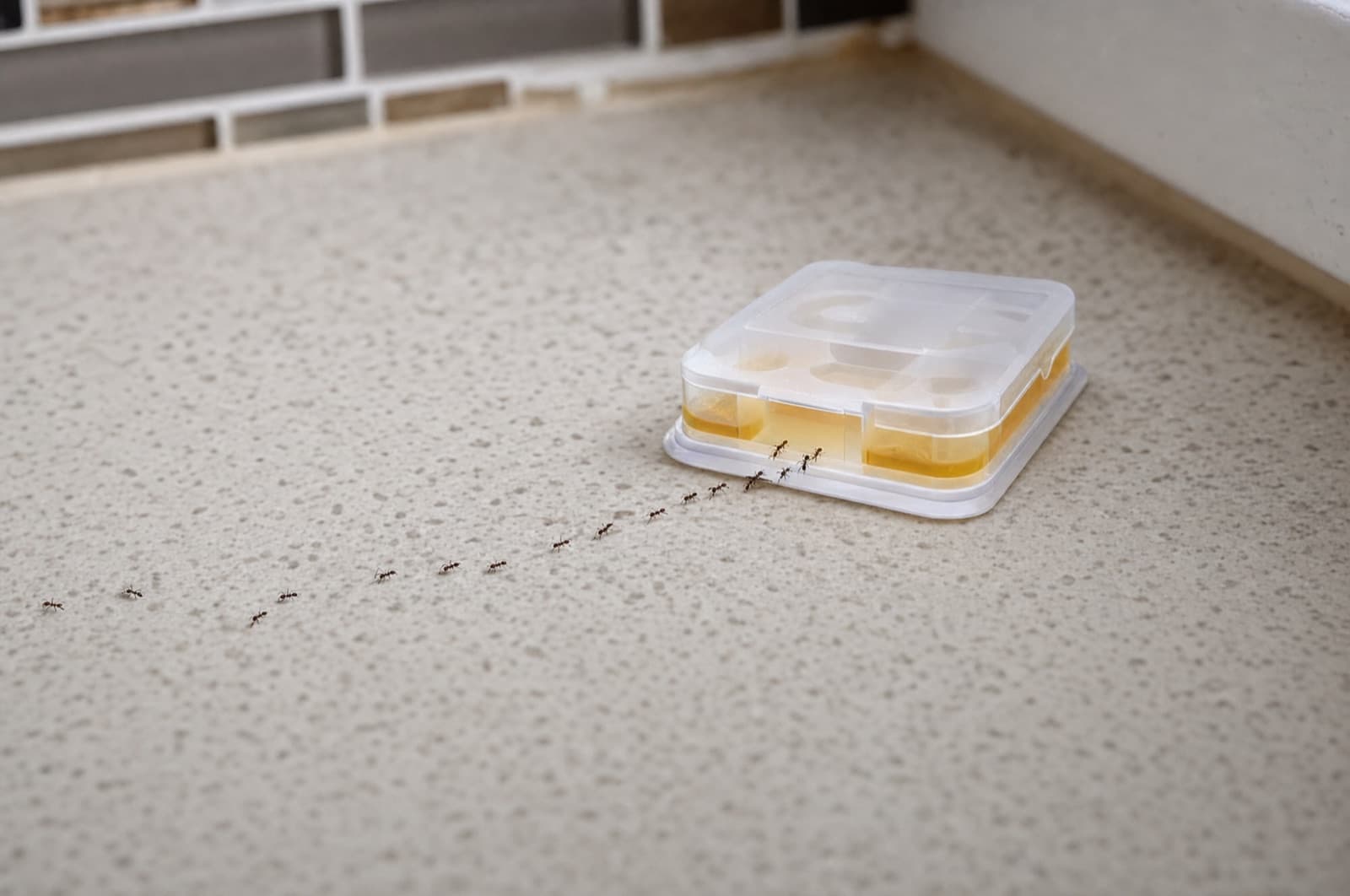
This is a harborage-and-moisture play, not a trail-following one — the placement logic mirrors gel-bait discipline far more than it mirrors Terro's ant stations.
Inspect for harborage and moisture, not a trail
Roaches don't lay a visible scent trail the way ants do — locate harborage (cracks, appliance voids, cabinet corners) and existing moisture sources (under sinks, behind the fridge, bathrooms) instead.
Common mistakePlacing stations the way you would an ant bait, on an open path — roaches respond to harborage and water, not a foraging line.Place many stations near walls, harborage, and water
Position stations along walls and in out-of-the-way places near cabinets, closets, under sinks, and refrigerators — label guidance suggests up to five stations in a typical kitchen and one in a bathroom.
Pro moveConcentrate placements where you've actually seen roaches or fecal spotting, not just anywhere convenient.Cut off competing water
Fix drips, dry out sinks overnight, and remove standing pet water where practical so the bait's water lure has less competition.
Pro moveReducing competing moisture is the single highest-leverage move for this product — it directly determines whether roaches choose the station.Keep sprays and foggers away from stations
Do not use aerosol insecticide or foggers near the placements.
CautionRepellent residue drives roaches away from the exact spot the bait needs them to visit.Check monthly and replace on schedule
Inspect stations about once a month and replace them roughly every three months, or sooner if a station runs empty.
Common mistakeLeaving an emptied or dried-out station in place for months, assuming it's still contributing.
Do & don't
- Place many stations near harborage and existing moisture
- Cut off competing water sources (leaks, wet sinks, pet water left out overnight)
- Check monthly and replace on schedule
- Place out of reach of pets and children
- Don't place it like an ant bait on an open trail — follow harborage logic instead
- Don't spray or fog near the stations
- Don't rely on it alone for a heavy, established infestation
- Don't ignore nearby leaks or standing water
Where it works vs. where it fails
No product fixes everything. This is the honest boundary — the situations it genuinely handles, and the ones it simply won't.
Where it works
- Roach activity is light to moderate and near identifiable harborage/moisture
- Competing water sources can be reduced (leaks fixed, sinks dried)
- Stations are placed in enough locations near real harborage
- It's used alongside sanitation, not as the only control step
Where it fails
- The infestation is heavy or building-wide — beyond what a few stations can dose
- Competing water is abundant and easy for roaches to reach
- The local roach population shows glucose aversion to sweet-matrix baits
- Stations are placed away from harborage, in the open
Mistakes that waste the product
Placing stations away from harborage
Roaches rarely travel to open, exposed spots, so an out-of-place station sees little traffic.
Leaving competing water sources active
Roaches will choose an easier water source over the station every time.
Spraying or fogging nearby
Repellent residue drives roaches away from the station.
Relying on it alone for a heavy infestation
A few stations can't dose a large, established German-roach population fast enough.
Leaving empty or expired stations in place
A dried-out station stops contributing even though it looks like it's still working.
What to expect — and when
Judge this as a supporting tool — the label markets fast kill of feeding roaches, but population-level change takes weeks and depends on adoption.
Hours after a roach drinks from the station
The manufacturer markets fast kill of individual feeding roaches, though this depends on the roach choosing the station over other water sources.
1-3 weeks
Some reduction in harborage-area activity if placement and sanitation are correct — a slower, population-level effect, not a single-day one.
Ongoing (monthly checks)
Sustained results depend on replacing stations on schedule and keeping competing moisture down.
When to stop DIY & call a pro
This product is a supporting tool, not a solo fix for a real infestation. Bridge to a pro when:
Roaches persist beyond a few weeks of correct placement and sanitation
Continued activity despite the right technique usually means the population has outgrown what stations alone can dose.
Roaches appear in multiple rooms or units, or you see them in daylight
Daytime sightings and multi-room spread typically indicate an established, building-scale population.
You suspect German cockroaches with a history of bait resistance
Some German-roach populations show glucose aversion or pyrethroid resistance, defeating consumer products regardless of correct technique.
When station placement and sanitation aren't closing out roach activity, Anchor's licensed NH technicians treat the harborage directly with professional-grade methods. Free inspection, same-day service across southern and central New Hampshire.
Roaches still active after correct placement?
Is it safe for pets & kids?
The short version lives here; the full per-species verdict lives on this product's pet-safety page.
Boric-acid liquid stations are lower in acute toxicity than many sprays in this hub, but the enclosed reservoir isn't meant for pet or child access. Placement out of reach is the main precaution.
Re-entry: Place and keep stations out of reach of pets and children — under appliances or in cabinet corners, not open floor.
Roach pressure in New Hampshire
German cockroaches can't survive away from heated structures, so in NH they're strictly an indoor, heat-dependent problem rather than a seasonal outdoor one — meaning a station program can run year-round without a seasonal on/off switch. Because activity tends to concentrate near kitchen and bathroom moisture in NH homes, cutting off competing water is often the highest-leverage step here. Anchor Pest Services treats established roach populations across Manchester, Nashua, Concord, and the surrounding towns.
Service area
Southern New Hampshire
Anchor Pest Services · NH license #782664 · NEPMA member · family-owned since 2017.
Frequently asked
Sources & further reading(4)
- [1]Hot Shot — Ultra Liquid Roach Bait product page
Station format, placement counts, and monthly check / ~3-month replacement guidance (facts only, not the efficacy verdict)
manufacturerverified 2026-07-14 - [2]NPIC — Boric Acid General Fact Sheet
Boric acid stomach-poison mode of action and sensitivity of efficacy to moisture/dilution
npicverified 2026-07-14 - [3]UC Statewide IPM Program — Cockroaches Pest Notes
Baits provide better cockroach control than sprays; species ID and sanitation/exclusion are required alongside baiting
extensionverified 2026-07-14 - [4]DeVries, Santangelo, Crissman, Mick & Schal, 'Exposure risks and ineffectiveness of total release foggers (TRFs) used for cockroach control,' BMC Public Health 19:96 (2019)
Field comparison showing gel baits significantly reduced cockroach populations while fogger-style products did not
academicverified 2026-07-14
Written & reviewed by
VerifiedDaniel Brady
NH-Licensed Pesticide Applicator · License #782664 (NHDAMF, RSA 430)
Daniel Brady is the New Hampshire–licensed applicator behind Anchor Pest Services, a family-owned pest control company serving the Manchester area since 2017.
Last updated July 2026
Related products in this category
Same shelf, different jobs — the dot shows each product's honest efficacy verdict at a glance.
Professional Pest Control
When a Bait Station Isn't Enough
A liquid roach bait genuinely helps near harborage and moisture, but a heavy or building-wide German-roach population needs more than a handful of stations. Anchor Pest Services treats the actual source with targeted, licensed methods across southern and central New Hampshire. Family-owned since 2017, NH license #782664.
- Targeted harborage treatment, not just more stations
- NH-licensed applicators (#782664)
- Free inspection — same-day service across southern NH
NH License #782664 · No obligation · We answer in person
Your next step
- Book a NH pro
Cockroach Control
Book now - Book a NH pro
Pest Control Services
Licensed, family-owned pest control across southern NH.
Book now - What to do next
Is Hot Shot Ultra Liquid Roach Bait Safe for Pets?
Read the answer - What to do next
Is MaxAttrax Roach Bait by Hot Shot Safe for Pets?
Read the answer - Also relevant
Is Hot Shot Ultra Liquid Roach Bait Safe for Pets?
Read the answer - Also relevant
Chemical Control for Occasional Invaders, Fabric Pests & Bed Bugs
Read the answer