
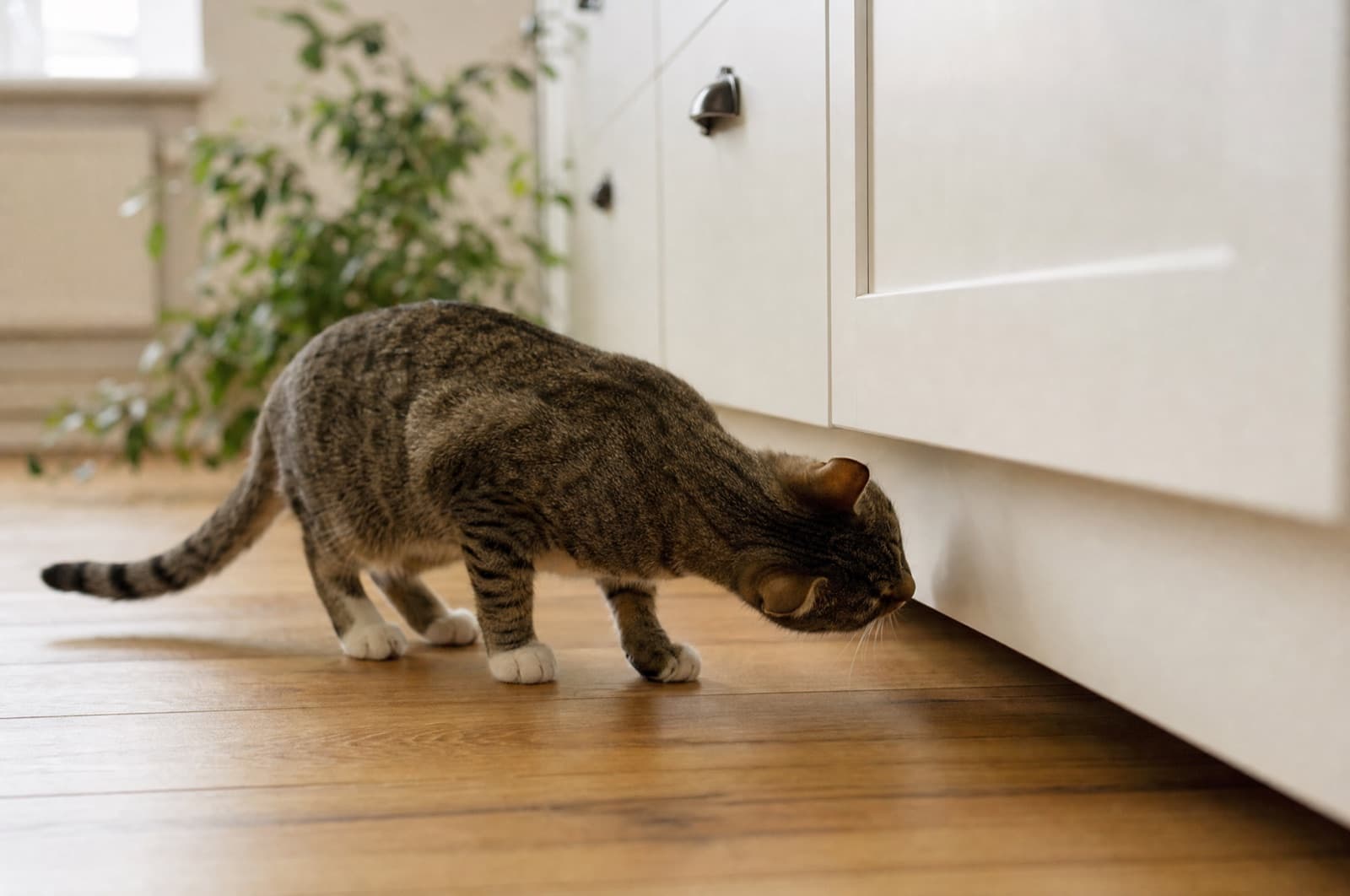
Is Hot Shot Ultra Liquid Roach Bait Safe for Pets?
At a Glance
- Product: Ultra Liquid Roach Bait by Hot Shot · Hot Shot
- Active ingredient: Dinotefuran 0.05%
- Re-entry: Not applicable in the spray sense; pods should stay pet-inaccessible for the full time they're deployed.
- Cat owners: Cats differ — read the cat card below
The short, honest answer
The score rolls up every per-species verdict below, weighted by the honest exposure that matters — a chewed-open tube, not a hidden dab — and is checked against the EPA label and veterinary toxicology.
A different chemistry from Terro's borax stations — low mammalian toxicity, but the sealed pods still need pet-proof placement.
Hot Shot Ultra Liquid Roach Bait uses dinotefuran (0.05%, EPA Reg. No. 9688-239-8845) — a neonicotinoid, not the borax found in Terro's ant-bait liquids that share this cluster. Dinotefuran binds insect nerve receptors far more strongly than mammalian ones, giving it a genuinely low mammalian-toxicity profile, and the Merck Veterinary Manual notes serious signs are unlikely with typical exposure. That does not make the pods disposable around pets, though — the label itself directs against letting children or pets play with the bait stations, and a pried-open or knocked-over pod exposes more liquid than roaches ever remove. Placement out of reach is still the operative safeguard.
General information, not veterinary advice. For a suspected exposure, contact your veterinarian or a pet-poison hotline. Verdict checked 2026-07-13 against the EPA label and veterinary toxicology.
It's not one answer — it's one per animal
Cats, birds, and fish routinely differ sharply from dogs. That contrast is the whole point of this scorecard, and no manufacturer page draws it.
- DogsCaution
- CatsCaution
- Small mammalsAvoid
- BirdsCaution
- FishCaution
Low mammalian toxicity, but a chewed-open pod is an avoidable exposure
Neonicotinoids like dinotefuran have low mammalian toxicity, and the Merck Veterinary Manual notes serious signs are unlikely, but a dog that chews open a station drinks a larger, avoidable amount of the reservoir.
Merck Veterinary Manual — Neonicotinoid Toxicosis in Animals
Generally well tolerated — monitor after any opened-station exposure
Cats generally tolerate dinotefuran well, but they can groom spilled liquid off fur or paws, so monitor for GI or mild neurological signs after any opened-station contact.
Merck Veterinary Manual — Neonicotinoid Toxicosis in Animals
Keep pet rodents and rabbits entirely away from stations
Small body size combined with a full reservoir warrants keeping pet rodents and rabbits away from these stations entirely, even though the active itself is comparatively low-toxicity.
Anchor Pest Services product research
Reported low toxicity to birds, but cage-free birds should still avoid stations
Dinotefuran is reported as practically non-toxic to birds, but that's not a reason to allow access — cage-free birds should still not be able to reach or peck at a station.
Anchor Pest Services product research
Reported nontoxic to fish, but avoid water contamination as a rule
Dinotefuran is reported nontoxic to fish and algae, but per EPA/ChemicalBook it is highly toxic to marine/estuarine mysid shrimp and to honey bees — avoid letting any liquid reach water regardless.
EPA/ChemicalBook data via manufacturer SDS
What's in it — and what it does to pets
Dinotefuran is a neonicotinoid that acts as an agonist at insect nicotinic acetylcholine receptors, to which it binds far more strongly than mammalian receptors — the basis of its low mammalian-toxicity profile. The Merck Veterinary Manual states serious signs are unlikely in pets, with any mild signs typically resolving under supportive veterinary care. It carries a notably different toxicological story from the borax found in this cluster's Terro liquid ant baits — the two should not be graded the same way.
Merck Veterinary Manual — Neonicotinoid Toxicosis in Animals; ScienceDirect — Dinotefuran overview
How to use it safely around pets
This is a sealed-pod liquid bait, not a spray — there's no dry-time window. The safeguard is where the pods sit and whether a pet can pry one open.
Place sealed pods flat, label-side up, out of pet reach
Position pods under sinks, behind or under appliances, and inside closets and cabinets — spots pets can't easily bat, chew, or tip.
Do not puncture or open pods yourself
Use the pods sealed and intact as designed; never transfer the liquid to another container.
Check pods periodically for damage
Confirm pods remain sealed, upright, and undisturbed; look for chew marks, cracks, or signs a pet has been pawing at one.
Discard emptied or damaged pods promptly
Replace any pod that's cracked, leaking, or already emptied, and dispose of it where pets can't retrieve it from the trash.
There's no drying window with a sealed liquid pod — the safeguard is placement and pod integrity, checked continuously.
Not applicable in the spray sense; pods should stay pet-inaccessible for the full time they're deployed.
A knocked-over or chewed-open pod is the realistic exposure scenario, not the small amount roaches remove.
Rather not track sealed-pod placement yourself?
Anchor's licensed NH technicians place and monitor bait securely, out of pet reach.
Symptoms to watch for
A sign, its urgency, and what to do — never a diagnosis. When in doubt, the emergency panel below is one tap away.
- Mild
Drooling or gagging
- Moderate
Vomiting
- Moderate
Lethargy
- Serious
Mild incoordination or tremor (higher intake)
Uncommon; signs are typically mild and resolve with supportive care
Act now — call a vet or a pet-poison line
Do not induce vomiting unless told to
If your pet accessed an opened, cracked, or chewed pod, act now — estimate how much liquid is missing and bring the pod or a photo of the label when you call. This page is general information, not veterinary advice — for a suspected exposure, contact your veterinarian or ASPCA Animal Poison Control (888-426-4435) right away.
What each situation calls for
Your pet nosed or licked an intact, sealed pod
Low-concern given dinotefuran's mammalian-safety profile, but there's no need to leave the pod accessible — relocate it and monitor your pet briefly.
A pod was found chewed open, cracked, or empty
Call your vet or a pet poison hotline and describe how much liquid is missing — even though signs are usually mild, an opened-station ingestion merits a call.
Your pet shows vomiting or mild tremor after exposure
Contact your veterinarian for guidance; supportive care typically resolves neonicotinoid exposure, but professional confirmation is still worthwhile.
In the next 60 seconds
- Move your pet away from the pod and any spilled liquid.
- Estimate how much liquid is missing from the pod — this helps a vet or hotline gauge the exposure.
- Do NOT induce vomiting unless a veterinarian or poison expert tells you to.
- Have the product name and EPA registration number (9688-239-8845) ready.
- Call your veterinarian or one of the hotlines below.
ASPCA Animal Poison Control
(888) 426-4435
24/7; a consultation fee may apply
Pet Poison Helpline
(855) 764-7661
24/7; a per-incident fee applies
Northern New England Poison Center
(800) 222-1222
24/7 human poison control — for household/child exposure context; call a vet or the pet lines above for pet guidance
Safer pet-friendly alternatives
Honest options that reduce or remove pet-toxicity — no affiliate hype, real caveats included.
Sanitation — remove water and food sources
SaferNon-chemical
Eliminating the moisture and food roaches seek reduces the reason bait is needed at all, with zero pet toxicity.
Doesn't eliminate an established infestation on its own; pairs well with securely placed bait.
Sealed bait stations kept out of reach
SaferEnclosed bait
Any enclosed roach bait format benefits from the same placement discipline — somewhere a pet genuinely cannot bat, chew, or tip it.
Still contains an insecticide — check integrity regularly.
Indoxacarb gel in true voids
SaferAlternative bait chemistry
A favorable selective-toxicity active placed strictly in inaccessible cracks and crevices — a genuinely different format and chemistry from a liquid pod.
Not risk-free — apply the same out-of-reach placement standard.
Professional roach control (Anchor Pest Services)
SaferLicensed professional service
A licensed applicator places sealed bait at locations chosen specifically to be inaccessible to pets and checks integrity on a schedule.
A service, not a product — request a pet-safety-focused plan.
Pet-safe roach control in New Hampshire
Because New Hampshire winters are too cold for cockroaches to survive outdoors, a roach problem here is almost always the German cockroach breeding indoors in the warm, moist kitchens and basements this liquid bait targets. Homeowner use of a sealed retail pod needs no NH license, but pest control performed for hire in New Hampshire must be done by an applicator licensed by the NH Department of Agriculture, Markets & Food (NHDAMF) Division of Pesticide Control under RSA 430. Anchor Pest Services is NH-licensed (#782664) and places and monitors bait pet-consciously across Manchester, Nashua, Concord, and the surrounding towns.
NH-licensed applicator #782664 (NHDAMF, RSA 430) · NEPMA member · family-owned since 2017.
Service Area Map
Southern New Hampshire
Frequently asked questions
Sources(4)
- [1]Hot Shot — Ultra Liquid Roach Bait Product Page
Product format and station design (facts only, not the verdict)
manufacturerverified 2026-07-13 - [2]Manufacturer SDS — Hot Shot Ultra Liquid Roach Bait (EPA Reg. No. 9688-239-8845)
Verified active (dinotefuran 0.05%), "do not let pets play with stations" directive
manufacturerverified 2026-07-13 - [3]Merck Veterinary Manual — Neonicotinoid Toxicosis in Animals
Low mammalian toxicity, clinical signs and prognosis
veterinaryverified 2026-07-13 - [4]ScienceDirect — Dinotefuran Overview
Mechanism of action, selective receptor-binding data
academicverified 2026-07-13
Written & reviewed by
VerifiedDaniel Brady
NH-Licensed Pesticide Applicator · License #782664 (NHDAMF, RSA 430)
Daniel Brady is the New Hampshire–licensed applicator behind Anchor Pest Services, a family-owned pest control company serving the Manchester area since 2017.
Last updated 2026-07-13
Pet-Safe Professional Pest Control
Skip the Guesswork — and the Chewed-Open-Pod Risk
DIY liquid bait means checking pod integrity yourself. Anchor Pest Services treats roaches with targeted, pet-aware placement across southern and central New Hampshire. Family-owned since 2017, NH license #782664.
- Pet-conscious targeted treatment
- NH-licensed applicators (#782664)
- Free inspection — same-day service across southern NH
NH License #782664 · No obligation · We answer in person
Your next step
- Book a NH pro
Cockroach Control
Book now - Book a NH pro
Pest Control Services
Licensed, family-owned pest control across southern NH.
Book now - Next step
Are Cockroaches Active at Night? NH Roach Timing Guide
Read the answer - What to do next
How to Use Ultra Liquid Roach Bait by Hot Shot
Read the answer - What to do next
How to Use MaxAttrax Roach Bait by Hot Shot
Read the answer - Also relevant
Chemical Control for Roaches, Silverfish, Crickets & Termites
Read the answer