
Is CB-80 Aerosol Insecticide Safe for Pets?
At a Glance
- Product: CB-80 Aerosol Insecticide by FMC · FMC
- Active ingredient: Pyrethrins 0.50%, Piperonyl Butoxide (PBO) 4.00%
- Re-entry: No long residual — the product breaks down in light and air — but the acute airborne exposure during and shortly after spraying is the main pet-safety window; ventilate before pets return.
- Cat owners: Cats differ — read the cat card below
The short, honest answer
The score rolls up every per-species verdict below, weighted by the honest exposure that matters — a chewed-open tube, not a hidden dab — and is checked against the EPA label and veterinary toxicology.
Natural pyrethrins alone are low-toxicity — but the PBO synergist in this can specifically amplifies toxicity in mammals.
CB-80 (EPA Reg. No. 279-3393) is a synergized pyrethrin flushing and contact aerosol — pyrethrins 0.50% at an 8:1 ratio with piperonyl butoxide (PBO) 4.00%. Natural pyrethrins have a lower mammalian-toxicity profile than synthetic pyrethroids and leave no meaningful residue once aerosol settles. The important nuance: PBO is added specifically to block the liver enzymes that detoxify pyrethrins in both insects and mammals, which the Merck Veterinary Manual describes as potentiating toxicity in mammals — a direct reason cats especially should stay away from wet or airborne product.
General information, not veterinary advice. For a suspected exposure, contact your veterinarian or a pet-poison hotline. Verdict checked 2026-07-13 against the EPA label and veterinary toxicology.
It's not one answer — it's one per animal
Cats, birds, and fish routinely differ sharply from dogs. That contrast is the whole point of this scorecard, and no manufacturer page draws it.
- DogsCaution
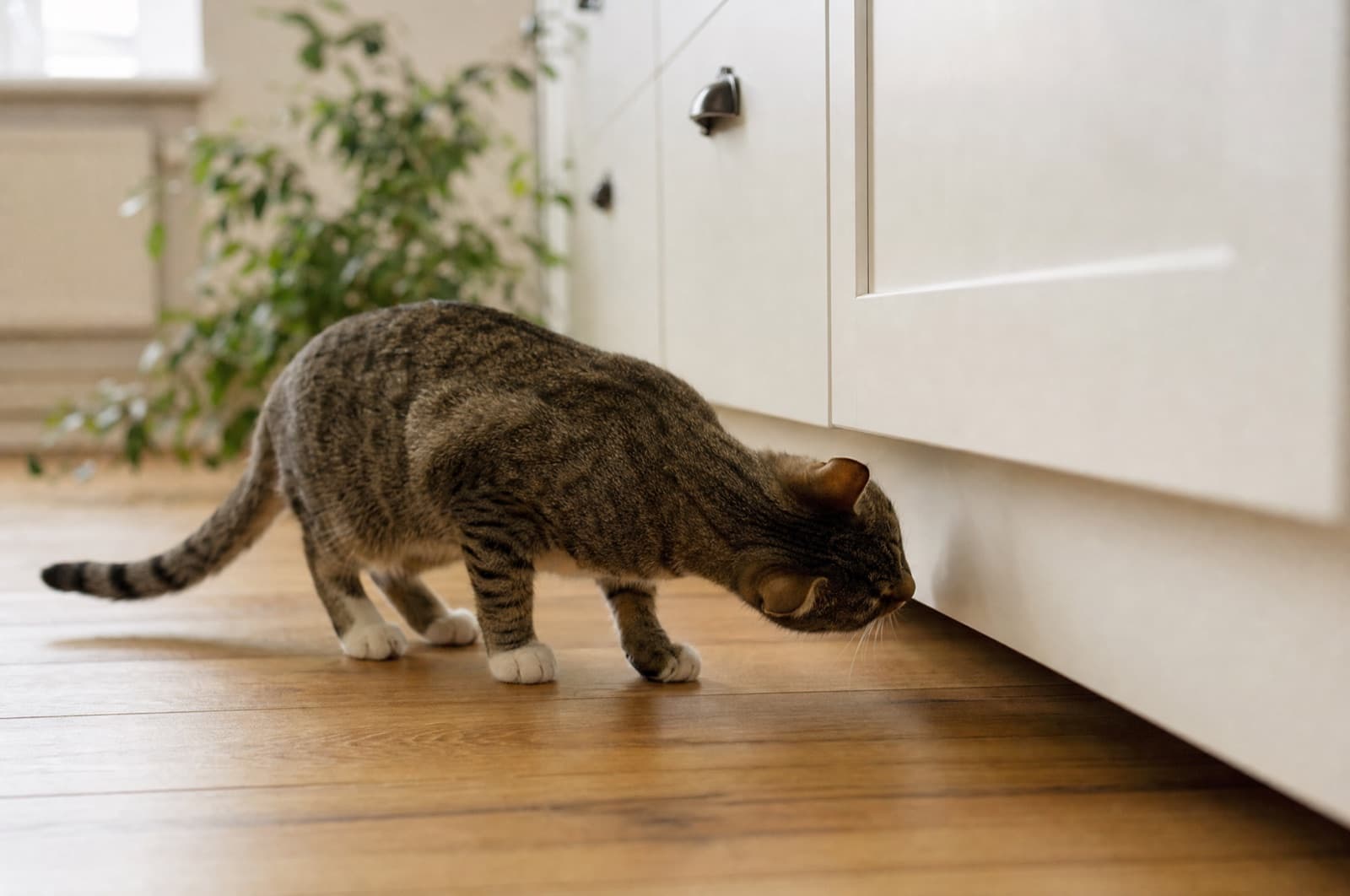
- CatsAvoid
- Small mammalsCaution
- BirdsAvoid
- FishAvoid
Low-toxicity active, but the synergist raises the stakes
Pyrethrins alone are low-toxicity to dogs, but the PBO synergist in this formula increases the pyrethrins' potency and effect. Keep dogs off treated surfaces until the aerosol has settled and everything is dry.
Merck Veterinary Manual — Pesticide Potentiating Agent Toxicosis in Animals
The PBO synergist is a specific reason to keep cats away
Cats already can't efficiently metabolize pyrethrins due to limited liver glucuronidation. Per the Merck Veterinary Manual, synergists like PBO 'potentiate toxicity in mammals' by inhibiting the very detoxifying enzymes cats rely on most. Keep cats out of the room during use and off surfaces until fully dry.
Merck Veterinary Manual — Pesticide Potentiating Agent Toxicosis in Animals
Remove during application — space-spray use means airborne exposure
CB-80 is used as a space or flushing spray with meaningful airborne particle exposure, and small mammals have a high respiratory rate relative to body size. Remove enclosures during use and until the space is ventilated.
NPIC general aerosol-exposure guidance
Remove birds before use — this is a space/flushing aerosol
Used as a space spray for flushing flying insects out of hiding, this product creates more airborne exposure than a targeted spot spray. Birds' respiratory systems are exceptionally sensitive to inhaled aerosol; remove them entirely before use.
NPIC; veterinary avian-toxicology guidance
Cover aquariums — pyrethrins are toxic to fish
Pyrethrins, even the natural form, are toxic to fish and aquatic invertebrates. Cover aquariums and turn off air pumps during and after application.
NPIC pyrethrins/pyrethroids fact sheet
What's in it — and what it does to pets
A botanical (chrysanthemum-derived) insecticide with a lower baseline mammalian-toxicity profile than synthetic pyrethroids and no meaningful residual buildup. In sensitive pets, especially cats, it can still cause drooling, tremors, twitching, and hyperexcitability.
NPIC pyrethrins/pyrethroids fact sheet
A synergist, not an insecticide on its own, added to make pyrethrins more effective by inhibiting the mixed-function oxidase enzymes that break them down. The Merck Veterinary Manual is explicit that this same mechanism potentiates pyrethrin toxicity in mammals — the pyrethrins in this can are effectively stronger against pets than pyrethrins alone would be.
Merck Veterinary Manual — Pesticide Potentiating Agent Toxicosis in Animals
How to use it safely around pets
CB-80 is used as a space or crack-and-crevice spray with no meaningful residual — it breaks down in light and air. Ventilating fully and keeping pets out during and immediately after use matters more here than with a residual product.
Remove pets and cover aquariums
Take all pets — including caged birds, small mammals, and fish tanks that can't be covered — out of the treatment area before you start.
Apply as a space or crack-and-crevice spray per label
Use for flushing insects from hiding places or as a targeted crack-and-crevice treatment, following label directions for the specific use.
Ventilate and let the aerosol settle before pets return
Because PBO amplifies the pyrethrins' effect, give the room extra ventilation time beyond just visible dryness before letting pets — especially cats — back in.
Store sealed and out of reach
Store the can upright, sealed, and out of pets' and children's reach, away from heat.
Keep pets out during application and until the aerosol has fully settled and surfaces are dry.
No long residual — the product breaks down in light and air — but the acute airborne exposure during and shortly after spraying is the main pet-safety window; ventilate before pets return.
Because PBO potentiates pyrethrin toxicity in mammals, give cats extra time and ventilation beyond the minimum.
This is a professional flushing spray — let a professional place it
Anchor's licensed NH technicians use calibrated ventilation and pet-removal protocols.
Symptoms to watch for
A sign, its urgency, and what to do — never a diagnosis. When in doubt, the emergency panel below is one tap away.
- Moderate
Drooling or hypersalivation
Often the earliest sign in cats; may be amplified by the PBO synergist
- Moderate
Paw flicking, ear or skin twitching
- Moderate
Vomiting
- Serious
Tremors
- Serious
Hyperexcitability or agitation
- Emergency
Seizures
Most likely in cats with significant exposure — seek emergency care
Act now — call a vet or a pet-poison line
Do not induce vomiting unless told to
If your pet ate, licked, or was in the room during spraying, act now — bring the can or a photo of the label when you call. This page is general information, not veterinary advice — for a suspected exposure, contact your veterinarian or ASPCA Animal Poison Control (888-426-4435) right away.
What each situation calls for
Your pet was in the room during or shortly after spraying
Move your pet to fresh air immediately and ventilate the treated space. Call your vet or a pet poison hotline if you notice drooling, twitching, or tremors.
Your cat is drooling, twitching, or tremoring
Treat as urgent — cats can't efficiently clear pyrethrins, and the PBO in this product specifically amplifies that effect. Call your vet or ASPCA Animal Poison Control immediately and bring the can or a photo of the label.
A bird was in the room during spraying
Move the bird to fresh air at once and contact an avian vet or a pet poison hotline — this is a space-spray product with real inhalation exposure.
In the next 60 seconds
- Get your pet away from the treated area and any wet product.
- Ventilate the space and move your pet to fresh air.
- Do NOT induce vomiting unless a veterinarian or poison expert tells you to.
- Have the product name and EPA registration number (279-3393) ready.
- Call your veterinarian or one of the hotlines below.
ASPCA Animal Poison Control
(888) 426-4435
24/7; a consultation fee may apply
Pet Poison Helpline
(855) 764-7661
24/7; a per-incident fee applies
Northern New England Poison Center
(800) 222-1222
24/7 human poison control — for household/child exposure context; call a vet or the pet lines above for pet guidance
Safer pet-friendly alternatives
Honest options that reduce or remove pet-toxicity — no affiliate hype, real caveats included.
Enclosed/tamper-resistant bait stations
SaferEnclosed bait (kept out of pet reach)
The active is sealed inside a station instead of dispersed as an aerosol, cutting airborne and grooming exposure.
Still contains an insecticide — place where pets and children can't pry them open.
Mechanical exclusion + sanitation
SaferNon-chemical
Caulking entry points, fixing moisture, and removing food removes the reason insects come in — zero pet-toxicity.
Slower than a spray and needs consistency.
Un-synergized, low-concentration botanical sprays
SaferBotanical / minimum-risk
A pyrethrin product without a PBO-style synergist avoids the toxicity-amplification effect this product's synergist adds.
Confirm the label — many consumer 'natural' sprays still include a synergist.
Professional pet-conscious treatment (Anchor Pest Services)
SaferLicensed professional service
This is a professional-grade flushing/space-spray product; licensed applicators use it with calibrated ventilation and pet-removal protocols.
A service, not a product — request a pet-safety-focused plan.
Pet-safe professional pest control in New Hampshire
CB-80 is a professional pyrethrin flushing aerosol meant for calibrated, ventilated use, not casual homeowner spraying around pets. In New Hampshire, applying insecticides for hire requires an applicator licensed and certified by the NH Department of Agriculture, Markets & Food (NHDAMF) Division of Pesticide Control under RSA 430 — the kind of training that dictates where and how a flushing agent is used indoors. Anchor Pest Services holds that NH license (#782664) and provides pet-conscious treatment across Manchester, Nashua, Concord, and the surrounding towns.
NH-licensed applicator #782664 (NHDAMF, RSA 430) · NEPMA member · family-owned since 2017.
Service Area Map
Southern New Hampshire
Frequently asked questions
Sources(4)
- [1]FMC — CB-80 for Insect Control EPA Label (Reg. No. 279-3393)
Verified actives (pyrethrins 0.50%, PBO 4.00%), use directions
epa_labelverified 2026-07-13 - [2]Merck Veterinary Manual — Pesticide Potentiating Agent Toxicosis in Animals
PBO mechanism and mammalian-toxicity potentiation
veterinaryverified 2026-07-13 - [3]NPIC — Pyrethrins and Pyrethroids Fact Sheet
Class-level mode of action and pet risk
npicverified 2026-07-13 - [4]Merck Veterinary Manual — Pyrethrin and Pyrethroid Toxicosis
Cat glucuronidation deficiency; clinical signs
veterinaryverified 2026-07-13
Written & reviewed by
VerifiedDaniel Brady
NH-Licensed Pesticide Applicator · License #782664 (NHDAMF, RSA 430)
Daniel Brady is the New Hampshire–licensed applicator behind Anchor Pest Services, a family-owned pest control company serving the Manchester area since 2017.
Last updated 2026-07-13
Pet-Safe Professional Pest Control
A Synergized Space Spray Deserves Professional Handling
DIY use of a PBO-synergized aerosol puts the ventilation and pet-removal burden on you. Anchor Pest Services treats flying and crawling pests with targeted, pet-aware methods across southern and central New Hampshire. Family-owned since 2017, NH license #782664.
- Pet-conscious targeted treatment
- NH-licensed applicators (#782664)
- Free inspection — same-day service across southern NH
NH License #782664 · No obligation · We answer in person
Your next step
- Book a NH pro
Pest Control Services
Licensed, family-owned pest control across southern NH.
Book now - What to do next
How to Use CB-80 Aerosol Insecticide by FMC
Read the answer - What to do next
How to Use Transport Mikron Insecticide by FMC
Read the answer - Also relevant
Chemical Wasp & Hornet Control: Aerosols, Timing & Allergy Safety
Read the answer - Also relevant
Chemical Control for Roaches, Silverfish, Crickets & Termites
Read the answer - Related guide
Is D-Force Insecticide Aerosol Spray Safe for Pets?
Read the answer