
Is the Max Defense System for Roaches by Combat Safe for Pets?
At a Glance
- Product: Max Defense System for Roaches by Combat · Combat
- Active ingredient: Fipronil (bait stations) 0.05%, Fipronil (gel syringe) 0.01%
- Re-entry: Not applicable in the same way as a spray; the safety window is set by where the gel and stations sit relative to where pets can reach, checked continuously.
- Cat owners: Cats differ — read the cat card below
The short, honest answer
The score rolls up every per-species verdict below, weighted by the honest exposure that matters — a chewed-open tube, not a hidden dab — and is checked against the EPA label and veterinary toxicology.
The sealed stations are low-risk — the exposed gel is the part that needs pet-proof placement.
Max Defense is a two-part system: child-resistant fipronil bait stations (0.05%) plus a separate syringe of fipronil gel (0.01%) meant for cracks and crevices. The sealed stations behave like other enclosed bait products in this hub — low-risk while intact, hazardous if a dog chews one open. The gel is the higher-risk component because it's applied openly rather than sealed inside plastic, which means a pet could physically lick it if it's placed anywhere reachable. Used correctly — gel pushed deep into voids pets can't access, stations placed where they can't be chewed open — both components carry real but manageable risk.
General information, not veterinary advice. For a suspected exposure, contact your veterinarian or a pet-poison hotline. Verdict checked 2026-07-13 against the EPA label and veterinary toxicology.
It's not one answer — it's one per animal
Cats, birds, and fish routinely differ sharply from dogs. That contrast is the whole point of this scorecard, and no manufacturer page draws it.
- DogsCaution
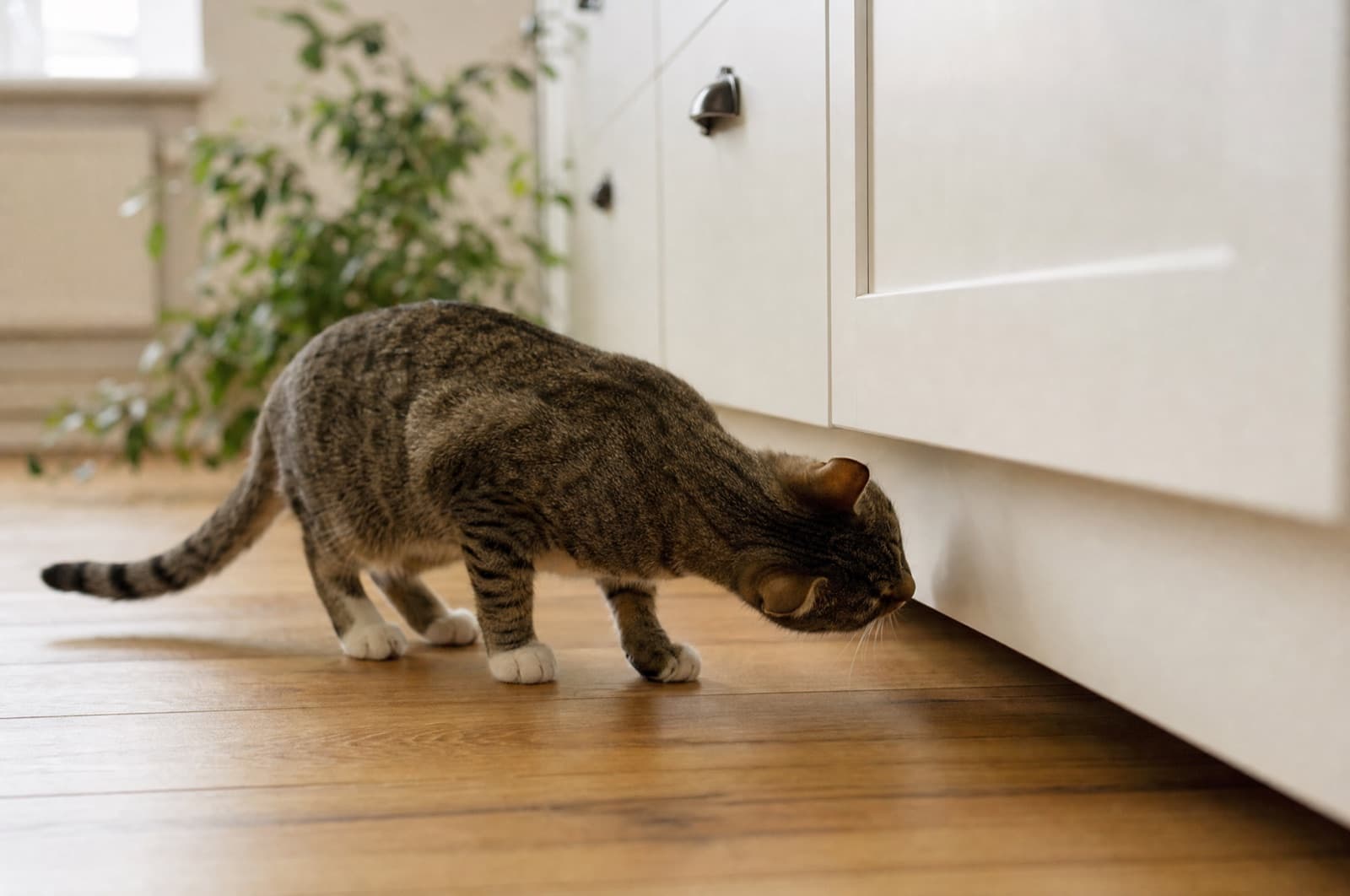
- CatsCaution
- Small mammalsAvoid
- BirdsCaution
- FishAvoid
Watch for chewed stations and licked gel
A dog can lick exposed gel placed within reach or chew open a bait station and eat the matrix inside. Fipronil affects the nervous system at sufficient exposure, so either route warrants a vet or hotline call — proper placement is what keeps the risk low.
NPIC fipronil fact sheet; Merck Veterinary Manual fipronil toxicosis
Less likely to chew stations, but gel contact is a real risk
Cats are less prone than dogs to chewing open plastic stations, but a cat can still contact exposed gel on a treated surface and ingest it while grooming. Keep the gel deep in cracks and voids a cat cannot reach.
Merck Veterinary Manual fipronil toxicosis
Keep both gel placements and stations completely out of reach
Pet rodents and rabbits are small and inquisitive enough that any accessible gel or station represents a meaningful ingestion risk. Their enclosures and free-roam areas should be nowhere near either component.
General small-mammal pesticide-exposure guidance
Keep free-flying birds away from gel and stations alike
NPIC notes fipronil is highly toxic to some birds on an acute oral basis. Site both the gel applications and the stations well away from any area a pet bird flies or lands.
NPIC fipronil fact sheet
Never let gel or station contents near an aquarium or drain
NPIC rates fipronil as highly to very highly toxic to marine and freshwater fish and invertebrates. Keep both components, and any rinse water used near them, well away from aquaria and household drains.
NPIC fipronil fact sheet
What's in it — and what it does to pets
A phenylpyrazole insecticide that disrupts insect nervous-system function; at sufficient exposure it can cause neurologic signs in pets, and the Merck Veterinary Manual notes most fipronil pet cases occur in dogs and cats from licking or ingesting product. The gel component carries more risk than the sealed stations simply because it's applied exposed rather than enclosed in plastic.
NPIC fipronil fact sheet; Merck Veterinary Manual
How to use it safely around pets
This is a two-component system, so safe use means two different placement disciplines — one for the sealed stations, one for the exposed gel.
Push gel only into true voids, never onto open surfaces
Apply the gel deep into cracks, crevices, and voids where a pet's tongue or paw physically cannot reach — never on an open countertop, floor, or baseboard face.
Place stations in enclosed, inaccessible spots
Set stations deep under sinks, behind or under appliances, or inside cabinets secured shut — places roaches travel but pets generally cannot reach or chew.
Don't break stations open, and count them
Never crack a station open yourself, and keep a mental tally of how many are placed so you'd notice if one goes missing or gets chewed apart.
Keep the packaging and EPA registration number
Hold onto the box for both the stations and the gel syringe so you have the EPA Reg. No. ready if you ever need to call a hotline.
There's no wet-surface drying window like a spray — the ongoing precaution with this product is placement, not time.
Not applicable in the same way as a spray; the safety window is set by where the gel and stations sit relative to where pets can reach, checked continuously.
Re-check gel and station placement periodically, especially after cleaning or furniture movement that could expose them.
Not sure your gel and stations are placed pet-safely?
Anchor's licensed NH technicians place bait precisely in voids pets can't reach.
Symptoms to watch for
A sign, its urgency, and what to do — never a diagnosis. When in doubt, the emergency panel below is one tap away.
- Moderate
Drooling or hypersalivation
- Moderate
Vomiting
- Moderate
Agitation or lethargy
- Serious
Muscle tremors
- Serious
Incoordination
- Emergency
Seizures
Seek emergency veterinary care immediately
Act now — call a vet or a pet-poison line
Do not induce vomiting unless told to
If your pet chewed a station or contacted the gel, act now — bring the packaging or a photo of the label when you call. This page is general information, not veterinary advice — for a suspected exposure, contact your veterinarian or ASPCA Animal Poison Control (888-426-4435) right away.
What each situation calls for
Your dog chewed open a bait station
Gather any remaining pieces of the station and packaging, then call your vet or a pet poison hotline right away — do not wait for symptoms to appear.
Your pet licked exposed gel
Wipe the pet's mouth and any residue with a damp cloth, then call your vet or a pet poison hotline. Do not induce vomiting unless told to.
Your pet is drooling, tremoring, or seems agitated after possible contact
Treat as urgent — call your vet or ASPCA Animal Poison Control immediately and bring the product packaging or a photo of the label.
In the next 60 seconds
- Get your pet away from the station or gel and any remaining product.
- Gently wipe any visible gel residue from your pet's mouth or paws.
- Do NOT induce vomiting unless a veterinarian or poison expert tells you to.
- Have the product name and EPA registration number (from the box) ready.
- Call your veterinarian or one of the hotlines below.
ASPCA Animal Poison Control
(888) 426-4435
24/7; a consultation fee may apply
Pet Poison Helpline
(855) 764-7661
24/7; a per-incident fee applies
Northern New England Poison Center
(800) 222-1222
24/7 human poison control — for household/child exposure context; call a vet or the pet lines above for pet guidance
Safer pet-friendly alternatives
Honest options that reduce or remove pet-toxicity — no affiliate hype, real caveats included.
Enclosed borax baits
SaferLower-toxicity bait (out of reach)
Borax-based baits are among the lower-toxicity active ingredients used in roach and ant baits, and placement out of pet reach further reduces risk.
Still a pesticide — placement discipline matters just as much as with fipronil products.
Non-toxic glue monitoring traps
SaferMechanical / adhesive (no toxicant)
Confirms whether roaches are present and where, with zero poisoning risk to pets.
Monitors and catches individual insects; doesn't eliminate an established colony on its own.
Sanitation and exclusion
SaferNon-chemical
Sealing entry points and removing food and moisture sources addresses why roaches are present at all, with zero pet-toxicity.
Slower to show results than active baiting.
Professional gel placement in true voids (Anchor Pest Services)
SaferLicensed professional service
A licensed applicator places gel and stations precisely in voids pets cannot reach and can verify placement stays secure over time.
A service, not a product — ask about pet-aware, low-toxicant placement.
Pet-safe roach control in New Hampshire
In New Hampshire's climate the German cockroach is essentially an indoor, heated-structure pest — it can't overwinter outdoors here — so it hides in the warm kitchen and appliance voids this two-part system targets, and getting both the exposed gel and the sealed stations placed out of a pet's reach is easy to get wrong. Pest control performed for hire in New Hampshire must be done by an applicator licensed by the NH Department of Agriculture, Markets & Food (NHDAMF) Division of Pesticide Control under RSA 430; Anchor Pest Services is NH-licensed (#782664) and treats pet-consciously across Manchester, Nashua, Concord, and the surrounding towns.
NH-licensed applicator #782664 (NHDAMF, RSA 430) · NEPMA member · family-owned since 2017.
Service Area Map
Southern New Hampshire
Frequently asked questions
Sources(5)
- [1]Retailer active-ingredient listing — Combat Max Defense fipronil bait
Verified fipronil bait-station active and concentration
manufacturerverified 2026-07-13 - [2]Combat — Max Roach Killing Gel Product Page
Gel component product facts
manufacturerverified 2026-07-13 - [3]EPA PPLS — Combat Fipronil Gel Label (Reg. No. 64240-42)
Verified gel active (fipronil 0.01%), EPA registration
epa_labelverified 2026-07-13 - [4]
- [5]Merck Veterinary Manual — Phenylpyrazole (Fipronil) Toxicosis in Animals
Clinical signs, dog/cat exposure pathways
veterinaryverified 2026-07-13
Written & reviewed by
VerifiedDaniel Brady
NH-Licensed Pesticide Applicator · License #782664 (NHDAMF, RSA 430)
Daniel Brady is the New Hampshire–licensed applicator behind Anchor Pest Services, a family-owned pest control company serving the Manchester area since 2017.
Last updated 2026-07-13
Pet-Safe Professional Pest Control
Precise Placement Beats DIY Guesswork
Getting gel and bait-station placement right in a home with pets takes discipline. Anchor Pest Services treats roach problems with targeted, pet-aware methods across southern and central New Hampshire. Family-owned since 2017, NH license #782664.
- Pet-conscious targeted treatment
- NH-licensed applicators (#782664)
- Free inspection — same-day service across southern NH
NH License #782664 · No obligation · We answer in person
Your next step
- Book a NH pro
Cockroach Control
Book now - Book a NH pro
Pest Control Services
Licensed, family-owned pest control across southern NH.
Book now - Next step
Are Cockroaches Active at Night? NH Roach Timing Guide
Read the answer - What to do next
How to Use the Max Defense System for Roaches by Combat
Read the answer - What to do next
How to Use Max Roach Killing Gel by Combat
Read the answer - Also relevant
Chemical Control for Roaches, Silverfish, Crickets & Termites
Read the answer