
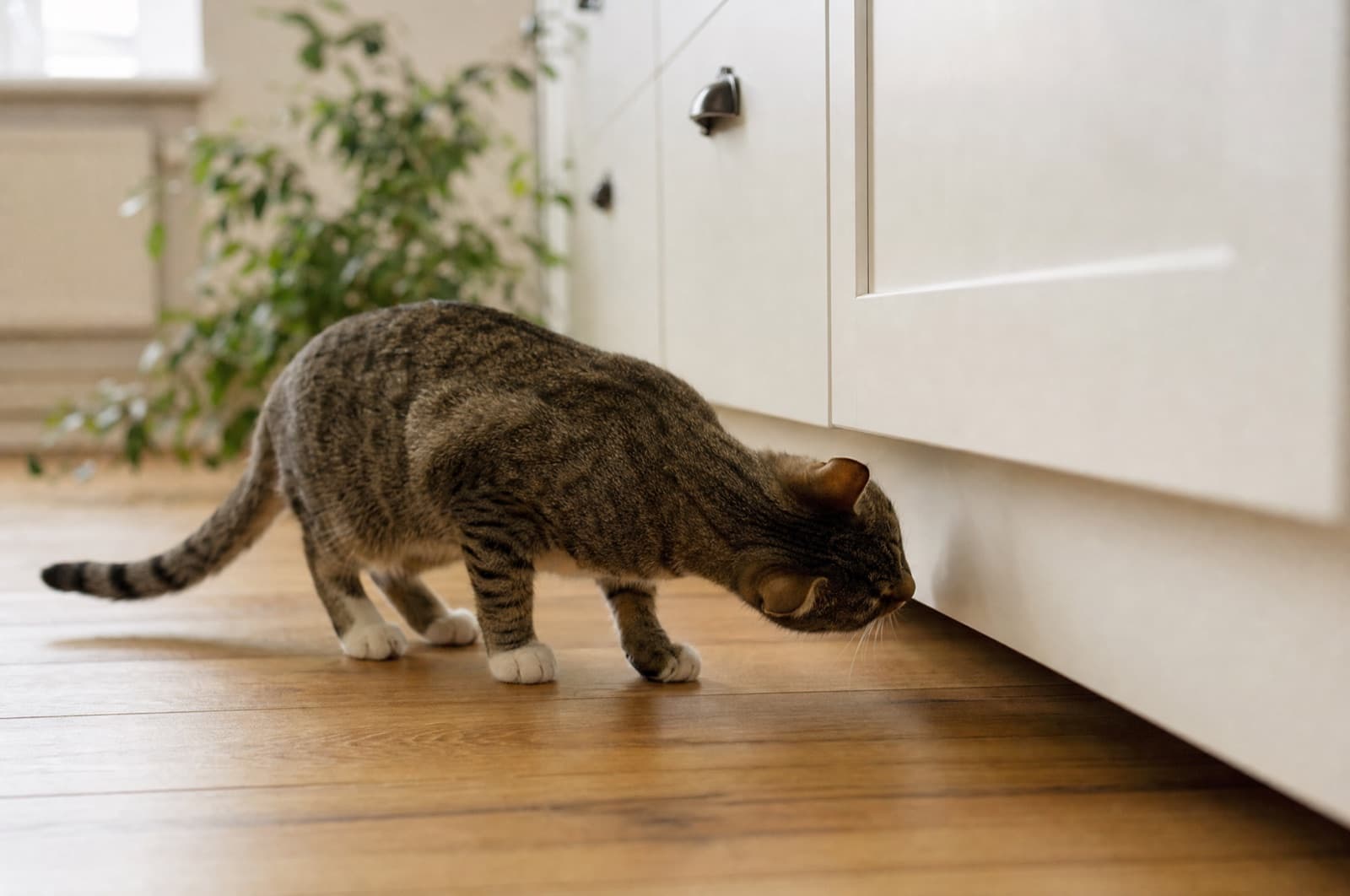
Is Combat Max Roach Killing Gel Safe for Pets?
At a Glance
- Product: Max Roach Killing Gel by Combat · Combat
- Active ingredient: Fipronil 0.01%
- Re-entry: Not applicable in the spray sense; a placement should never be accessible to a pet, at any point.
- Cat owners: Cats differ — read the cat card below
The short, honest answer
The score rolls up every per-species verdict below, weighted by the honest exposure that matters — a chewed-open tube, not a hidden dab — and is checked against the EPA label and veterinary toxicology.
Low-risk in a properly placed dab — but avoid entirely around cats and pet rabbits.
Combat Max Roach Killing Gel uses fipronil (0.01%, EPA Reg. No. 64240-45) — a genuinely different active from Advion's indoxacarb despite sitting in the same gel-bait cluster, and different from the hydramethylnon used in some other Combat SKUs. Fipronil has documented selective toxicity favoring insects over mammals at labeled concentrations, but it is a real neurotoxicant with confirmed pet poisoning cases, and the Pet Poison Helpline is explicit that fipronil products should never be used around pet rabbits. Dogs generally tolerate incidental exposure; cats and small mammals are the species to actively protect. As with any gel, the risk scales with accessibility — a crevice dab is low-concern, a chewed-open tube is not.
General information, not veterinary advice. For a suspected exposure, contact your veterinarian or a pet-poison hotline. Verdict checked 2026-07-13 against the EPA label and veterinary toxicology.
It's not one answer — it's one per animal
Cats, birds, and fish routinely differ sharply from dogs. That contrast is the whole point of this scorecard, and no manufacturer page draws it.
- DogsCaution
- CatsAvoid
- Small mammalsAvoid
- BirdsCaution
- FishAvoid
Generally tolerated in small amounts — a chewed-open tube is a real neurotoxic exposure
The Merck Veterinary Manual notes fipronil has more than 500-fold selective toxicity toward insects over mammals, so dogs generally tolerate incidental contact. But ingestion of a chewed-open tube is a documented neurotoxic exposure with real GI and CNS signs.
Merck Veterinary Manual — Phenylpyrazole (Fipronil) Toxicosis in Animals
Higher-concern species — grooming gel from fur drives real exposure
Cats are the species of greater concern with this product: grooming gel off fur and paws drives oral intake, and fipronil affects the feline central nervous system. Keep every placement somewhere a cat cannot brush against it.
Pet Poison Helpline — Fipronil Insecticide Poisoning
Never use around pet rabbits or small rodents
The Pet Poison Helpline states plainly: "Never use any fipronil product on pet rabbits as this is often fatal!" Pet rabbits and small rodents must never have access to this product under any circumstance.
Pet Poison Helpline — Fipronil Insecticide Poisoning
Keep placements inaccessible to any cage-free bird
Ingestion is the route of concern for birds with a gel product — keep every dab somewhere a free-roaming or cage-free bird cannot peck at it.
Anchor Pest Services product research
Never let gel or rinse water reach aquarium or pond water
Fipronil is highly toxic to aquatic life. Never contaminate aquarium or pond water, and never rinse an applicator near a tank.
EPA Registered Product Label (Reg. No. 64240-45)
What's in it — and what it does to pets
Fipronil blocks GABA-gated chloride channels in the insect nervous system, and the Merck Veterinary Manual documents more than 500-fold selective toxicity toward insects versus mammals at labeled concentrations — a real safety margin for incidental dog exposure. It remains a genuine neurotoxicant, though: the Pet Poison Helpline documents real poisoning cases, with cats and especially pet rabbits at the highest risk, independent of the fact that fipronil is also used in controlled veterinary flea/tick products at very different, regulated doses.
Merck Veterinary Manual — Phenylpyrazole (Fipronil) Toxicosis in Animals; Pet Poison Helpline — Fipronil Insecticide Poisoning
How to use it safely around pets
Combat's application method encourages placing many small dabs across roach-traffic areas, which means the safeguard is the number of accessible placements, not drying time — there's no wet/dry window with a gel.
Place dabs only deep in cracks, crevices, and voids
Apply behind and under appliances, inside cabinet voids, and along structural gaps pets cannot reach — never on an open, exposed surface.
Wipe up any gel on an exposed surface immediately
If a dab lands somewhere visible or reachable, remove it right away with a damp paper towel rather than leaving it in place.
Recap and store the syringe elevated and latched
Never leave the applicator where a dog, cat, or rabbit can find and chew it — a full syringe is a far larger dose than any single placement.
Recheck placements periodically
Confirm dabs remain in their original inaccessible spots and haven't been dislodged.
There is no drying window with this gel — the safeguard is placement geometry, not time. Keep every dab permanently out of pet reach.
Not applicable in the spray sense; a placement should never be accessible to a pet, at any point.
Store the applicator syringe latched and elevated — it holds far more product than any single placed dab.
Have cats or pet rabbits at home?
Anchor's licensed NH technicians can factor small mammals into your treatment plan directly.
Symptoms to watch for
A sign, its urgency, and what to do — never a diagnosis. When in doubt, the emergency panel below is one tap away.
- Moderate
Vomiting or nausea
- Mild
Drooling
- Moderate
Lethargy or depression
- Serious
Muscle twitching or tremors
- Serious
Incoordination
- Emergency
Seizures
Seek emergency veterinary care immediately
Act now — call a vet or a pet-poison line
Do not induce vomiting unless told to
If your pet ate, licked, or chewed into this product, act now — note roughly how much bait is missing and bring the syringe or a photo of the label when you call. This page is general information, not veterinary advice — for a suspected exposure, contact your veterinarian or ASPCA Animal Poison Control (888-426-4435) right away.
What each situation calls for
Your dog licked or nosed a properly placed crevice dab
This is typically low-concern given fipronil's selective toxicity, but monitor for drooling, vomiting, or lethargy and call your vet or a pet poison hotline if any sign appears.
Your cat groomed gel off its fur or paws
Treat as a real exposure — call your vet or ASPCA Animal Poison Control promptly and describe how much contact occurred. Watch closely for twitching or incoordination.
A pet rabbit had any access to this product
Call a pet poison hotline or an exotic/rabbit-experienced veterinarian immediately, even for suspected minor contact — the Pet Poison Helpline notes fipronil exposure is often fatal to rabbits.
In the next 60 seconds
- Move your pet away from the bait and any remaining product.
- Estimate how much gel is missing from the syringe or placement.
- Do NOT induce vomiting unless a veterinarian or poison expert tells you to.
- Have the product name and EPA registration number (64240-45) ready.
- Call your veterinarian or one of the hotlines below — treat any pet rabbit exposure as an emergency.
ASPCA Animal Poison Control
(888) 426-4435
24/7; a consultation fee may apply
Pet Poison Helpline
(855) 764-7661
24/7; a per-incident fee applies
Northern New England Poison Center
(800) 222-1222
24/7 human poison control — for household/child exposure context; call a vet or the pet lines above for pet guidance
Safer pet-friendly alternatives
Honest options that reduce or remove pet-toxicity — no affiliate hype, real caveats included.
Sanitation and exclusion first
SaferNon-chemical
Removing food, water, and entry points reduces roach pressure with zero pet toxicity, especially valuable in rabbit or small-mammal households.
Slower than baiting; often needs pairing with a targeted bait once accessible sources are removed.
Enclosed, child-/pet-resistant bait stations
SaferEnclosed bait
Keeps any active ingredient sealed away from paws, fur, and curious noses rather than exposed as an open gel dab where pets roam.
Still contains an insecticide — verify the station is genuinely tamper-resistant before placing it in a pet home.
Indoxacarb gel used strictly in inaccessible voids
SaferAlternative bait active
Indoxacarb requires insect-specific bioactivation to become fully toxic, a favorable selective-toxicity profile distinct from fipronil — genuinely different chemistry, still requires the same out-of-reach placement discipline.
Not risk-free — still grade and place it with the same care as any bait.
Professional pet-conscious treatment (Anchor Pest Services)
SaferLicensed professional service
Licensed applicators place bait in true structural voids and can advise rabbit and small-mammal households on additional precautions.
A service, not a product — request a pet-safety-focused plan and mention any small mammals in the home.
Pet-safe roach control in New Hampshire
New Hampshire's cold winters mean cockroaches here — almost always the German cockroach — live and breed indoors year-round rather than moving in and out with the seasons, favoring the warm basements, kitchens, and older foundations common across southern and central NH. Placing an exposed fipronil gel safely gets harder in a home with cats or rabbits, and pest control for hire in New Hampshire must be done by an applicator licensed by the NH Department of Agriculture, Markets & Food (NHDAMF) under RSA 430. Anchor Pest Services is NH-licensed (#782664) and treats pet-consciously across Manchester, Nashua, Concord, and the surrounding towns.
NH-licensed applicator #782664 (NHDAMF, RSA 430) · NEPMA member · family-owned since 2017.
Service Area Map
Southern New Hampshire
Frequently asked questions
Sources(3)
- [1]EPA Registered Product Label — Combat Max Roach Killing Gel (Reg. No. 64240-45)
Verified active (fipronil 0.01%), environmental hazard statement
epa_labelverified 2026-07-13 - [2]Pet Poison Helpline — Fipronil Insecticide Poisoning
Cat CNS risk, explicit rabbit-fatality warning
pet_poisonverified 2026-07-13 - [3]Merck Veterinary Manual — Phenylpyrazole (Fipronil) Toxicosis in Animals
Selective toxicity margin, clinical signs
veterinaryverified 2026-07-13
Written & reviewed by
VerifiedDaniel Brady
NH-Licensed Pesticide Applicator · License #782664 (NHDAMF, RSA 430)
Daniel Brady is the New Hampshire–licensed applicator behind Anchor Pest Services, a family-owned pest control company serving the Manchester area since 2017.
Last updated 2026-07-13
Pet-Safe Professional Pest Control
Skip the Guesswork — Especially With Rabbits or Cats in the House
DIY fipronil bait placement puts the pet-safety burden on you. Anchor Pest Services treats roaches with targeted, pet-aware placement across southern and central New Hampshire. Family-owned since 2017, NH license #782664.
- Pet-conscious targeted treatment
- NH-licensed applicators (#782664)
- Free inspection — same-day service across southern NH
NH License #782664 · No obligation · We answer in person
Your next step
- Book a NH pro
Cockroach Control
Book now - Book a NH pro
Pest Control Services
Licensed, family-owned pest control across southern NH.
Book now - Next step
Are Cockroaches Active at Night? NH Roach Timing Guide
Read the answer - What to do next
How to Use Max Roach Killing Gel by Combat
Read the answer - Also relevant
Chemical Control for Roaches, Silverfish, Crickets & Termites
Read the answer - Also relevant
Mechanical Control for Fall Invaders, Bed Bugs & Fabric Pests
Read the answer