
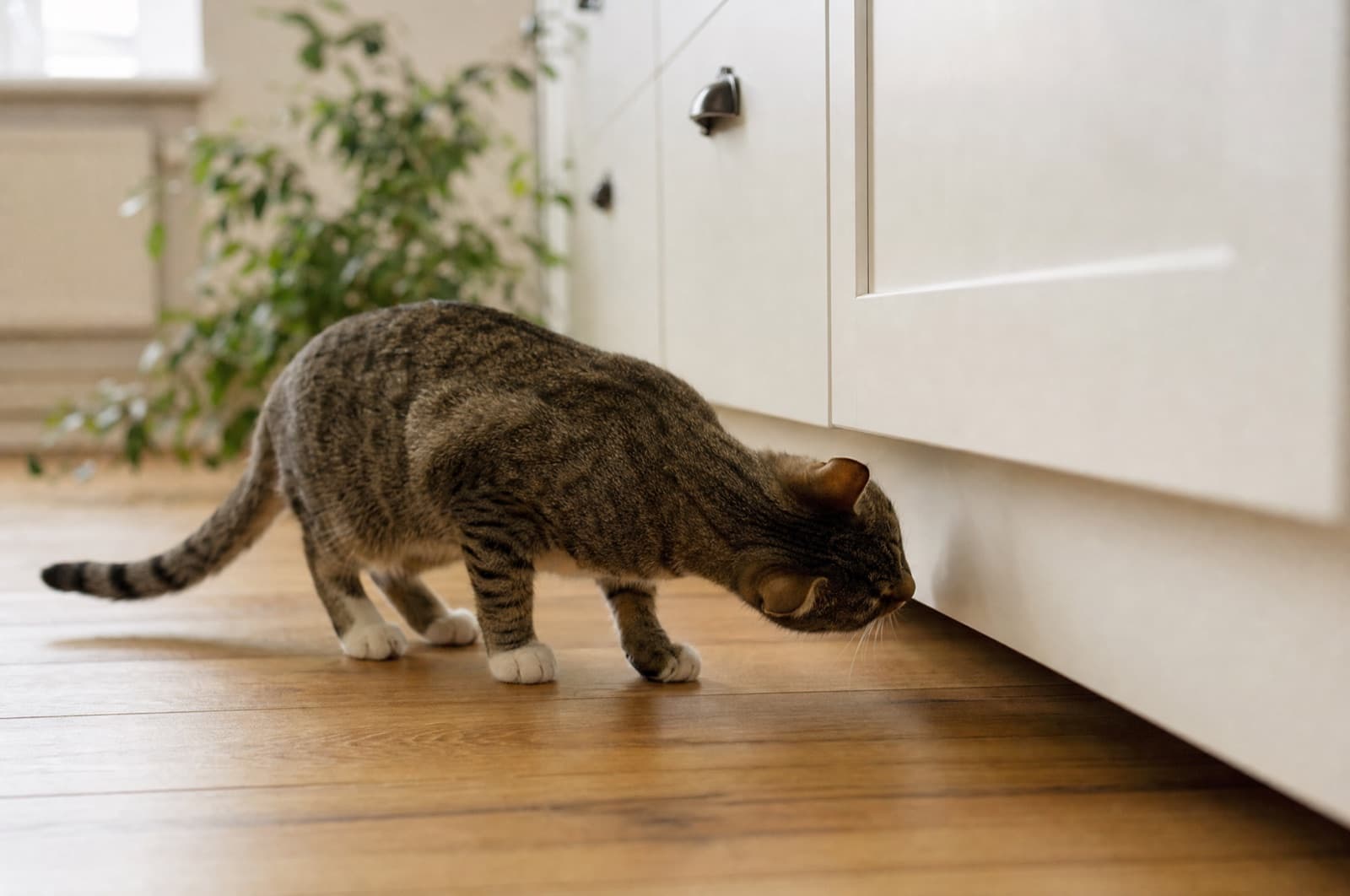
Is Transport Mikron Insecticide by FMC Safe for Pets?
At a Glance
- Product: Transport Mikron Insecticide by FMC · FMC
- Active ingredient: Bifenthrin 6.00%, Acetamiprid 5.00%
- Re-entry: Ask your pest control company for the specific interval for this application; it is set by the product label, which is the legal authority.
- Cat owners: Cats differ — read the cat card below
The short, honest answer
The score rolls up every per-species verdict below, weighted by the honest exposure that matters — a chewed-open tube, not a hidden dab — and is checked against the EPA label and veterinary toxicology.
A licensed-applicator product — keep pets off treated surfaces until fully dry, and cover fish tanks before spraying.
Transport Mikron is a professional liquid concentrate (bifenthrin 6.00% + acetamiprid 5.00%) sold through pest-management distribution and diluted for crack-and-crevice, spot, or perimeter application — not something a NH homeowner typically buys and sprays themselves, and some uses require an applicator license. Once professionally applied and fully dried, treated surfaces are low-risk; the real hazards are wet product, direct contact or inhalation during application, and any spray reaching an aquarium. If your pest control company uses this product, the honest framing is to ask about pet-aware timing and re-entry rather than to DIY-apply it yourself.
General information, not veterinary advice. For a suspected exposure, contact your veterinarian or a pet-poison hotline. Verdict checked 2026-07-13 against the EPA label and veterinary toxicology.
It's not one answer — it's one per animal
Cats, birds, and fish routinely differ sharply from dogs. That contrast is the whole point of this scorecard, and no manufacturer page draws it.
- DogsCaution
- CatsCaution
- Small mammalsCaution
- BirdsAvoid
- FishAvoid
Keep off treated surfaces until fully dry
Dried residue in cracks and crevices is low-risk once the application has fully cured, but wet product is a genuine hazard. Ask your applicator for the specific re-entry time and keep dogs off treated surfaces until then.
FMC Transport Mikron label; NPIC pyrethroid guidance
Cats are especially sensitive to the bifenthrin component
Cats can't efficiently metabolize pyrethroids like bifenthrin because they lack efficient glucuronidation, making them the most vulnerable common pet to this product. Keep cats away from treated areas until fully dry and prevent them from grooming any wet residue.
VCA Animal Hospitals — cat pyrethroid sensitivity
Keep out of treated rooms until dry
Rabbits, guinea pigs, and similar pets have high metabolic and respiratory rates that raise their sensitivity to pesticide residue. Keep them and their enclosures out of any treated room until the application is fully dry.
General small-mammal pesticide-exposure guidance
Remove birds during application
Bifenthrin sprays and mist are hazardous to birds, particularly during and shortly after application. Remove pet birds from the area entirely while the product is being applied.
FMC MSDS; NPIC pyrethroid guidance
Cover or remove aquariums before any application nearby
FMC's own MSDS states bifenthrin is highly toxic to fish and aquatic arthropods. Cover or remove aquariums and never allow spray or rinse water to reach a tank or a household drain.
FMC Transport Mikron MSDS
What's in it — and what it does to pets
A pyrethroid that overstimulates the nervous system in sensitive animals. It's highly toxic to fish and aquatic arthropods per FMC's own safety data sheet, and cats are unusually sensitive to it because of their limited ability to clear pyrethroids. Once fully dry, residue in treated cracks and crevices is considered low-risk, but wet product is a real hazard.
FMC Transport Mikron MSDS; VCA cat pyrethroid sensitivity
A neonicotinoid insecticide with lower acute vertebrate toxicity than the pyrethroid component, but it's still a pesticide capable of causing gastrointestinal upset and, at sufficient exposure, tremors. It's included here as a separate toxicity note rather than folded into the bifenthrin note because it works through a different mechanism.
FMC Transport Mikron SDS
How to use it safely around pets
This is a licensed-applicator product, not a homeowner spray. If your pest control company uses it, safe use is about clearing pets out during application and keeping them off surfaces until fully dry.
Ask your applicator about the treatment plan
Confirm where the product will be applied (crack-and-crevice, spot, or perimeter — the label prohibits indoor broadcast spraying) and how long pets need to stay away.
Remove pets and cover aquariums before application
Keep all pets out of the treatment area while the technician is working, and cover or turn off aquarium air pumps if the area is anywhere near a fish tank.
Keep pets off treated surfaces until fully dry
Follow your applicator's specific re-entry guidance; as a pyrethroid-containing product, wet residue is the main pet-exposure route, especially for cats.
Ventilate after drying
Air out the treated space once it's dry and before pets spend extended time there, especially in an enclosed room.
Keep all pets off treated surfaces until the application is fully dry, per your applicator's label-based guidance.
Ask your pest control company for the specific interval for this application; it is set by the product label, which is the legal authority.
Cats and fish warrant the most caution — keep cats off treated surfaces longest, and keep aquariums covered until well after the room is dry and ventilated.
Have a pest control company using professional concentrates?
Anchor's licensed NH technicians plan placement and re-entry timing around the pets in your home.
Symptoms to watch for
A sign, its urgency, and what to do — never a diagnosis. When in doubt, the emergency panel below is one tap away.
- Moderate
Drooling or hypersalivation
Often the earliest sign in cats
- Moderate
Vomiting
- Serious
Twitching or tremors
- Serious
Incoordination
- Serious
Hyperexcitability
- Emergency
Seizures
Most likely in cats with significant exposure — seek emergency care
Act now — call a vet or a pet-poison line
Do not induce vomiting unless told to
If your pet contacted wet product from a Transport Mikron application, act now — bring the product label or a photo of it when you call. This page is general information, not veterinary advice — for a suspected exposure, contact your veterinarian or ASPCA Animal Poison Control (888-426-4435) right away.
What each situation calls for
Your pet contacted wet treated surfaces
Wipe the residue off paws or fur with a damp cloth to stop further grooming ingestion, then call your vet or a pet poison hotline. Do not induce vomiting unless a professional tells you to.
Your cat is drooling, twitching, or tremoring
Treat as urgent — cats are the most pyrethroid-sensitive common pet. Call your vet or ASPCA Animal Poison Control immediately and bring the product label or a photo of it.
A bird was in the treated area during or shortly after application
Move the bird to fresh air at once and contact an avian vet or a pet poison hotline.
In the next 60 seconds
- Get your pet away from the treated area and any wet product.
- Gently wipe wet residue off paws and fur to stop grooming ingestion.
- Do NOT induce vomiting unless a veterinarian or poison expert tells you to.
- Have the product name and EPA registration number ready — ask your applicator for it.
- Call your veterinarian or one of the hotlines below.
ASPCA Animal Poison Control
(888) 426-4435
24/7; a consultation fee may apply
Pet Poison Helpline
(855) 764-7661
24/7; a per-incident fee applies
Northern New England Poison Center
(800) 222-1222
24/7 human poison control — for household/child exposure context; call a vet or the pet lines above for pet guidance
Safer pet-friendly alternatives
Honest options that reduce or remove pet-toxicity — no affiliate hype, real caveats included.
Targeted baiting instead of liquid spray
SaferEnclosed bait (where feasible)
Where the target pest allows it, sealing the active inside a bait station instead of spraying surfaces sharply cuts pet contact and grooming exposure.
Not effective for every pest a liquid concentrate treats — ask your applicator whether baiting fits your situation.
Non-toxic traps and monitoring
SaferMechanical / adhesive (no toxicant)
Confirms pest presence and activity level with zero pet-toxicity risk before deciding whether a liquid application is needed at all.
Monitors and catches individual insects rather than treating an established problem.
Exclusion and sanitation
SaferNon-chemical
Sealing entry points and removing food or moisture sources reduces the pest pressure that leads to needing a concentrate like this in the first place.
Works best alongside, not instead of, professional treatment for an active infestation.
Professional application with pet-aware timing (Anchor Pest Services)
SaferLicensed professional service
Since this is a licensed-applicator product already, the honest safer path is a technician who plans placement and re-entry timing around your pets rather than a generic application.
A service, not a product — ask specifically for pet-aware scheduling and placement.
Pet-safe professional pest control in New Hampshire
Transport Mikron pairs bifenthrin with acetamiprid in a professional-only formulation — the right move for a New Hampshire pet owner isn't DIY but hiring a licensed applicator. Applying pesticides for hire in NH requires certification through the NH Department of Agriculture, Markets & Food (NHDAMF) Division of Pesticide Control under RSA 430, and Anchor's technicians hold it (License #782664). They provide pet-conscious treatment across Manchester, Nashua, Concord, and the surrounding towns, with re-entry timing planned around the pets in your home.
NH-licensed applicator #782664 (NHDAMF, RSA 430) · NEPMA member · family-owned since 2017.
Service Area Map
Southern New Hampshire
Frequently asked questions
Sources(5)
- [1]FMC Transport Mikron Safety Data Sheet
Verified actives (bifenthrin 6.00%, acetamiprid 5.00%), fish toxicity statement
epa_labelverified 2026-07-13 - [2]FMC Transport Mikron Product Label
Licensed-applicator/termiticide use, crack-and-crevice application method
epa_labelverified 2026-07-13 - [3]FMC Transport Mikron MSDS — Bifenthrin Aquatic Toxicity
"Highly toxic to fish and aquatic arthropods" statement
manufacturerverified 2026-07-13 - [4]VCA Animal Hospitals — Pyrethrin/Pyrethroid Poisoning in Cats
Feline glucuronidation sensitivity, clinical signs
veterinaryverified 2026-07-13 - [5]NPIC — Pyrethrins and Pyrethroids Fact Sheet
Class-level pyrethroid pet-risk guidance
npicverified 2026-07-13
Written & reviewed by
VerifiedDaniel Brady
NH-Licensed Pesticide Applicator · License #782664 (NHDAMF, RSA 430)
Daniel Brady is the New Hampshire–licensed applicator behind Anchor Pest Services, a family-owned pest control company serving the Manchester area since 2017.
Last updated 2026-07-13
Pet-Safe Professional Pest Control
Professional Products Deserve Pet-Aware Application
Products like Transport Mikron are meant for licensed applicators, not DIY use. Anchor Pest Services applies professional-grade treatments with pet-aware timing and placement across southern and central New Hampshire. Family-owned since 2017, NH license #782664.
- Pet-conscious targeted treatment
- NH-licensed applicators (#782664)
- Free inspection — same-day service across southern NH
NH License #782664 · No obligation · We answer in person
Your next step
- Book a NH pro
Pest Control Services
Licensed, family-owned pest control across southern NH.
Book now - What to do next
How to Use Transport Mikron Insecticide by FMC
Read the answer - Also relevant
Chemical Control for Roaches, Silverfish, Crickets & Termites
Read the answer - Related guide
Is CB-80 Aerosol Insecticide Safe for Pets?
Read the answer - Related guide
Is Suspend SC Insecticide Concentrate by Bayer Safe for Pets?
Read the answer - Related guide
Is Zenprox EC Insecticide by Zoecon Safe for Pets?
Read the answer