
How Should I Dispose of Diseased Leaves?
Bag small amounts for the trash, use a municipal yard-waste program if you have a lot, or bury deep away from the garden — just keep diseased leaves out of your home compost bin.
At a glance
- The verdict: A simple yard-sanitation routine
- Who fixes it: You
- Category: Leaf Disease & Fungus Management
The short answer
Remove diseased leaves promptly and keep them out of the backyard compost bin. The safest routine options are sealing small debris in a bag for the trash, or using a municipal yard-waste program that composts at high heat, per Iowa State University Extension. Most home piles don't get hot enough: Iowa State notes municipal facilities reach the 140°F-plus needed to kill pathogens while home piles usually don't. Burying works if it's deep and far from the garden, per University of Illinois Extension. This is a routine homeowner sanitation task, not a call for a pest-control company.
Who actually fixes this?
Start here
You
This is routine yard sanitation — bagging, hauling, or burying debris — well within any homeowner's ability, with no insect involved.
- UNH Extension — you want an ID before deciding how aggressively to dispose of a specific plant's debris
The details, straight
Remove it promptly and completely
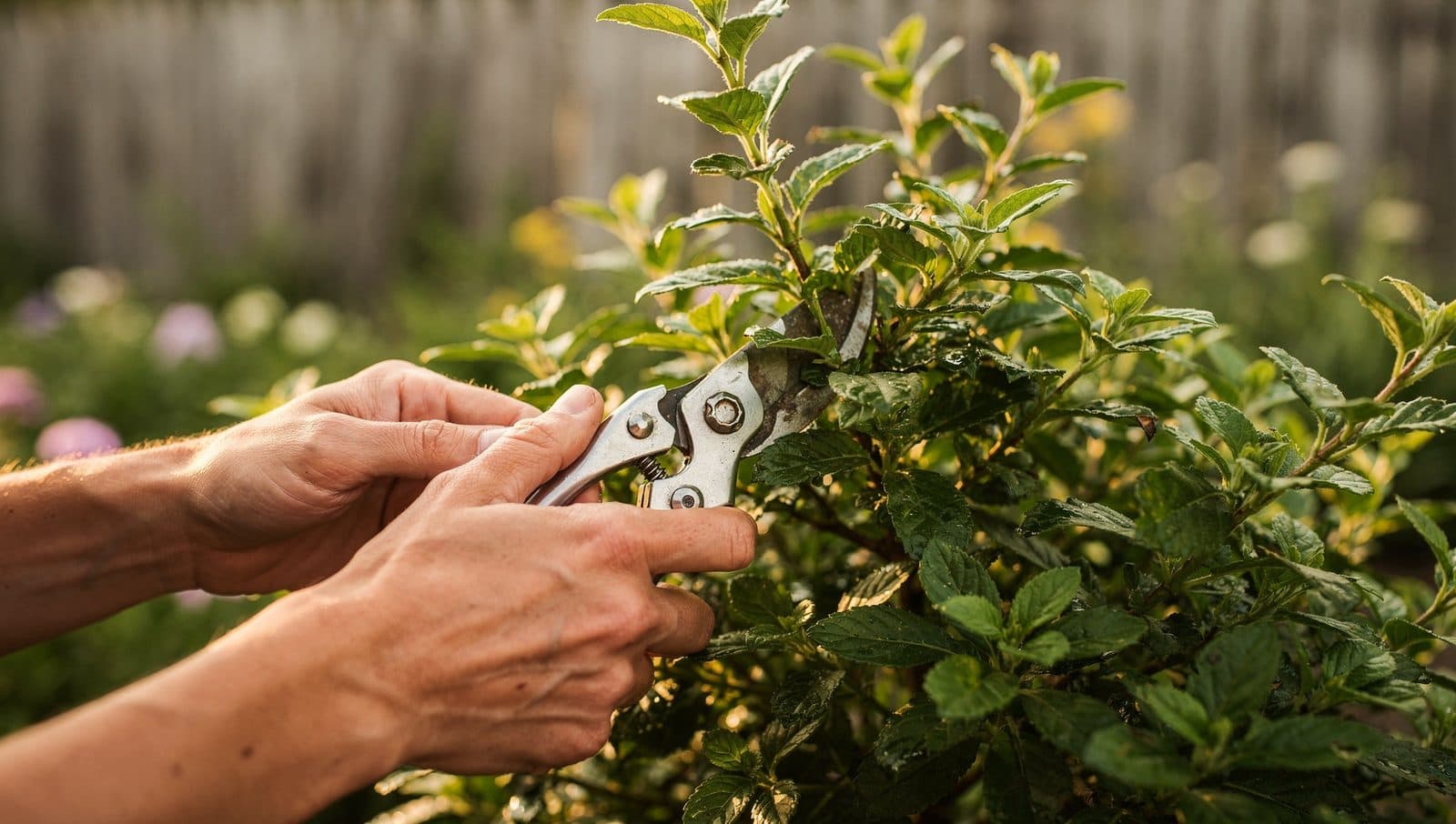
UMass Extension advises to "prune out infected twigs and branches and rake up leaf-spotted leaves. Dispose of these materials away from the affected plants," because leaving debris in place gives the pathogen an overwintering site right where it can reinfect the same plant next season. Prompt, thorough removal is the single biggest lever you control.
Bag small amounts for the trash
Iowa State University Extension is direct on this: plants with disease or pest issues should be removed and "destroyed and not placed in the compost bin since most home compost piles do not reach temperatures hot enough to kill pathogens." For a typical homeowner amount of diseased leaves, sealing them in a yard-waste or trash bag is the simplest, most reliable option.
Use a municipal or hot composting program for larger volumes
If you have a big pile of diseased leaves, Iowa State notes that home piles rarely reach 140°F, but "most municipal composting facilities do" reach that pathogen-killing temperature. Check your NH town's yard-waste or transfer-station rules — many accept diseased plant debris for hot composting even when they discourage home composting of the same material.
Burying is a fallback, done right
University of Illinois Extension notes that burying diseased plant material can work as a disposal method if you bury it deep and well away from garden beds. Keep in mind some pathogens can persist in soil for years, so this is a fallback for material you can't bag or haul, not a preferred first choice.
Don't forget tools, pots, and bags
University of Illinois Extension also recommends disinfecting tools, pots, cages, and stakes that touched diseased material, and trashing rather than reusing potting soil from diseased container plants. Sanitation isn't just about the leaves themselves — anything that touched them can carry the pathogen forward if you reuse it untreated.
Key takeaways
- Remove diseased leaves promptly and dispose of them away from healthy plants.
- Bag small amounts and put them in the trash — don't add them to a home compost bin.
- Municipal yard-waste facilities reach the sustained heat (140°F-plus) that kills pathogens; most backyard piles don't.
- Burying deep, far from the garden, is a reasonable fallback for larger amounts.
- Disinfect tools, pots, and stakes that touched diseased material; don't reuse contaminated potting soil.
Wondering about burning instead?
New Hampshire has specific rules on burning yard debris — see the honest answer before you strike a match.
See the burn-or-compost answerDisposal timing for a New Hampshire fall
Because most of New Hampshire's leaf drop lands in October and November, right before the ground freezes, diseased foliage is easy to gather and remove in one or two passes rather than letting it overwinter under snow and re-infect plants in spring. UNH Cooperative Extension advises against composting foliage from serious plant diseases in a backyard pile that never gets hot enough to kill pathogens; bagging for municipal yard-waste collection is the safer route. Anchor Pest Services handles structural and yard pests, not plant-disease sanitation, but we'll flag if a staged pile is sitting against your foundation.
NH-licensed applicator #782664 (NHDAMF, RSA 430) · NEPMA member · family-owned since 2017.
Related questions
Sources(3)
- [1]Iowa State University Extension — Managing Fallen Leaves and Fall Cleanup
Home compost piles don't reach pathogen-killing temperatures; municipal facilities do
extensionverified 2026-07-14 - [2]UMass Extension — Diseases of Trees and Shrubs
Prompt removal of infected debris away from the plant
extensionverified 2026-07-14 - [3]University of Illinois Extension — Managing Plant Diseases
Burying deep as a fallback; tool and pot sanitation
extensionverified 2026-07-14
Written & reviewed by
VerifiedDaniel Brady
NH-Licensed Pesticide Applicator · License #782664 (NHDAMF, RSA 430)
Daniel Brady is the New Hampshire–licensed applicator behind Anchor Pest Services, a family-owned pest control company serving the Manchester area since 2017.
Last updated 2026-07-14
Your next question
Honest pest help for New Hampshire homes
Leaf Diseases Are Plant Care — But Your Home Is Our Job
Diagnosing and treating a plant disease is garden and tree care, and we'll always tell you so. Where Anchor Pest Services genuinely helps is the pests around your home — rodents, ants, ticks, and moisture pests drawn to leaf litter and debris against the foundation. Family-owned since 2017, NH license #782664, serving Manchester, Nashua, Concord and nearby towns.
- Plain answer — disposal is a yard-waste question, not a pest-control call
- NH-licensed (#782664) only if a raked pile against the foundation becomes harborage
- Structural and yard pest coverage for Manchester and surrounding NH towns
NH License #782664 · No obligation · We answer in person
Your next step
- Fall guide
Fall Pest Control in New Hampshire
What matters before frost: the fall invader window, mice at the foundation, and what to seal first.
Read the answer - Book a NH pro
Pest Control Services
Licensed, family-owned pest control across southern NH.
Book now - Related guide
Should I Burn or Compost Diseased Leaves?
Read the answer - Related guide
Can Infected Leaves Spread Disease to Other Plants?
Read the answer - Related guide
Can Composting Leaves Spread Pests?
Read the answer - Related guide
Should I Mulch with Fallen Leaves?
Read the answer