
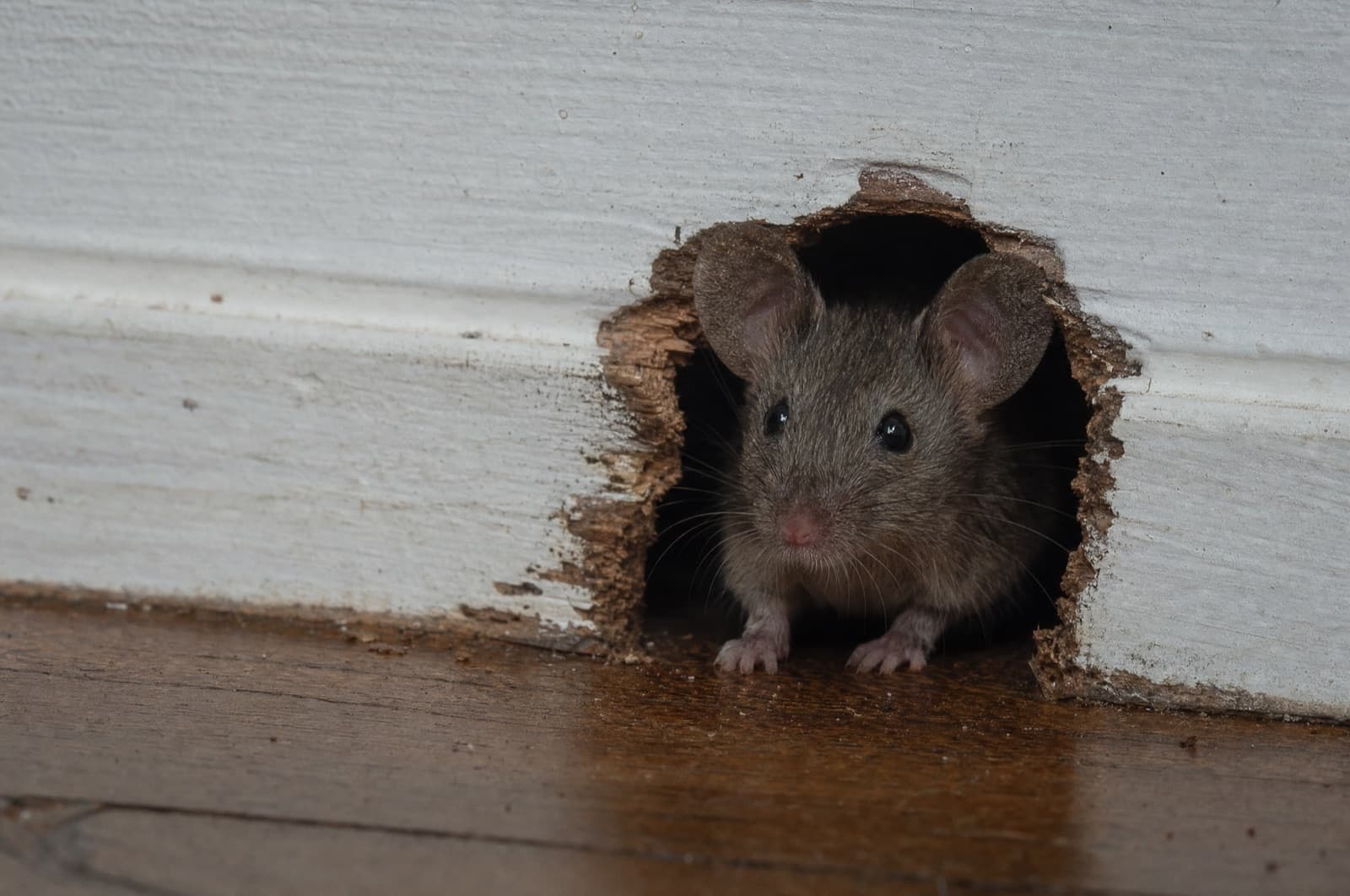
How Do I Disinfect Areas Where Rats Were Active?
At a Glance
- Short answer: Hard surfaces: wet-wipe then disinfect with 1:9 bleach. Porous materials: launder, steam-clean, sun, or bag for removal. Cover cuts first.
- Key fact: Leptospira bacteria in rat urine can enter through cuts and mucous membranes, not just inhalation — cover open skin before cleaning.
- NH relevance: Norway rats are established in New Hampshire towns and cities, and often nest near foundations, basements, and burrow-adjacent outdoor areas.
- Action needed: Cover cuts, match cleaning method to surface type, and never disinfect insulation in place — bag and remove it instead.
The short of it
Disinfecting after rats follows the same CDC surface-by-surface logic as mice — hard surfaces get wiped and disinfected, porous materials get laundered, steam-cleaned, or in the case of contaminated insulation, bagged for removal. The rat-specific addition is leptospirosis: because rats shed Leptospira bacteria in their urine and it can enter through cuts or mucous membranes, cover any open skin before you start and treat urine-contaminated areas with particular care.
How Do I Disinfect Areas Where Rats Were Active — By the Numbers
1:9
CDC bleach-to-water ratio (1.5 cups per gallon)
Weeks–months
How long leptospirosis bacteria can survive in water or soil
30 min
Air-out time before entering an enclosed space
The CDC rodent-cleanup protocol
This mirrors the mouse disinfection protocol by surface type, with added precautions for leptospirosis risk from rat urine.
Cover cuts and air out
Cover any open cuts or scrapes before starting — Leptospira bacteria in rat urine can enter through broken skin. Open doors and windows for 30 minutes and leave an enclosed space during that time.
Never disturb droppings or urine dry, before or after airing out.
Wet-wipe droppings and urine
In gloves, spray droppings and urine until very wet with disinfectant or fresh 1:9 bleach solution, soak 5 minutes, and wipe up with paper towels into a covered trash can.
Disinfect hard surfaces
Mop or wipe floors, countertops, cabinets, and plastic, glass, or metal containers with a general-purpose disinfectant or fresh 1:9 bleach solution.
Treat porous materials separately
Launder contaminated fabrics in hot water and detergent; shampoo or steam-clean carpets and upholstery; sun or isolate books and papers for at least three weeks.
Bag contaminated exposed insulation for removal — don't disinfect it in place.
Wash up
Wash gloved hands, remove gloves, then wash bare hands thoroughly with soap and water.
- Never sweep or vacuum dry droppings, urine, or nesting material.
- Never clean with cuts or scrapes uncovered.
- Never attempt to disinfect contaminated insulation in place — bag it for removal instead.
Calibrated from: CDC, "How to Clean Up After Rodents" and "About Leptospirosis" (last reviewed 2024).
The full picture
Cover cuts before you start
Leptospirosis bacteria spread through infected rats' urine and can survive in water or soil for weeks to months, entering the body through cuts or through the eyes, nose, and mouth. Cover any open cuts or scrapes before cleaning, and avoid touching your face during the process — this is a rat-specific precaution beyond the standard glove-and-wet-clean routine used for mice.
Hard, nonporous surfaces
For floors, counters, cabinets, and plastic, glass, or metal containers, wet-wipe the droppings and urine first (spray, soak 5 minutes, wipe with paper towels), then mop or wipe the surface with a general-purpose disinfectant or a fresh 1:9 bleach solution (1.5 cups bleach per gallon of water). This always follows the 30-minute air-out step for enclosed spaces.
Porous materials and insulation
Launder contaminated fabrics in hot water and detergent, shampoo or steam-clean carpets and upholstery, and sun or isolate books and papers in a rodent-free space for at least three weeks. Contaminated exposed insulation should be bagged for removal rather than disinfected in place, since it can't be reliably cleaned. Move contaminated storage boxes outside into sunlight to sort, and if rats reached ductwork, contact a professional service.
Bottom line — Cover cuts first, then follow the same surface-matched CDC disinfection method used for mice — wipe and disinfect hard surfaces, launder or steam-clean porous fabrics, and bag contaminated insulation for removal. See a healthcare provider if symptoms develop after cleanup.
Finding rat activity in your home or yard?
Disinfecting protects you today, but rats will keep coming back until entry points are sealed. Anchor's licensed NH technicians handle both.
Why this matters in New Hampshire
Norway rats are established in New Hampshire's towns and cities, often active near foundations, basements, sheds, and burrow-adjacent outdoor areas. Deer mice remain the state's hantavirus reservoir, but leptospirosis risk from rat urine is a distinct, present concern wherever rat activity has occurred indoors or out.
Key local data
UNH Cooperative Extension: Norway rats are commonly found in New Hampshire's cities and towns.
- NH-licensed applicator · #782664
- Same-day service
- Family-owned since 2017
Service Area Map
Southern New Hampshire
Frequently asked
Sources (5)
- [1]
- [2]
- [3]
- [4]NH DHHS — Hantavirus(2024)
- [5]
Written & reviewed by
VerifiedDaniel Brady
NH-Licensed Pesticide Applicator · License #782664 (NHDAMF, RSA 430)
Daniel Brady is the New Hampshire–licensed applicator behind Anchor Pest Services, a family-owned pest control company serving the Manchester area since 2017.
Professional Rodent Control
Disinfecting Won't Stop Rats From Coming Back
Careful disinfection protects your health today, but it won't seal the gaps rats are using to get in. Anchor Pest Services finds entry points and removes the rats already inside. Family-owned since 2017, NH license #782664.
- Same-day service across southern NH
- NH-licensed applicators (#782664)
- Free inspection — no flat-price guesswork
NH License #782664 · No obligation · We answer in person
Your next step
- Book a NH pro
Rodent Control
Book now - Next step
Rodent Mites After Mice or Rats Are Removed
Read the answer - Related guide
How Do I Clean Rat Droppings Without Getting Sick?
Read the answer - Related guide
What Diseases Can Rats Spread?
Read the answer - Related guide
What Is the Safest Way to Dispose of a Dead Rat?
Read the answer - Related guide
What Cleaning Products Kill Rodent Bacteria and Viruses?
Read the answer