
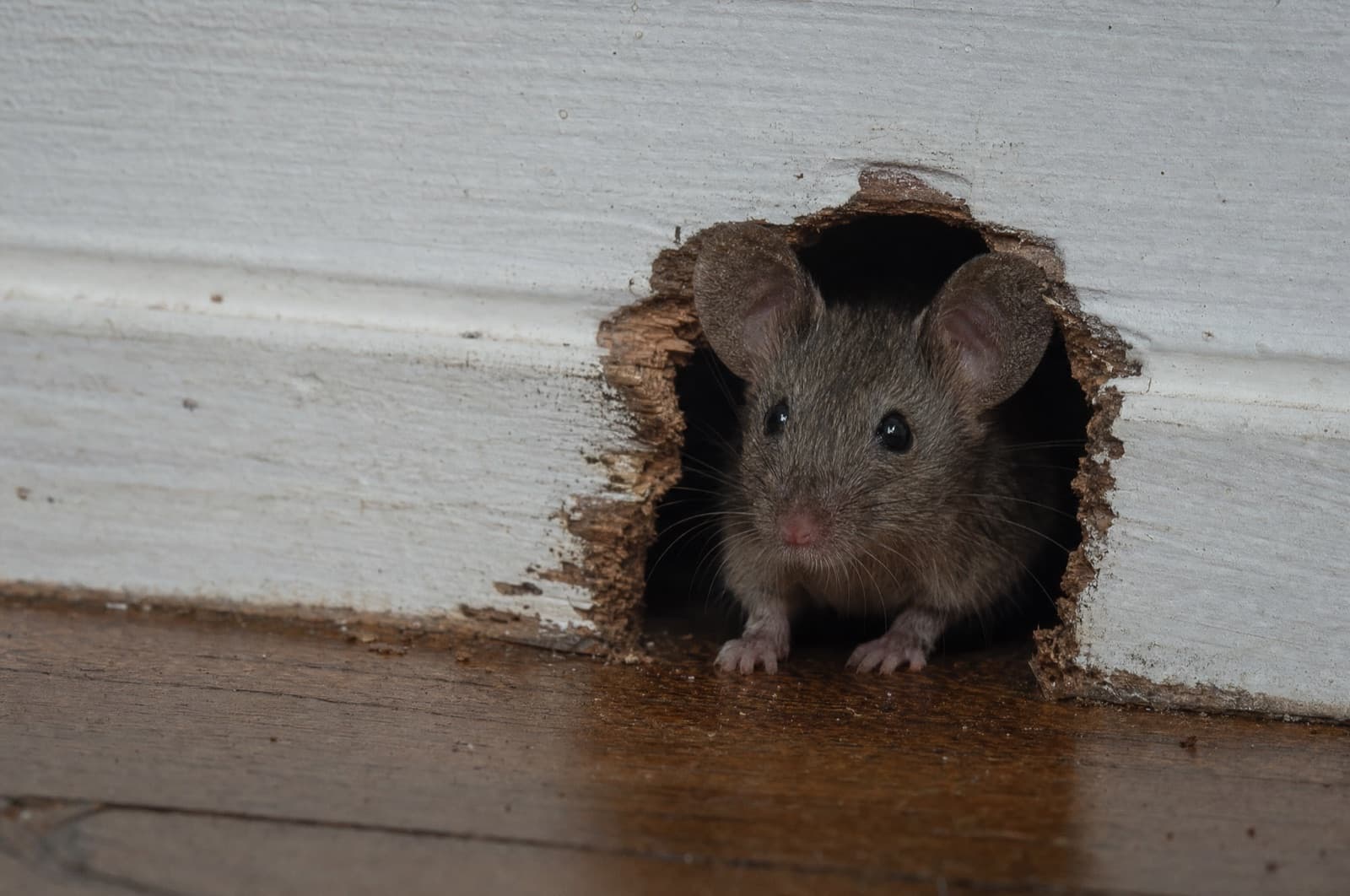
What Is the Best Way to Get Rid of Rats in a Home?
At a Glance
- Short answer: Sanitation + trapping + exclusion together — not any single method alone.
- Key fact: Skipping exclusion is the top reason a rat 'fix' doesn't last.
- NH relevance: Wooded NH lots keep outdoor rat pressure high year-round, so sealing matters more here than in denser urban settings.
- Action needed: Escalate to a professional once you're dealing with wall/attic nesting, structural burrows, or repeat infestations.
The short of it
There's no single silver bullet. University IPM programs converge on the same answer: remove food and harborage (sanitation), physically remove the current rats (pre-baited snap trapping), and seal the structure so new rats can't replace them (exclusion) — done together, not as separate, optional steps. A couple of rats caught early with good technique is a reasonable DIY project. Established colonies, wall or attic nesting, structural burrows, or repeat infestations are where DIY effort routinely stalls and professional inspection pays for itself.
What Is the Best Way to Get Rid of Rats in a Home — By the Numbers
3
Core elements of an effective rat program: sanitation, trapping, exclusion
½ in
Smallest gap a rat can squeeze through — the exclusion target
5–7 days
Recommended pre-baiting period before setting rat traps
150 ft
Typical rat foraging range from the nest
The full picture
Step 1: Sanitation — remove what feeds and shelters them
Secure trash and compost, store pet food and birdseed in sealed metal or hard-plastic containers, clean up spilled food promptly, and clear clutter and woodpiles that provide cover near the foundation. This won't evict rats already inside on its own, but it caps how large a population your home can support and makes trapping more effective, since hungry rats take bait faster.
Step 2: Trapping — remove the rats already there
Snap traps set along walls and known travel routes, pre-baited (left unset) for several days, are the extension-recommended workhorse — rats are neophobic and avoid new objects until they've grown used to them. Skip indoor rodenticides where possible: extension guidance discourages them because a poisoned rat commonly dies inside a wall or void, decaying for weeks and producing odor, secondary pests, and even a secondary-poisoning risk to pets that find a carcass.
Step 3: Exclusion — the step that makes it permanent
The University of Nebraska Extension is explicit that rodents reinvade through openings left unsealed after any control effort. Rats need only about a ½-inch gap to enter, so seal foundation cracks, utility penetrations, vents, and door gaps with hardware cloth, steel wool, and metal flashing — not caulk or foam alone, which rats chew through. This is the step that turns 'we trapped the rats' into 'the rats are actually gone.'
DIY vs. calling a professional
A light, early infestation — a few rats, no wall or attic nesting, accessible entry points — is a reasonable DIY project using the three steps above. Established colonies, burrows under structures, nesting in walls or attics, or infestations that keep recurring despite honest effort usually mean hidden entry points or a larger population than trapping alone can keep up with. That's the point where professional inspection, pre-baiting strategy, and warrantied exclusion earn their cost.
Bottom line — No single method — not traps alone, not poison, not sanitation alone — reliably solves a rat problem. Combine food/harborage removal, trapping, and sealing every gap larger than ½ inch; escalate to a professional once wall/attic nesting or recurrence enters the picture.
Not sure DIY is enough?
Anchor's licensed NH technicians run the full sanitation-trapping-exclusion program, or just the pieces you're missing.
Why this matters in New Hampshire
Wooded lots across Rockingham, Hillsborough, Merrimack, and Strafford counties keep outdoor rat populations close to homes year-round, and pressure spikes as Manchester's first hard frost approaches — about October 19 at 50% probability, October 29 at 80% (NOAA 1991–2020) — when rats push indoors for warmth. Sealing entry points before that seasonal push is the highest-leverage move for NH homeowners running the integrated approach above.
Key local data
Norway rats are established across New Hampshire's cities and towns (UNH Cooperative Extension); roof rats are essentially absent from the Northeast (Cornell).
- NH-licensed applicator · #782664
- Same-day service
- Family-owned since 2017
Service Area Map
Southern New Hampshire
Frequently asked
Sources (5)
- [1]
- [2]
- [3]
- [4]
- [5]
Written & reviewed by
VerifiedDaniel Brady
NH-Licensed Pesticide Applicator · License #782664 (NHDAMF, RSA 430)
Daniel Brady is the New Hampshire–licensed applicator behind Anchor Pest Services, a family-owned pest control company serving the Manchester area since 2017.
Professional Rodent Control
One Integrated Program, Not a Single Trick
Anchor Pest Services combines sanitation guidance, professional-grade trapping, and warrantied exclusion — the three-part approach that actually holds. Family-owned since 2017, NH license #782664.
- Same-day service across southern NH
- NH-licensed applicators (#782664)
- Free inspection — no flat-price guesswork
NH License #782664 · No obligation · We answer in person
Your next step
- Next step
Will Rats Go Away Without Food?
Read the answer - Related guide
Do Rats Come Back After Being Removed?
Read the answer - Related guide
How Long Does It Take to Get Rid of a Rat Problem?
Read the answer - Related guide
Will Rats Go Away Without Food?
Read the answer - Related guide
When Should I Call Pest Control for Rats?
Read the answer - Related guide
Do Dogs Keep Rats Away?
Read the answer