
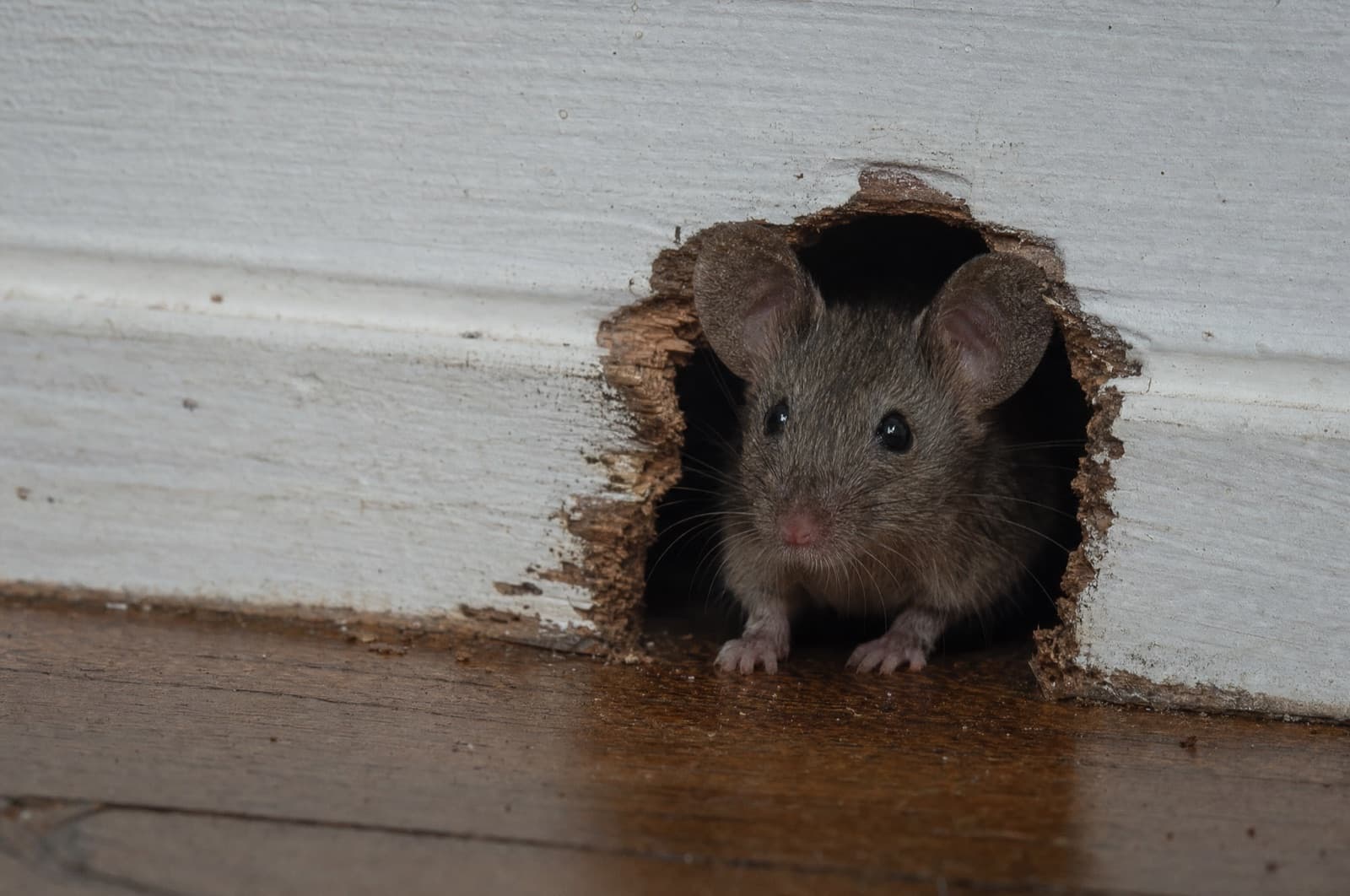
Will Rats Go Away Without Food?
At a Glance
- Short answer: No — food removal alone rarely evicts an established rat colony.
- Key fact: Rats forage up to 150 feet (a mile if stressed) rather than abandon warm shelter.
- NH relevance: NH's cold months raise the value of an indoor food source, so rats tolerate more inconvenience to keep it.
- Action needed: Pair food removal with active trapping and sealing entry points larger than ½ inch.
The short of it
Removing food is a smart first move, but on its own it rarely evicts an established rat colony. Norway rats typically hold territory within about 25–100 feet of a reliable food source and will simply forage farther — commonly up to 150 feet, and as far as a mile under pressure — rather than abandon a warm, sheltered structure. Rats also pull much of their water from moist food, garbage, and condensation, so a genuinely 'dry and empty' home is hard to achieve. Lasting removal takes food removal plus active trapping plus sealing entry points larger than ½ inch — not one of those alone.
Will Rats Go Away Without Food — By the Numbers
25–100 ft
Typical Norway rat territory around a food source
Up to 1 mile
How far a stressed rat will range rather than leave
½ inch
Smallest gap a rat needs to re-enter
3 steps
Sanitation + trapping + exclusion, done together
The full picture
Why rats don't just walk away
University IPM programs are consistent on this: rats establish territories within about 25–100 feet of a reliable food source and will gnaw through wood, plastic, and soft metals to keep reaching it. When one source disappears, a Norway rat typically doesn't leave the property — it forages farther, commonly ranging up to 150 feet and, under real food stress, as far as a mile. That's a lot of persistence for an animal that already has warmth and shelter.
Where the water actually comes from
Rats need daily water, but they get a surprising amount of it from moist food — garbage, pet food, compost — and from condensation on pipes. That means a home can look 'clean' to a homeowner and still supply everything a rat needs to keep going. Sanitation reduces how many rats an area can support, but it's a suppressant, not an eviction notice for the rats already established inside.
What actually gets rid of them
The durable fix is Integrated Pest Management: reduce food and harborage, actively trap to remove the rats currently inside, and seal every opening larger than ½ inch so new rats can't replace them. Skipping any one of the three tends to just make rats bolder and more destructive — ranging into living space, chewing wiring — before they ever abandon a nest.
Bottom line — Food removal is one leg of a three-legged stool: sanitation, trapping, and exclusion. Alone, it mostly just makes rats forage harder or range farther — it doesn't reliably clear them.
Cut off the food and they're still there?
Food removal alone won't clear an established rat colony. Anchor's licensed NH technicians trap the rats already inside and seal the entry points that let new ones in.
Why this matters in New Hampshire
Outdoor food thins out fast once cold weather sets in, which makes an indoor food source even more valuable to a rat that's already found one. Rats that get in ahead of Manchester's first hard frost — about October 19 at 50% probability, October 29 at 80% (NOAA 1991–2020) — have every incentive to stay put through winter rather than leave over a locked pantry. That's why fall is the highest-leverage season for exclusion, not food restriction alone.
Key local data
Norway rats are established across New Hampshire's cities and towns (UNH Cooperative Extension); roof rats are essentially absent from the Northeast (Cornell).
- NH-licensed applicator · #782664
- Same-day service
- Family-owned since 2017
Service Area Map
Southern New Hampshire
Frequently asked
Sources (5)
- [1]
- [2]
- [3]
- [4]
- [5]
Written & reviewed by
VerifiedDaniel Brady
NH-Licensed Pesticide Applicator · License #782664 (NHDAMF, RSA 430)
Daniel Brady is the New Hampshire–licensed applicator behind Anchor Pest Services, a family-owned pest control company serving the Manchester area since 2017.
Professional Rodent Control
Food Removal Is a Start, Not a Finish
A rat with shelter will forage farther rather than leave. Anchor Pest Services combines trapping with structural exclusion so the colony is removed and locked out — not just inconvenienced. Family-owned since 2017, NH license #782664.
- Same-day service across southern NH
- NH-licensed applicators (#782664)
- Free inspection — no flat-price guesswork
NH License #782664 · No obligation · We answer in person
Your next step
- Book a NH pro
Rodent Control
Book now - Next step
When Are Rats Most Active? NH Rat Timing Guide
Read the answer - Related guide
Do Rats Come Back After Being Removed?
Read the answer - Related guide
How Long Does It Take to Get Rid of a Rat Problem?
Read the answer - Related guide
How Long Do Rats Survive Indoors?
Read the answer - Related guide
How Long Do Rats Survive Indoors?
Read the answer