
Do Rats Come Back After Being Removed?
At a Glance
- Short answer: Yes — removal without sealing entry points is usually temporary.
- Key fact: A single dispersing rat can colonize a location that was just cleared.
- NH relevance: Wooded NH neighborhoods put most properties within a rat colony's normal 150-foot range.
- Action needed: Seal every gap larger than ½ inch as part of removal, not as a separate later step.
The short of it
Removal and prevention are two different jobs, and skipping the second one is why rats reappear. Trapping or baiting eliminates the rats currently inside, but the University of Nebraska Extension is explicit that rodents reinvade through openings left unsealed after any control program. Rats squeeze through gaps as small as ½ inch, Norway rats routinely range 150 feet from a nest (up to a mile under stress), and a single dispersing rat can start a new colony in a location that was recently cleared. In practice, 'do rats come back' is really asking 'did you seal the house' — removal without exclusion is temporary by design.
Do Rats Come Back After Being Removed — By the Numbers
½ inch
Smallest gap a rat needs to re-enter
150 ft
Typical Norway rat range from a nest (up to 1 mile stressed)
1 mi
How far Norway rats will range from a nest under stress or scarcity
The full picture
Trapping removes rats — it doesn't remove the doorway
Snap-trapping or baiting eliminates the rats currently living inside a structure, but it does nothing to the gaps, cracks, and utility penetrations that let them in. The University of Nebraska Extension states plainly that rodents will reinvade through openings left unsealed. That's a structural problem, not a population problem, and trapping alone can't fix it.
How little a rat needs to get back in
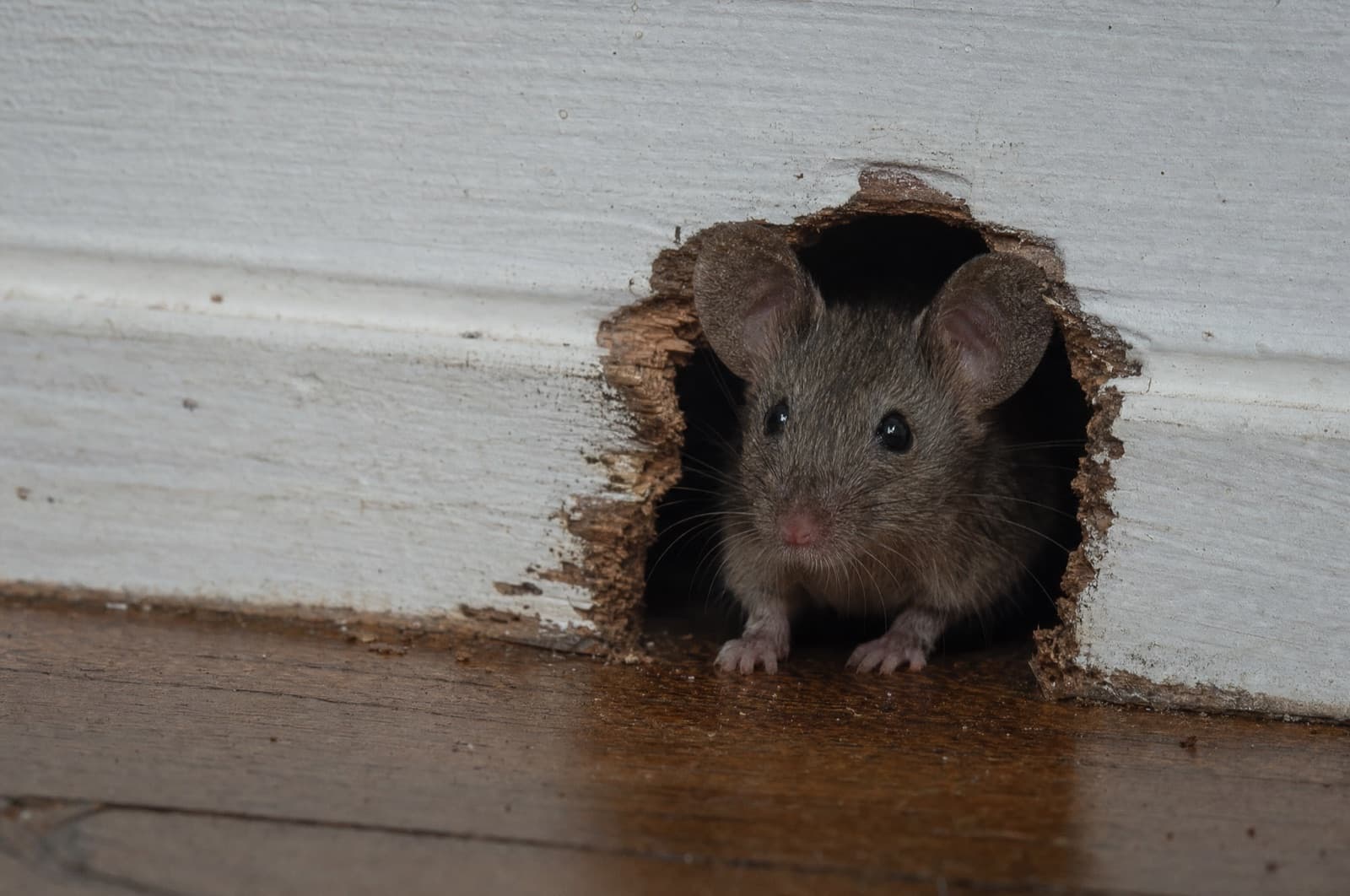
Rats squeeze through gaps as small as about ½ inch — roughly the diameter of a nickel — so any unsealed opening larger than that is effectively an open door. Norway rats travel roughly 150 feet from a nest for food and water routinely, and up to a mile under stress or scarcity, which means most New Hampshire properties sit well within reach of a neighborhood colony.
Why one cleared colony doesn't mean the problem is solved
A single dispersing rat — often a young male pushed out of a crowded nest — can arrive and start a brand-new colony in a spot that was recently cleared. Combined with reinvasion through unsealed gaps, this is why 'do rats come back' is really a question about your home's envelope, not about how thorough the last removal was.
Bottom line — Removal becomes durable prevention only when it includes sealing every gap larger than ½ inch — foundation cracks, utility penetrations, vents, and door sweeps. Skip that step and reinvasion is the honest default expectation, not a fluke.
Already trapped rats once? Don't do it twice.
Anchor pairs rat removal with warrantied exclusion work, so the gaps that let them in the first time get sealed for good.
Why this matters in New Hampshire
Wooded neighborhoods across southern and central New Hampshire keep outdoor rat pressure constant, and that pressure spikes each fall as Manchester's first hard frost approaches — about October 19 at 50% probability, October 29 at 80% (NOAA 1991–2020) — and rats push indoors for warmth. A home that was cleared last year without exclusion work is just as attractive to this year's dispersing rats as it was before.
Key local data
Norway rats are established across New Hampshire's cities and towns (UNH Cooperative Extension); roof rats are essentially absent from the Northeast (Cornell).
- NH-licensed applicator · #782664
- Same-day service
- Family-owned since 2017
Service Area Map
Southern New Hampshire
Frequently asked
Written & reviewed by
VerifiedDaniel Brady
NH-Licensed Pesticide Applicator · License #782664 (NHDAMF, RSA 430)
Daniel Brady is the New Hampshire–licensed applicator behind Anchor Pest Services, a family-owned pest control company serving the Manchester area since 2017.
Professional Rodent Control
Make Removal Permanent, Not Temporary
Trapping clears the rats you have now. Anchor Pest Services finds and seals every gap larger than ½ inch so the next dispersing rat has nowhere to go. Family-owned since 2017, NH license #782664.
- Same-day service across southern NH
- NH-licensed applicators (#782664)
- Free inspection — no flat-price guesswork
NH License #782664 · No obligation · We answer in person
Your next step
- Book a NH pro
Rodent Control
Book now - Next step
Where Do Mice Go in the Winter? NH Mouse Timing Guide
Read the answer - Related guide
Will Rats Go Away Without Food?
Read the answer - Related guide
How Big of a Hole Can a Rat Squeeze Through?
Read the answer - Related guide
What Steps Prevent Rats From Coming Back?
Read the answer - Related guide
What Steps Prevent Rats From Coming Back?
Read the answer