
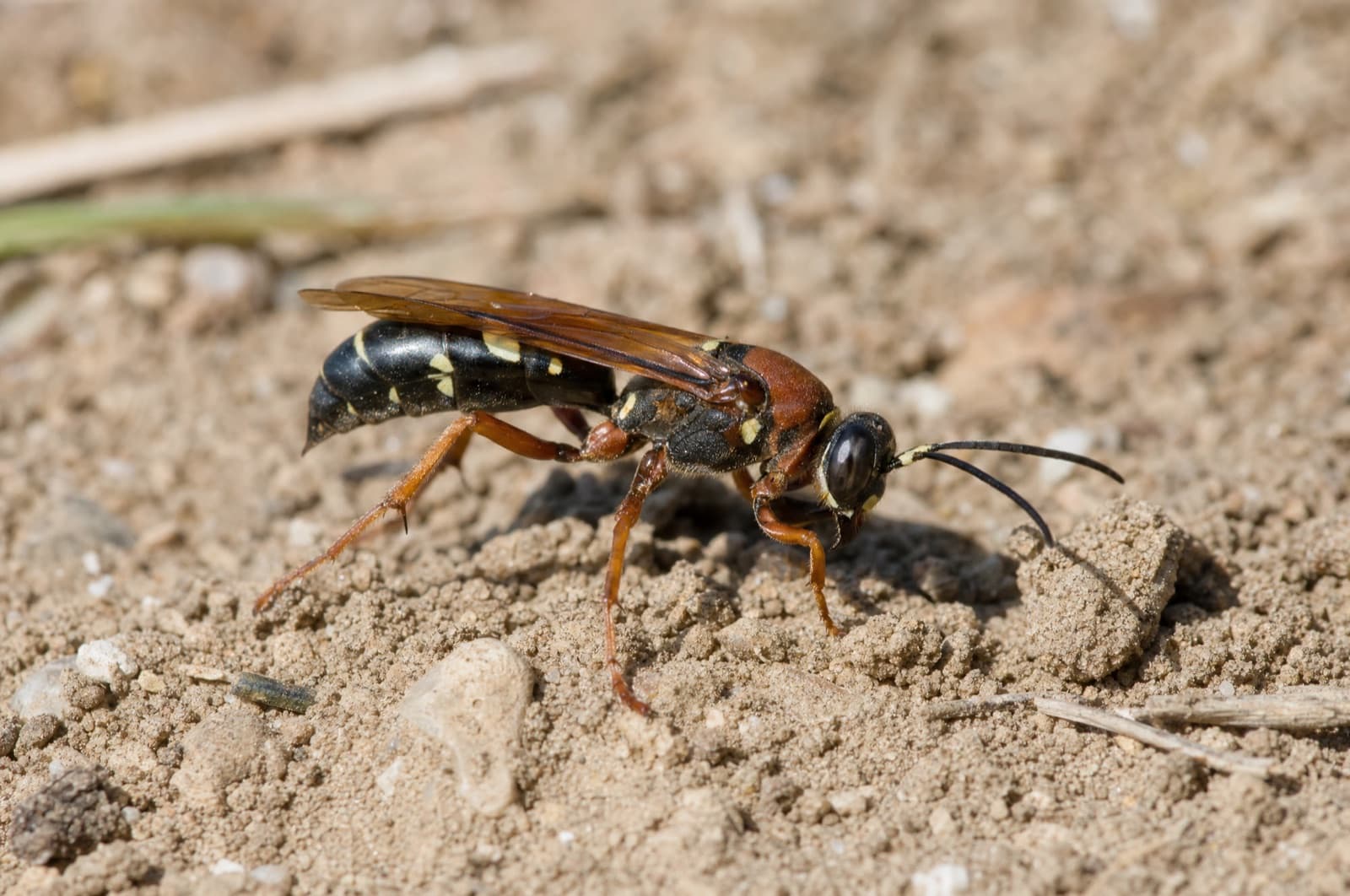
Cicada Killer Wasp — Quick ID for New Hampshire
Cicada killers are New Hampshire's largest wasps — up to 40 mm — and look alarming, but they almost never sting people. Males hover and patrol aggressively over lawns but cannot sting; females sting only if handled. This is the fast identifier; for lawn management and lookalike comparisons, see the full guide.
- Size
- 30–40 mm
- one of NH's largest wasps; Sphecius speciosus
- Sting risk
- Very low
- males can't sting; females rarely do
- Nesting
- Ground burrows
- solitary; no colony defense
- Active season
- Mid-July to late August
- timed to cicada emergence
Is it a cicada killer?
The cicada killer is New Hampshire's largest wasp and looks alarming — but it almost never stings people. Spotting one in your lawn in July is usually a sign of a solitary ground-nesting female, not a colony threat.
This page is a fast identifier. For lawn management, seasonal timing, and lookalike comparisons, see the complete cicada killer guide in the Wasp Species hub linked above.
Quick cicada killer ID
Size and behavior are the fastest tells — nothing else in NH is this large and digging burrows solo.
Cicada killer wasp
- Scientific name
- Sphecius speciosus
- Family
- Crabronidae
- Size
- 30–40 mm
- Coloration
- Black or rusty thorax, black abdomen with pale yellow markings, amber-tinted wings
- Habitat
- Sunny, sparsely vegetated or bare soil — lawns, sandy banks, edges of driveways and patios
- Active season
- Mid-July through late August
- Diet
- Adults drink nectar; females provision burrows with paralyzed cicadas as larval food
- Reproduction
- Females dig individual burrows and stock each cell with one or two paralyzed cicadas
- Lifespan
- Single season; adults die by September
Present throughout New Hampshire wherever cicadas occur; most visible in sunny southern NH yards and sandy banks in July–August.
The tells — key ID features
- Very large — 30–40 mm, far bigger than any yellowjacket or paper wasp.
- Amber-tinted wings and a black abdomen with pale yellow bands (not crisp bright yellow).
- Solitary ground nester: pencil-width burrow holes with a fan of excavated soil alongside.
- Males hover and patrol aggressively but physically cannot sting; females sting only if grabbed.
Bald-faced hornet
How to tell — Bald-faced hornets are black and white and build an enclosed aerial paper nest — not ground-burrowing, and smaller (15–20 mm).
Eastern yellowjacket
How to tell — Yellowjackets are much smaller (10–16 mm), with crisp bright yellow banding, and nest in concealed colonies — not solitary burrows.
Signs of a problem
Watch the lawn in midsummer.
Pencil-width burrow holes with a small mound of excavated soil in a bare or sandy lawn area
What it means — Female cicada killer digging or provisioning a nesting burrow.
Large wasps hovering low and patrolling over a patio, lawn, or driveway edge in July or August
What it means — Male cicada killers defending territory — they look threatening but cannot sting.
Cicada killer management in New Hampshire
Cicada killers are beneficial but can damage a lawn or create an unsettling presence in a high-traffic area. Because they're solitary ground-nesters, treatment differs from colony stingers. The full guide covers lawn management and when professional treatment is warranted.
When to call a pro
- Numerous burrows are damaging a lawn, walkway, or landscape bed.
- Nesting is in a high-traffic area (play area, front walk) and the presence is disruptive.
- You want a confirmed ID before any treatment — misidentifying a colonial stinger could lead to unnecessary aggression.
Not sure it's a cicada killer wasp?
A licensed NH technician can confirm the species and tell you honestly whether it's a DIY fix or a job for a pro — free inspection, same-day service across Southern New Hampshire.
Frequently asked questions
Sources(2)
- [1]Penn State Extension — Cicada Killer Wasps
biology, sting risk, lawn behavior
extensionverified 2026-06-30 - [2]
Written & reviewed by
VerifiedDaniel Brady
NH-Licensed Pesticide Applicator · License #782664 (NHDAMF, RSA 430)
Daniel Brady is the New Hampshire–licensed applicator behind Anchor Pest Services, a family-owned pest control company serving the Manchester area since 2017.
Last updated 2026-06-30

New Hampshire pest control
Dealing with cicada killer wasps in your home?
Anchor Pest Services identifies and handles cicada killer wasp problems across southern and central New Hampshire. Family-owned since 2017, NH license #782664.
- NH-licensed applicators (#782664)
- Same-day service · free inspection
- Family-owned since 2017
Your next step
- Next step
Do wasps chew on wood to build nests?
Read the answer - What to do next
How to Get Rid of Cicada Killer Wasps
Read the answer - What to do next
What Attracts Cicada Killer Wasps to Your House?
Read the answer - Also relevant
Ground Wasps in NH — What's Nesting in Your Lawn?
Read the answer - Related guide
Paper Wasp — Quick ID for New Hampshire Homeowners
Read the answer