
How to Check Your Dog for Ticks After a Hike
This is a homeowner habit, not a service call — a thorough post-hike check is something you can do every time in a few minutes.
You've got this. It's a systematic hands-and-eyes routine, not a special skill, and doing it the same day is what actually matters.
At a glance
- Whose desk: Your hands
- Urgency: Home care OK
- The rest lives at: Ticks & fleas FAQ
Whose job is this, really?
Pet-parasite questions belong to three genuinely different owners. Here's the desk that actually owns this one — even when the honest answer is 'not us.'
This is a homeowner habit, not a service call — a thorough post-hike check is something you can do every time in a few minutes.
You've got this. It's a systematic hands-and-eyes routine, not a special skill, and doing it the same day is what actually matters.
What this means for your pet — and when to act
Health-conservative by construction: when in doubt, this escalates. Read the trigger for what moves you up a band.
A routine post-exposure habit, not a symptom check
This page is about technique — there is no symptom in play, just a habit worth building after any time outdoors in tick habitat.
If you find a tick already attached and notice illness signs (fever, lethargy, limping) in the days-to-weeks afterward, that becomes a veterinary question — not something this check itself resolves.
The safe technique, step by step
Do this within a couple of hours of coming inside, in good light, while your dog is calm.
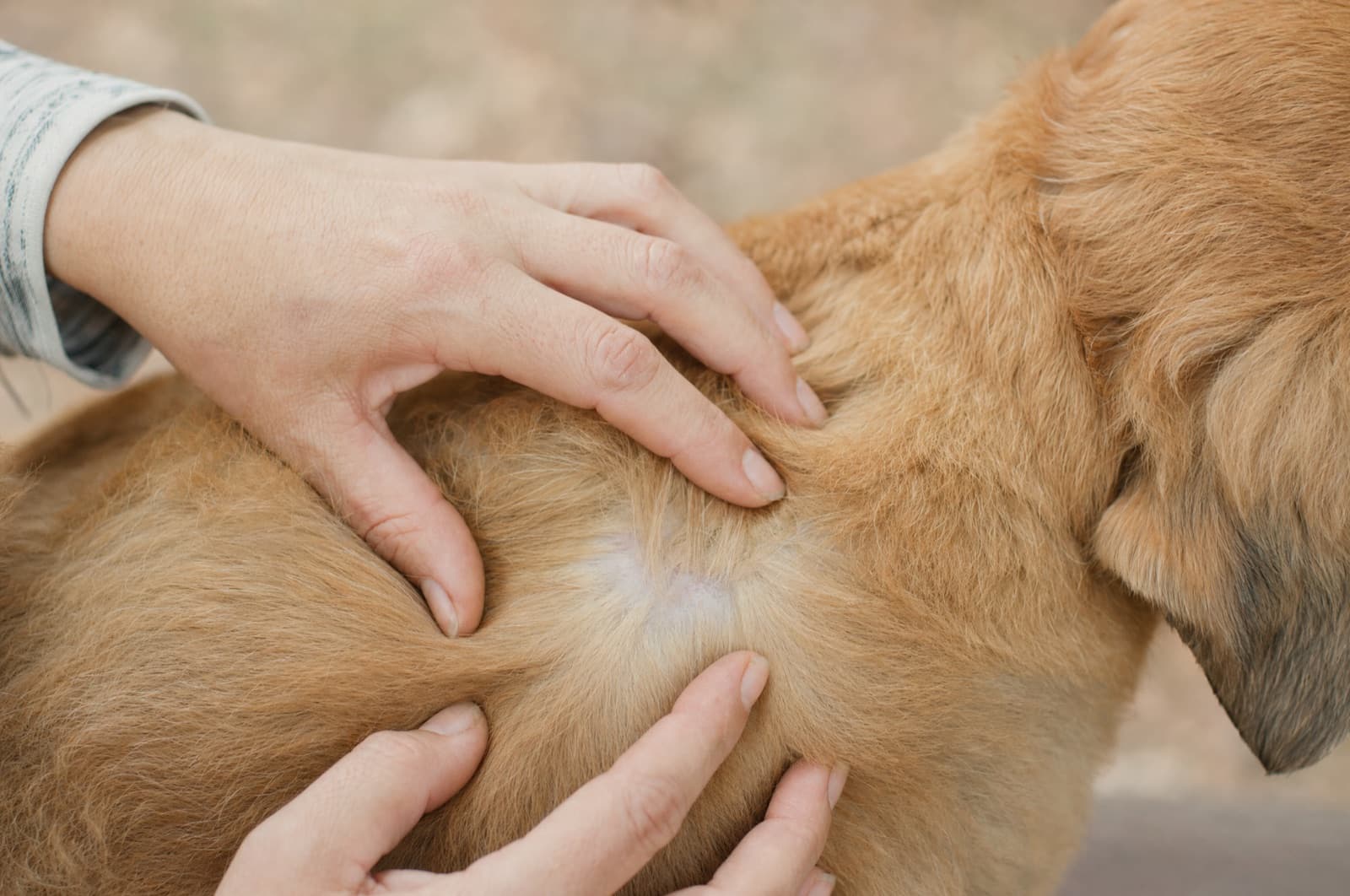
Run your hands slowly over your dog's entire body, feeling for any small bump under the fur.
An attached tick feels like a firm, skin-level lump; engorged ones are larger and softer.
Part the fur and inspect the CDC-listed hot spots specifically: in and around the ears (including the ear-canal opening), around the eyelids, under the collar, under the front legs, between the back legs, between the toes, and around the tail base.
These warm, thin-fur, tucked-away areas are where ticks attach most often.
Use a flashlight on dark or long coats and go slowly — nymphs are pinhead-sized and easy to miss.
Nymph season (mid-May through mid-July in NH) is when the smallest, hardest-to-spot ticks are most active.
Remove any attached tick immediately with fine-tipped tweezers rather than noting it and coming back later.
Prompt removal reduces disease-transmission risk; don't wait.
Check your own body, clothing, and gear too — ticks hitchhike indoors on pets, packs, and people.
A Connecticut study found showering soon after being outdoors cut human Lyme risk by as much as 58%, and routine body checks by up to 45%.
A quick brush or lint-roller pass over the coat can help dislodge unattached, crawling ticks before they find a spot to bite.
This hub owns pet-specific prevention
The general biology, the mosquito Q&A, the pet-product safety — those live in siblings that already earn them. Here's exactly where.
General tick biology and identification live in our ticks & fleas FAQ. This page covers only the post-hike check technique.
How this calibrates for NH
New Hampshire's wooded trail edges and tall-grass margins are prime questing habitat, and blacklegged ticks stay active on any winter day above freezing with no snow cover — so this check is a year-round habit, not just a summer one. Walking dogs in the center of trails away from brushy edges reduces how many ticks they pick up in the first place.
NH-licensed applicator #782664 (NHDAMF, RSA 430) · NEPMA member · family-owned since 2017.
Frequently asked
Sources(3)
- [1]CDC
Preventing Ticks on Pets — hot-spot diagram, daily checks
- [2]UNH Cooperative Extension
New Hampshire tick seasonality and winter activity
- [3]CDC
Preventing Tick Bites — examine gear and pets
Written & reviewed by
VerifiedDaniel Brady
NH-Licensed Pesticide Applicator · License #782664 (NHDAMF, RSA 430)
Daniel Brady is the New Hampshire–licensed applicator behind Anchor Pest Services, a family-owned pest control company serving the Manchester area since 2017.
Your next step
Anchor Pest Services
Have a different pest question?
This one may be your vet's call, not a spray — but if you're facing something that is a pest job, we serve Southern New Hampshire with a free inspection and same-day service.
- NH-licensed applicator
- Same-day service
- Pet & family-conscious
NH License #782664 · No obligation · We answer in person