
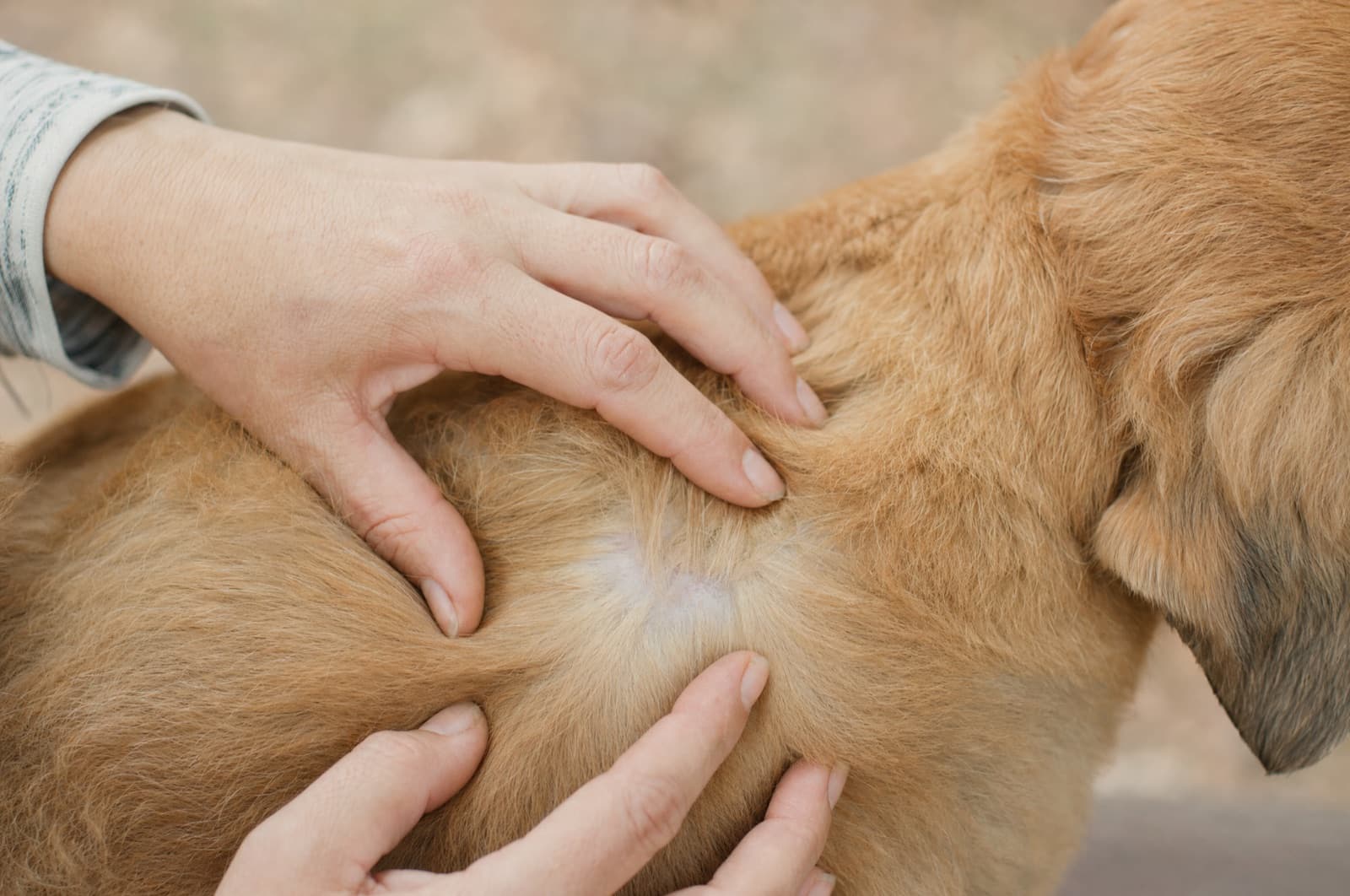
How to Find Tick Hot Spots on Dogs During Body Checks
Learning where to look is a homeowner skill, not a service call — a systematic body check is something any pet owner can master.
You've got this. It's a matter of knowing which handful of spots to check carefully, not searching your dog's entire coat inch by inch.
At a glance
- Whose desk: Your hands
- Urgency: Home care OK
- The rest lives at: Ticks & fleas FAQ
Whose job is this, really?
Pet-parasite questions belong to three genuinely different owners. Here's the desk that actually owns this one — even when the honest answer is 'not us.'
Learning where to look is a homeowner skill, not a service call — a systematic body check is something any pet owner can master.
You've got this. It's a matter of knowing which handful of spots to check carefully, not searching your dog's entire coat inch by inch.
What this means for your pet — and when to act
Health-conservative by construction: when in doubt, this escalates. Read the trigger for what moves you up a band.
A technique to learn, not a symptom check
This page teaches where to look during a body check — there is no symptom in play here, just a skill worth building.
If a check turns up illness signs alongside an attached tick, or signs appear in the days-to-weeks after a bite, that becomes a veterinary question.
The safe technique, step by step
CDC's dog diagram and CAPC guidance both point to the same handful of high-yield spots — work through them the same way every time.
Start at the head and work systematically toward the tail so you don't skip a zone.
A consistent order beats a random pass over the coat.
Check in and around the ears, including the ear-canal opening and the base of the flap, using a flashlight if needed.
CAPC notes the head, ears, and neck are especially common attachment sites.
Check around the eyelids gently, without pressing on the eye itself.
Thin skin and fur here make it an easy attachment spot.
Check under the collar by sliding it around and parting the fur beneath it.
A collar covers and protects this warm strip of skin from casual brushing.
Check under the front legs (armpits) and between the back legs (groin).
Both are warm, protected, thin-fur zones ticks favor.
Check between the toes, both top and bottom, near the pads.
Easy to miss because it requires spreading the toes apart.
Check around and under the base of the tail.
Another tucked, thin-fur area.
Use your fingertips to feel for a small hard bump at each zone — an attached tick feels like a firm skin-level lump, while an engorged one is larger and softer.
Look for tiny legs near the skin to tell a tick apart from a skin tag, nipple, or scab.
This hub owns pet-specific prevention
The general biology, the mosquito Q&A, the pet-product safety — those live in siblings that already earn them. Here's exactly where.
General tick biology lives in our ticks & fleas FAQ. This page covers only where to check and how to tell a tick apart from normal skin features.
How this calibrates for NH
New Hampshire's nymph tick stage peaks mid-May through mid-July and is pinhead-sized — the stage most likely to transmit Lyme disease to people and pets precisely because it's so easy to miss. Going slowly through each hot spot with good light matters most during this window.
NH-licensed applicator #782664 (NHDAMF, RSA 430) · NEPMA member · family-owned since 2017.
Frequently asked
Sources(3)
- [1]CDC
Preventing Ticks on Pets — hot-spot diagram
- [2]CAPC (Companion Animal Parasite Council)
Common attachment sites — head, ears, neck
- [3]UNH Cooperative Extension
New Hampshire nymph seasonality and size
Written & reviewed by
VerifiedDaniel Brady
NH-Licensed Pesticide Applicator · License #782664 (NHDAMF, RSA 430)
Daniel Brady is the New Hampshire–licensed applicator behind Anchor Pest Services, a family-owned pest control company serving the Manchester area since 2017.
Your next step
Anchor Pest Services
Have a different pest question?
This one may be your vet's call, not a spray — but if you're facing something that is a pest job, we serve Southern New Hampshire with a free inspection and same-day service.
- NH-licensed applicator
- Same-day service
- Pet & family-conscious
NH License #782664 · No obligation · We answer in person