
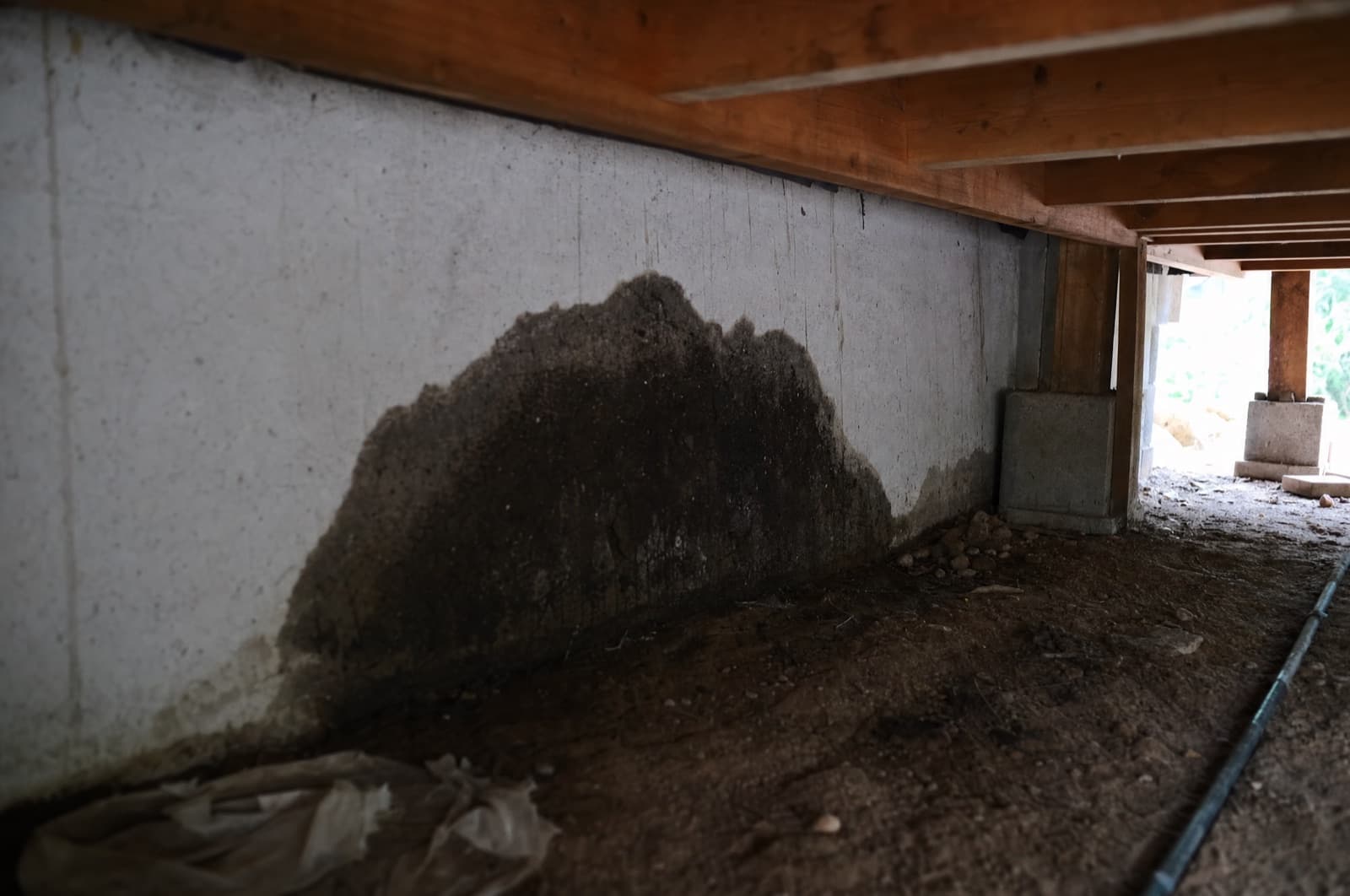
How to Prevent Termites After Water Damage in a Bathroom or Laundry Room
Water-damaged framing in a bathroom or laundry room is genuine termite habitat — it's one of the few spots where a moisture-sustained colony can persist even without a strong connection to the soil.
Worth prompt drying and a look inside the cavity, not panic. Most leak damage is decay, but a chronically wet bay is exactly the condition subterranean termites exploit, so it deserves a real check.
At a glance
- What it is: Real termite risk
- The driver: Leak-saturated framing
- Who fixes it: A moisture or building pro
Water-damaged framing in a bathroom or laundry room is genuine termite habitat — it's one of the few spots where a moisture-sustained colony can persist even without a strong connection to the soil.
Worth prompt drying and a look inside the cavity, not panic. Most leak damage is decay, but a chronically wet bay is exactly the condition subterranean termites exploit, so it deserves a real check.
Pull the right lever, not the sprayer
The organism is downstream of one condition. Remove that condition and it has no foothold — which is why prevention here is rarely a pesticide.
The driver
Leak-saturated framing
Subterranean termites strongly prefer moist, softened wood over dry lumber, and a leak or overflow can keep framing wet well after the surface looks dry. Chronic dampness is one of the few conditions that lets an above-ground colony persist without a constant soil connection, and it's the same condition that feeds wood-decay fungi.
Source:Clemson Cooperative Extension (HGIC)— Subterranean Termite Control
3 levers, honestly ranked
Sorted by what actually moves the driver — primary first, theatre last. Effort is graded so you know what's a five-minute fix and what's a real project.
- Primary — moves the driverWeekend project
Dry the structure all the way through, not just the surface
After any leak, overflow, or slow drip, run fans and a dehumidifier until the framing is dry at its core, not merely dry to the touch — surface drying can leave a damp interior that stays attractive to termites and decay fungi for weeks. Open a small inspection point if a wall cavity was soaked, and replace any wood that has gone soft, delaminated, or crumbly rather than drying and reusing it. Removing the trapped moisture removes the exact condition that created the risk in the first place, which is why this is the highest-leverage step.
- Primary — moves the driverWeekend project
Fix the leak at its source and ventilate the room
Repair the plumbing, fixture, or appliance connection that caused the leak, and add or run an exhaust fan so routine humidity from showers, baths, and washing machines doesn't re-wet the same cavity. A one-time dry-out doesn't help much if the same slow drip starts the cycle again.
- SupportingQuick DIY
Inspect the open cavity before you close it back up
While a wall or subfloor is open for repair, probe the studs and subfloor for hollow-sounding wood, soil-lined tunnels, or pencil-width mud tubes before patching. This is the one real chance to catch termite activity while it's visible instead of sealing it behind new drywall.
Whose job is this, really?
Who actually fixes it
A moisture or building pro
The actual fix is plumbing repair and structural drying — a plumber or water-damage/building professional's job, not a pesticide application. A licensed pest professional's role is confirming whether termites (versus plain decay) are present once the cavity is open.
You find mud tubes or soil packed inside the cavity, or swarmers emerge indoors near the bathroom or kitchen in spring — request a professional termite inspection.
How this calibrates for NH
A sudden indoor swarm in a bathroom or kitchen is a recognized early sign of an established colony, and New Hampshire's TIP Zone 3 counties — Rockingham, Hillsborough, Merrimack, and Strafford — are squarely in the range where that combination is worth taking seriously rather than dismissing as stray flying ants.
NH-licensed applicator #782664 (NHDAMF, RSA 430) · NEPMA member · family-owned since 2017.
Frequently asked
Sources(3)
- [1]Clemson Cooperative Extension (HGIC)
Subterranean Termite Control
- [2]NC State Extension
Monitoring & Management of Eastern Subterranean Termites
- [3]UC Statewide IPM Program (UC ANR)
Subterranean and Other Termites
Written & reviewed by
VerifiedDaniel Brady
NH-Licensed Pesticide Applicator · License #782664 (NHDAMF, RSA 430)
Daniel Brady is the New Hampshire–licensed applicator behind Anchor Pest Services, a family-owned pest control company serving the Manchester area since 2017.
Your next step
Anchor Pest Services
Have a different pest question?
This one may not be a pesticide job — but if you're facing something that is, we serve Southern New Hampshire with a free inspection and same-day service.
- NH-licensed applicator
- Same-day service
- Pet & family-conscious
NH License #782664 · No obligation · We answer in person