
Skip to content
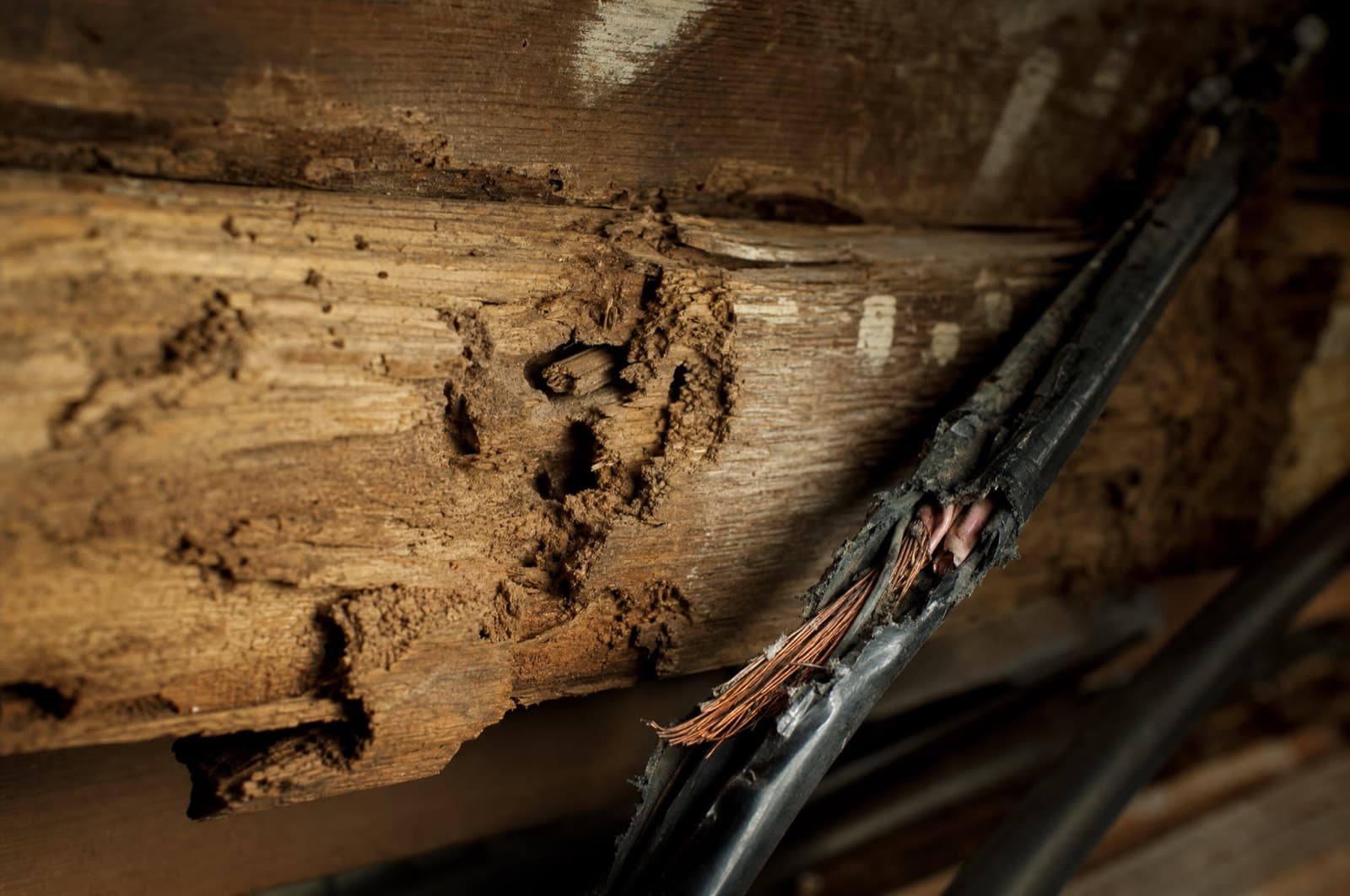
Pest damage evidence — a gnawed structural beam and a chewed electrical wire
Daniel Brady · NH-Licensed Pesticide Applicator · License #782664
Reviewed by Daniel Brady

Do termites really eat wood inside houses?

Structural — genuinely earned, not overstated
Yes, genuinely. Eastern subterranean termites — the only termite species established in New Hampshire — feed on wood cellulose with the help of gut protozoa that let them digest it, and this is one of the few pests in this hub where the fear is earned rather than overstated. Per the U.S. Forest Service, an average subterranean termite colony of about 60,000 workers eats roughly one-fifth of an ounce of wood a day, enough to fully consume a one-foot length of a 2x4 in five to six months. That's real, ongoing structural feeding — but it is a multi-year process, not the overnight destruction implied by 'silent destroyer' marketing.

At a glance

  • Can it?: Yes
  • How common: Occasional
  • Hype: About right
  • Evidence: Well documented
  • ~60,000 workers

    Size of an average subterranean termite colony

    Colonial Pest Control

  • 1/5 ounce/day

    Wood a mature colony eats daily

    Colonial Pest Control

  • 5-6 months

    Time for a colony to fully consume a one-foot length of a 2x4

    Colonial Pest Control

  • 3-8 years

    Ongoing feeding needed before serious structural damage occurs

    NC State Extension

The honest answer

The short of it

The verdict
Structural — genuinely earned, not overstated

Yes. Eastern subterranean termites, the only termite established in New Hampshire, digest structural wood cellulose and cause real damage — the one honest correction is speed: this takes years, not weeks.

The correction

What they claim vs. what the evidence supports

One shared severity track, two markers. The span between them is the hype delta — named out loud.

The claim — subterranean termites eating structural wood inside a house

That termites are 'silent destroyers' capable of devastating a home's structure in the blink of an eye, framing any infestation as an immediate emergency measured in days.

Where the claim comes from: Pest-control marketing copy and viral home-inspection posts that use collapse-adjacent language to create urgency around termite treatment.

Severity, 0–100
Hype says85
74Evidence says
The hype is fairWell documented
The evidence

Termites genuinely do eat structural wood, continuously, in New Hampshire homes — this part of the claim holds up. What doesn't hold up is the implied speed. NC State Extension states that 'serious structural damage takes between 3 to 8 years of ongoing feeding and infestation to occur,' and New England's cold winters slow feeding activity sharply for months at a time.

The gap

This is one of the pages in this hub where the internet's severity rating is close to correct — termites really are a genuine structural threat and deserve to be taken seriously. The only distortion worth naming is the timescale: it's years of ongoing feeding, not an overnight collapse, and that difference is exactly the room a homeowner has to catch it early.

Damage assessment

What is actually harmed

Damage verdict
Structural — genuinely earned, not overstated
StructuralCan it?Yes
The specimen
Pest
Eastern subterranean termites (Reticulitermes flavipes) — the only termite species established in New Hampshire
What is in question
Sill plates, floor joists, subflooring, wall studs, and girders near soil contact; also paper, cardboard, and cellulose insulation
How common
Occasional
Evidence
Well documented
Mechanism

Worker termites tunnel from an underground colony through soil, building pencil-diameter mud tubes to bridge gaps like foundation walls, and feed on wood cellulose along the grain once they reach it. They rely on gut protozoa to secrete the enzymes needed to break down cellulose — without those symbionts, termites cannot digest wood at all. Because feeding follows moisture and proximity to soil, sill plates and floor framing near grade are the most exposed targets, and a mature colony's feeding is continuous as long as it remains active and untreated.

Actually at risk4
  • Sill plates and rim joists in contact with or close to soil
  • Floor joists, subflooring, and girders reached via mud tubes
  • Wall studs and framing near foundation penetrations
  • Paper, cardboard, and cellulose-based insulation the colony encounters along the way
Not at risk — despite the myth3
  • Concrete, masonry, and steel — termites tunnel around these but cannot eat or breach them
  • Homes and structures with no wood-to-soil contact and an intact termiticide or bait barrier
  • New Hampshire homes worried about drywood or Formosan termites — neither species is established in the state; only the eastern subterranean termite is
Worst realistic case
A hidden infestation left undetected for several years compromises sill plates or floor framing significantly enough to require structural repair — a real and serious outcome, but one that took years of continuous feeding to reach, not weeks.

Assessed from: U.S. Forest Service (via Colonial Pest Control); Connecticut Agricultural Experiment Station Eastern Subterranean Termite fact sheet; Utah State University Extension; NC State Extension

The compounding clock

Does it get worse if you ignore it?

Over time
Compounds

Compounds continuously, but slowly — the real clock runs in years, not weeks.

The timeline
3 stages
  1. MonthsReversible

    A colony reaches structural wood via mud tubes and begins feeding. Damage is internal and typically invisible from the surface; New Hampshire winters slow activity considerably.

  2. YearsReversible

    Feeding continues at roughly one-fifth of an ounce a day for a mature colony — enough to consume a one-foot 2x4 section every five to six months. Localized weakening begins to accumulate in the wood being actively fed on.

  3. DecadesReversible

    NC State Extension notes serious structural damage takes 3 to 8 years of ongoing, untreated infestation to occur; left far longer, undetected damage can become extensive in framing near the original entry point.

What stops the clock
A professional termiticide soil barrier or bait system that eliminates the colony. Once the colony is gone, feeding stops entirely — the wood that's already been consumed doesn't repair itself, but no further damage accrues.
Repair scope

Who actually fixes this

Scope, not dollars — the honest answer to “how expensive is it,” routed to the right trade.

Who fixes it
Pest pro first
Effort
A project

The colony must be eliminated before any structural repair is worth doing — replacing wood while termites remain active simply gives them fresh material to feed on next.

The right order
  1. 1
    Confirm active termite activity and have the colony professionally treated (soil termiticide barrier or bait system)
  2. 2
    Have a licensed contractor assess any wood that shows significant feeding damage
  3. 3
    Replace or reinforce compromised sill plates, joists, or framing as the contractor recommends
Route by symptom
  • Licensed contractorFeeding has significantly weakened a sill, joist, or other structural member and needs replacement or sistering
Do not
  • Don't patch, paint, or replace wood over an active, untreated colony — it will simply feed on the new material
  • Don't wait for visible damage before acting — most feeding happens inside wood where it isn't visible until well established
Where we help — and where we don't

Termite treatment and prevention are core Anchor work. We do not perform the structural rebuild ourselves — that's a licensed contractor's job, and we'll say so plainly rather than quote you for it.

In depth

The full picture

01

Yes — and this is one of the earned fears in this hub

It's worth being direct: this hub exists mainly to correct exaggerated damage claims, and termites are one of the few pests where that correction runs the other way. Eastern subterranean termites genuinely eat structural wood inside New Hampshire homes, and the risk is well documented rather than anecdotal or overstated marketing copy.

The mechanism is specific. Termites cannot digest cellulose on their own — they depend on protozoa living in their gut to break wood down into usable nutrients. A worker termite without those gut symbionts would starve even surrounded by wood. That dependency is also why termites need consistent access to moisture, and why they build mud tubes to bridge dry, exposed gaps like a foundation wall on their way to a wood source.

02

How much wood, and how fast

The U.S. Forest Service estimate, cited by pest professionals including Colonial Pest Control, puts a mature colony's feeding rate in concrete terms: roughly 60,000 workers eating about one-fifth of an ounce of wood per day. At that rate, it takes five to six months for a colony to fully consume just a one-foot length of a standard 2x4. That's a genuinely useful number to hold onto, because it reframes 'termites are eating your house' from an abstract horror into a specific, slow, measurable process.

03

The honest correction: speed, not existence

The part of the common claim that doesn't hold up is timing. 'Silent destroyers' and 'damage in the blink of an eye' language implies a home could be compromised in days or weeks. NC State Extension's actual figure is that serious structural damage takes three to eight years of ongoing, untreated feeding to occur — and New Hampshire's cold winters slow termite activity for a meaningful part of each year on top of that.

That gap between real and invented isn't a reason to relax about termites; it's the opposite. It means a homeowner who catches the signs early — mud tubes, swarmers, hollow-sounding wood — has real time to act before serious structural compromise sets in. Drywood and Formosan termites, which can behave differently, are not established in New Hampshire; the eastern subterranean termite is the species actually at work here, and its pace is what the evidence above describes.

Key takeaways
5 points
  • Yes — eastern subterranean termites genuinely eat structural wood in New Hampshire homes; this fear is earned, not overstated.
  • A mature colony eats about one-fifth of an ounce of wood a day — enough to consume a one-foot 2x4 in five to six months.
  • Serious structural damage takes three to eight years of ongoing, untreated feeding — the honest clock is years, not weeks.
  • Only the eastern subterranean termite is established in New Hampshire; drywood and Formosan termites are not.
  • The colony must be professionally eliminated before any structural repair is worth doing.
New Hampshire context

What this looks like in New Hampshire homes

Orkin's Termite Infestation Probability zone data places southern New Hampshire in a zone of slight to moderate termite pressure, meaning infestations happen but at a lower baseline rate than the Mid-Atlantic or Southeast. Combined with the state's cold winters, which slow termite feeding for months at a stretch, that means New Hampshire homeowners typically have more runway to catch an infestation early than homeowners in warmer regions — but the eastern subterranean termite is genuinely present and active across Manchester, Nashua, Concord, and surrounding towns during the warmer months.

  • NH-licensed #782664

    Southern New Hampshire

  • Family-owned

    Since 2017

  • Honest routing

    Even when it isn’t us

We serve these communities

ManchesterNashuaConcordDerryBedfordSalemHudsonAmherstAuburnGoffstownHooksettLitchfieldLoudonMilfordBristol

Service Area Map

Southern New Hampshire

BristolPop. 3,200LoudonPop. 5,500ConcordPop. 43,900HooksettPop. 14,800GoffstownPop. 18,000AuburnPop. 5,700ManchesterPop. 115,600BedfordPop. 23,300LitchfieldPop. 8,500AmherstPop. 11,300DerryPop. 34,500MilfordPop. 15,700HudsonPop. 25,600NashuaPop. 91,100SalemPop. 30,000HQCityHover for info

Mud tubes or swarmers? Termites are a genuine structural risk — catch it early.

Anchor's termite treatment eliminates the colony before feeding becomes years of undetected structural loss.

Follow-up questions

Frequently asked

Sources & citations(4)
  1. Colonial Pest Control — How Much Wood Can Termites Eat (citing U.S. Forest Service)

    Mature colony feeding rate of roughly 1/5 ounce of wood per day; one-foot 2x4 consumed in 5-6 months

    extensionverified 2026-07-16
  2. Connecticut Agricultural Experiment Station — Eastern Subterranean Termite fact sheet

    Feeding mechanism, mud tube construction, and structural wood targets

    govverified 2026-07-16
  3. NC State Extension — Eastern Subterranean Termites

    Serious structural damage takes 3-8 years of ongoing feeding and infestation to occur

    extensionverified 2026-07-16
  4. Utah State University Extension — Subterranean Termites

    Gut protozoa required for cellulose digestion

    extensionverified 2026-07-16

Written & reviewed by

Verified

Daniel Brady

NH-Licensed Pesticide Applicator · License #782664 (NHDAMF, RSA 430)

Daniel Brady is the New Hampshire–licensed applicator behind Anchor Pest Services, a family-owned pest control company serving the Manchester area since 2017.

Verify license

Last updated Jul 2026

Honest pest help for New Hampshire homes

We Take Termites Seriously — And We'll Tell You the Real Timeline.

Termites are one of the few pests in this guide where the fear is genuinely earned: subterranean termites really do eat structural wood in New Hampshire homes. The honest correction is speed, not severity — serious damage takes years, giving you real time to act. Anchor Pest Services handles termite treatment and prevention; the structural rebuild, if one's ever needed, routes to a licensed contractor. Family-owned since 2017, NH license #782664, serving Manchester, Nashua, Concord and nearby towns.

  • Honest advice — we tell you when a fear is genuinely earned, not just when it isn't
  • NH-licensed applicators (#782664) — free inspection, same-day service
  • Termite treatment and structural pest control across southern and central New Hampshire

NH License #782664 · No obligation · We answer in person