
How to Prevent Termites in Wall Studs After a Plumbing Leak
Leak-soaked wall studs are a top-tier conducive condition and one of the specific situations where subterranean termites can sustain an above-ground presence — worth prompt drying and inspection, not alarm.
Real and time-sensitive: the fix is straightforward (dry the cavity, fix the leak), but an isolated in-wall colony is one case where treating the soil around the house wouldn't reach the actual problem.
At a glance
- What it is: Real termite risk
- The driver: Saturated in-wall framing
- Who fixes it: A moisture or building pro
Leak-soaked wall studs are a top-tier conducive condition and one of the specific situations where subterranean termites can sustain an above-ground presence — worth prompt drying and inspection, not alarm.
Real and time-sensitive: the fix is straightforward (dry the cavity, fix the leak), but an isolated in-wall colony is one case where treating the soil around the house wouldn't reach the actual problem.
Pull the right lever, not the sprayer
The organism is downstream of one condition. Remove that condition and it has no foothold — which is why prevention here is rarely a pesticide.
The driver
Saturated in-wall framing
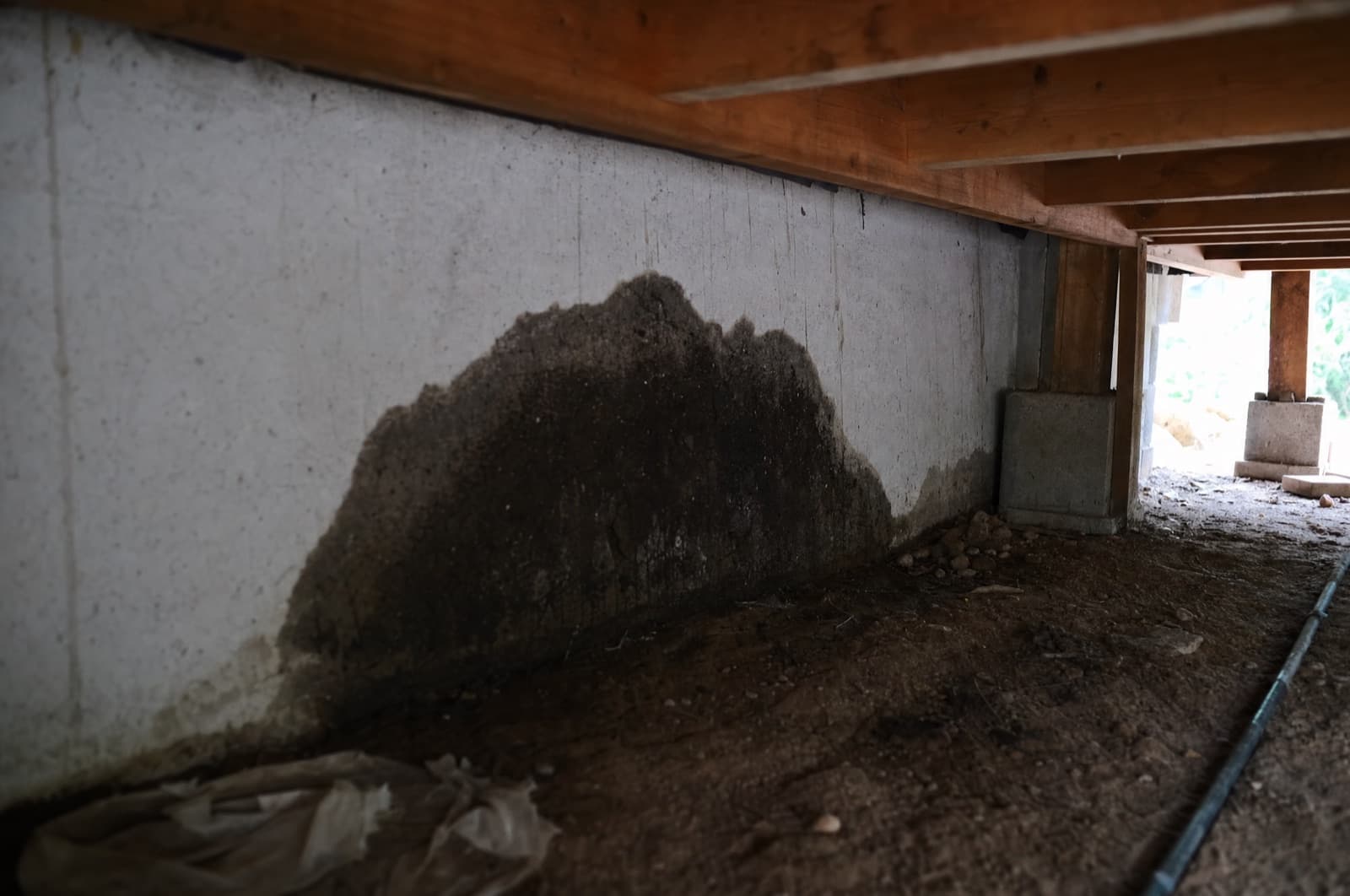
Termites strongly prefer moist wood, and chronic in-wall moisture from an undetected or unresolved plumbing leak can support an isolated above-ground colony that never touches the soil — a case Extension entomologists specifically distinguish because a standard soil treatment around the foundation would not reach it. Correcting the moisture is explicitly described as the first step in resolving any above-ground termite activity of this kind.
Source:NC State Extension— Monitoring & Management of Eastern Subterranean Termites
3 levers, honestly ranked
Sorted by what actually moves the driver — primary first, theatre last. Effort is graded so you know what's a five-minute fix and what's a real project.
- Primary — moves the driverWeekend project
Dry the wall cavity completely and replace ruined wood
Open, dry, and dehumidify the affected stud bay until the wood is dry all the way through, not just at the surface, and replace any framing that's structurally compromised, delaminated, or crumbling rather than leaving it in place. A moist core left behind a patched wall stays attractive to termites and decay fungi long after the leak itself is fixed, which is why correcting the moisture is explicitly the first and most important step in resolving activity like this.
- Primary — moves the driverHire a pro
Fix the leak at its source
Repair the pipe or fixture causing the leak and verify — ideally with a moisture meter or a follow-up check after a few days — that the cavity is genuinely dry before closing the wall back up.
- SupportingQuick DIY
Inspect studs before closing up the wall
While the cavity is open, probe the studs for hollowing or softness and look for mud or shelter tubes before patching, since this is the only practical chance to catch activity before it's sealed behind new drywall.
Whose job is this, really?
Who actually fixes it
A moisture or building pro
Finding and fixing the leak, then drying and rebuilding the wall cavity, are plumbing and carpentry jobs. A licensed pest professional's role is confirming whether termite activity is present and, if an above-ground colony is found, treating it directly since soil treatment around the house wouldn't reach it.
You find tubes or damage in the studs, or the same wall has had repeated leaks — both call for a professional termite inspection in addition to the plumbing fix.
How this calibrates for NH
An isolated in-wall, above-ground termite colony is uncommon in New Hampshire but genuinely possible where a leak runs unnoticed for an extended period; the moisture fix is the same honest, effective response whether the eventual finding is termites, carpenter ants, or simple decay.
NH-licensed applicator #782664 (NHDAMF, RSA 430) · NEPMA member · family-owned since 2017.
Frequently asked
Sources(3)
- [1]NC State Extension
Monitoring & Management of Eastern Subterranean Termites
- [2]Mississippi State University Extension
Signs of Termite Infestation
- [3]Clemson Cooperative Extension (HGIC)
Subterranean Termite Control
Written & reviewed by
VerifiedDaniel Brady
NH-Licensed Pesticide Applicator · License #782664 (NHDAMF, RSA 430)
Daniel Brady is the New Hampshire–licensed applicator behind Anchor Pest Services, a family-owned pest control company serving the Manchester area since 2017.
Your next step
- termite-mite-prevention-guides
Preventing termites after water damage in a bathroom or laundry room
Read the answer - termite-mite-prevention-guides
Preventing termites around plumbing penetrations under sinks and tubs
Read the answer - faq-pest-damage-and-risks
Can termites damage flooring or wall supports?
Read the answer
Anchor Pest Services
Have a different pest question?
This one may not be a pesticide job — but if you're facing something that is, we serve Southern New Hampshire with a free inspection and same-day service.
- NH-licensed applicator
- Same-day service
- Pet & family-conscious
NH License #782664 · No obligation · We answer in person