
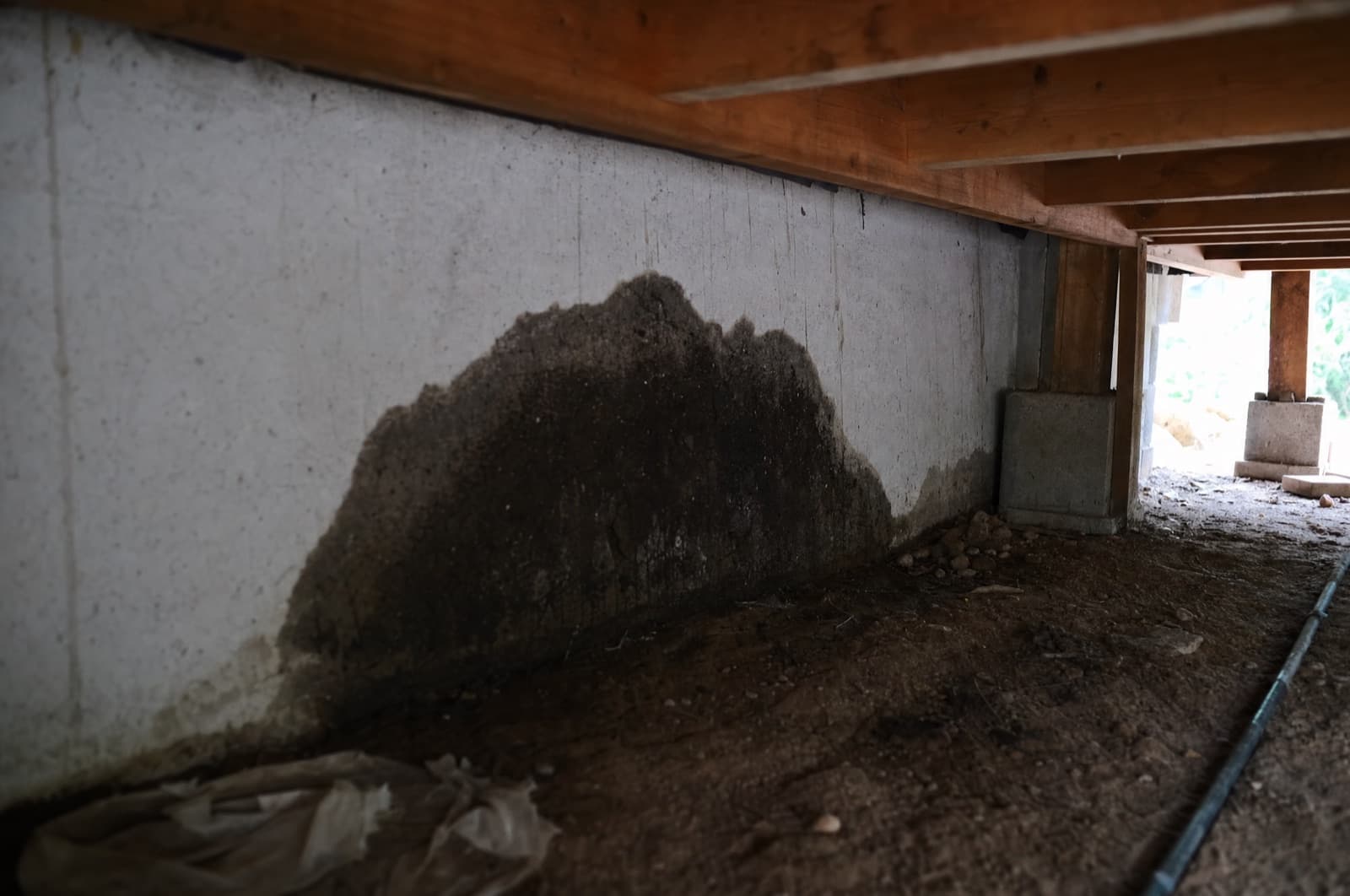
How to Prevent Termites in a Crawl Space
This is a genuine termite-risk scenario worth taking seriously — a crawl space combines the three things subterranean termites need: soil, moisture, and wood within easy reach.
Real, but preventable by controlling one thing: moisture. This is worth a professional inspection where you see damp joists or mud tubes — not a reason to panic.
At a glance
- What it is: Real termite risk
- The driver: Moisture + wood-to-soil proximity
- Who fixes it: A moisture or building pro
This is a genuine termite-risk scenario worth taking seriously — a crawl space combines the three things subterranean termites need: soil, moisture, and wood within easy reach.
Real, but preventable by controlling one thing: moisture. This is worth a professional inspection where you see damp joists or mud tubes — not a reason to panic.
Pull the right lever, not the sprayer
The organism is downstream of one condition. Remove that condition and it has no foothold — which is why prevention here is rarely a pesticide.
The driver
Moisture + wood-to-soil proximity
Subterranean termites thrive in the dark, humid soil of a crawl space and build mud tubes up piers and walls to reach joists and subfloor; low clearance worsens humidity and blocks inspection. Termites don't create the moisture — they exploit it, which is why moisture control is a real prevention lever, not theatre.
Source:Building America (PNNL)— Crawl space moisture control and termite-conducive conditions
4 levers, honestly ranked
Sorted by what actually moves the driver — primary first, theatre last. Effort is graded so you know what's a five-minute fix and what's a real project.
- Primary — moves the driverWeekend project
Install or repair a continuous soil vapor barrier and control water
Cover the entire crawl-space floor with continuous polyethylene sheeting to cut soil-moisture evaporation onto the joists, overlap and seal the seams, and correct any standing water or drainage entering the space. This is the highest-leverage move because it attacks the moisture that both attracts termites and drives the wood decay that mimics termite damage.
Note: This replaces the outdated 'just add more vents' advice — modern building science favors sealing and conditioning the space over adding ventilation.
- Primary — moves the driverHire a pro
Maintain clearance between soil and wood
Keep at least 18 inches between soil and beams or joists (more in high-hazard settings), remove scrap wood, cardboard, and old form boards, and keep the dirt graded low and even so piles don't shrink the clearance. Clearance denies termites the wood-to-soil contact they depend on and preserves an inspectable gap where mud tubes would show.
- SupportingWeekend project
Screen vents and seal penetrations
Cover any vents with fine (roughly #50 bronze) mesh and seal utility penetrations to slow entry while keeping the space inspectable. This is a supporting step — it does not replace moisture control.
- SupportingHire a pro
Schedule a professional inspection of the wettest zones
Have a licensed inspector check piers, the sill, and any chronically damp corner for mud tubes and decay — crawl-space damage is cryptic and easily missed by an untrained eye.
Whose job is this, really?
Who actually fixes it
A moisture or building pro
The durable fix is moisture and clearance work — a job for you or a building/moisture professional. A pest professional confirms species and handles monitoring or treatment if activity is found.
You find mud tubes on piers, damp musty joists, or visible wood damage — call for a professional termite inspection promptly.
How this calibrates for NH
New Hampshire's high water tables and spring snowmelt make damp crawl spaces common in the southern and central part of the state — exactly where the Eastern subterranean termite is established (USDA/HUD termite-probability zones place risk in southern and central NH, not the North Country). Modern NH crawl-space retrofits increasingly seal and condition the space rather than adding vents; done with a vapor barrier and clearance, that is also the better termite-prevention approach.
NH-licensed applicator #782664 (NHDAMF, RSA 430) · NEPMA member · family-owned since 2017.
Frequently asked
Sources(3)
- [1]Building America (PNNL)
Crawl space moisture control
- [2]University of Kentucky Entomology
ENTFACT-605: Termite control — conducive conditions and mud tubes
- [3]Clemson Cooperative Extension (HGIC)
Termite prevention and crawl-space moisture
Written & reviewed by
VerifiedDaniel Brady
NH-Licensed Pesticide Applicator · License #782664 (NHDAMF, RSA 430)
Daniel Brady is the New Hampshire–licensed applicator behind Anchor Pest Services, a family-owned pest control company serving the Manchester area since 2017.
Anchor Pest Services
Have a different pest question?
This one may not be a pesticide job — but if you're facing something that is, we serve Southern New Hampshire with a free inspection and same-day service.
- NH-licensed applicator
- Same-day service
- Pet & family-conscious
NH License #782664 · No obligation · We answer in person