
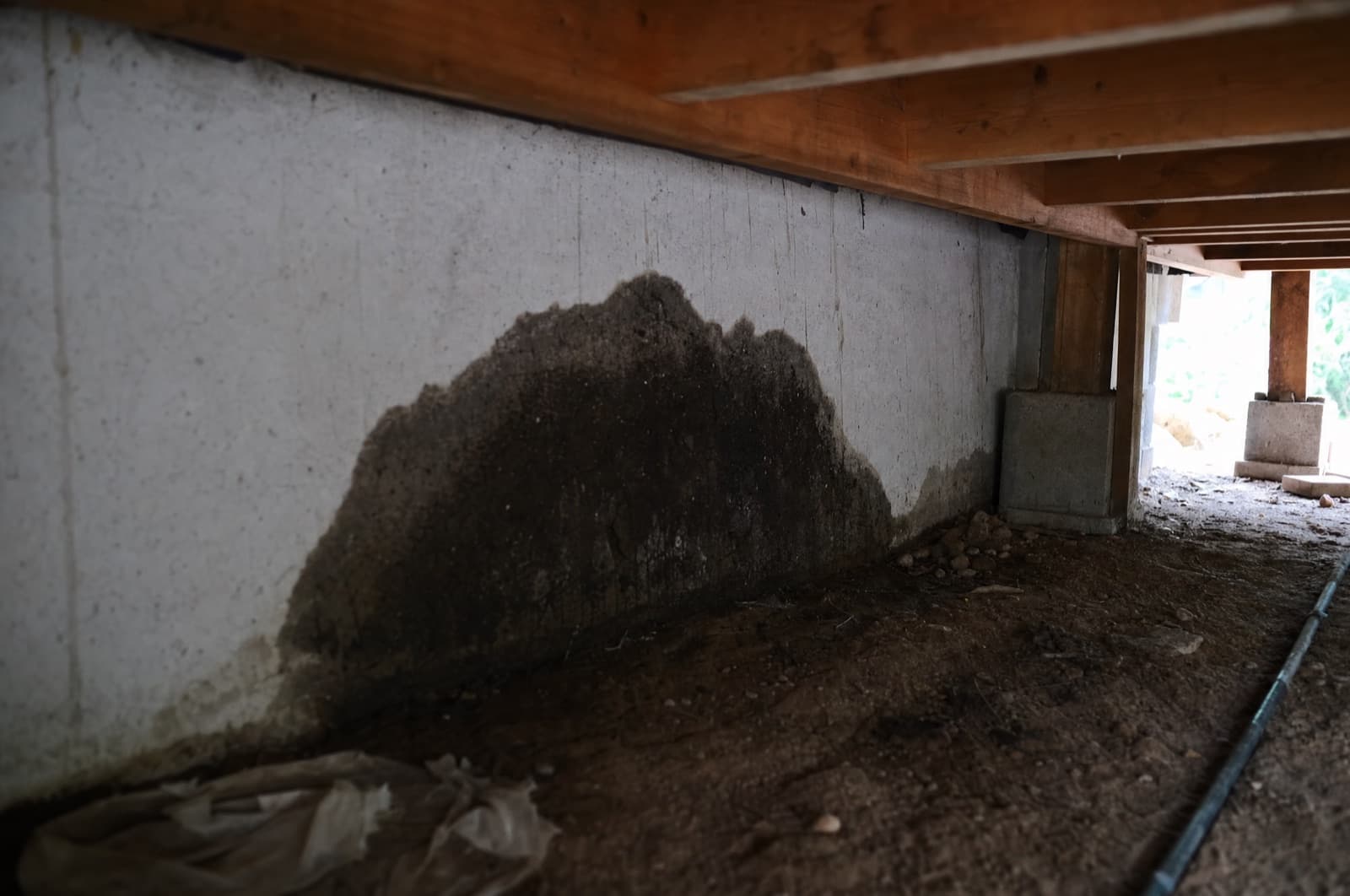
How to Prevent Termites in a Basement with Exposed Wood Framing
This is a genuine termite-risk scenario — exposed sill plates, joists, and studs close to a damp basement floor or wall are precisely the cellulose targets subterranean termites reach by building mud tubes up the foundation, so it's a legitimate inspection priority, especially where the basement runs damp.
Real, and worth watching, but the actual driver is controllable: dry the basement and the wood loses most of its appeal, whether the risk is termites, decay, or carpenter ants.
At a glance
- What it is: Real termite risk
- The driver: Basement dampness plus wood close to the foundation wall
- Who fixes it: A moisture or building pro
This is a genuine termite-risk scenario — exposed sill plates, joists, and studs close to a damp basement floor or wall are precisely the cellulose targets subterranean termites reach by building mud tubes up the foundation, so it's a legitimate inspection priority, especially where the basement runs damp.
Real, and worth watching, but the actual driver is controllable: dry the basement and the wood loses most of its appeal, whether the risk is termites, decay, or carpenter ants.
Pull the right lever, not the sprayer
The organism is downstream of one condition. Remove that condition and it has no foothold — which is why prevention here is rarely a pesticide.
The driver
Basement dampness plus wood close to the foundation wall
Termites tube up interior foundation walls and through hollow-block voids to reach exposed framing, and damp wood is far more attractive to them than dry wood — the moisture doesn't just draw termites in, it's often what lets a colony persist above ground at all.
Source:University of Kentucky Entomology— ENTFACT-605: Protecting Your Home Against Termites (Potter)
3 levers, honestly ranked
Sorted by what actually moves the driver — primary first, theatre last. Effort is graded so you know what's a five-minute fix and what's a real project.
- Primary — moves the driverWeekend project
Control basement humidity and leaks
Fix any foundation seepage, run a dehumidifier to keep the basement genuinely dry rather than just tolerable, repair plumbing drips promptly, and insulate cold-water lines that sweat in summer. Keeping the structural wood dry removes the single condition that both attracts termites and can sustain a moisture-fed colony above ground — and it protects against New Hampshire's far more common basement problems, wood decay and carpenter ants, at the same time.
- SupportingQuick DIY
Keep stored wood, cardboard, and debris off the floor and away from walls
Never stack firewood, scrap lumber, or cardboard boxes directly against basement walls or on the slab; store anything cellulose-based off the ground on metal racks instead. These piles feed termites directly, offer concealed entry points against the foundation wall, and let a colony bypass any soil treatment entirely.
- SupportingQuick DIY
Inspect the sill and foundation wall each spring
Shine a light along the top of the foundation wall and the sill plate looking for pencil-width mud tubes, and probe any soft-feeling wood with a screwdriver. This is a five-minute habit that catches activity while it's still a small, manageable repair rather than a structural one.
Whose job is this, really?
Who actually fixes it
A moisture or building pro
Drying out the basement — sealing seepage, running a dehumidifier, fixing drips — is homeowner or waterproofing-contractor work, and it's the fix that actually removes the driver. A pest professional's job starts if mud tubes or activity actually show up.
You spot a mud tube on the foundation wall, find spring swarmers indoors, or probe a hollow-sounding sill — get a professional inspection before doing any cosmetic repair.
How this calibrates for NH
Full basements are the norm in New Hampshire home construction, and a heated basement can even let occasional winter swarms happen indoors when the rest of the yard is still frozen — one more reason a spring check of the sill and foundation wall is worth the five minutes.
NH-licensed applicator #782664 (NHDAMF, RSA 430) · NEPMA member · family-owned since 2017.
Frequently asked
Sources(3)
- [1]University of Kentucky Entomology
ENTFACT-605: Protecting Your Home Against Termites
- [2]NC State Extension
Monitoring & Management of Eastern Subterranean Termites
- [3]UNH Cooperative Extension
Carpenter Ants fact sheet (A.T. Eaton) — NH structural pest context
Written & reviewed by
VerifiedDaniel Brady
NH-Licensed Pesticide Applicator · License #782664 (NHDAMF, RSA 430)
Daniel Brady is the New Hampshire–licensed applicator behind Anchor Pest Services, a family-owned pest control company serving the Manchester area since 2017.
Your next step
Anchor Pest Services
Have a different pest question?
This one may not be a pesticide job — but if you're facing something that is, we serve Southern New Hampshire with a free inspection and same-day service.
- NH-licensed applicator
- Same-day service
- Pet & family-conscious
NH License #782664 · No obligation · We answer in person