
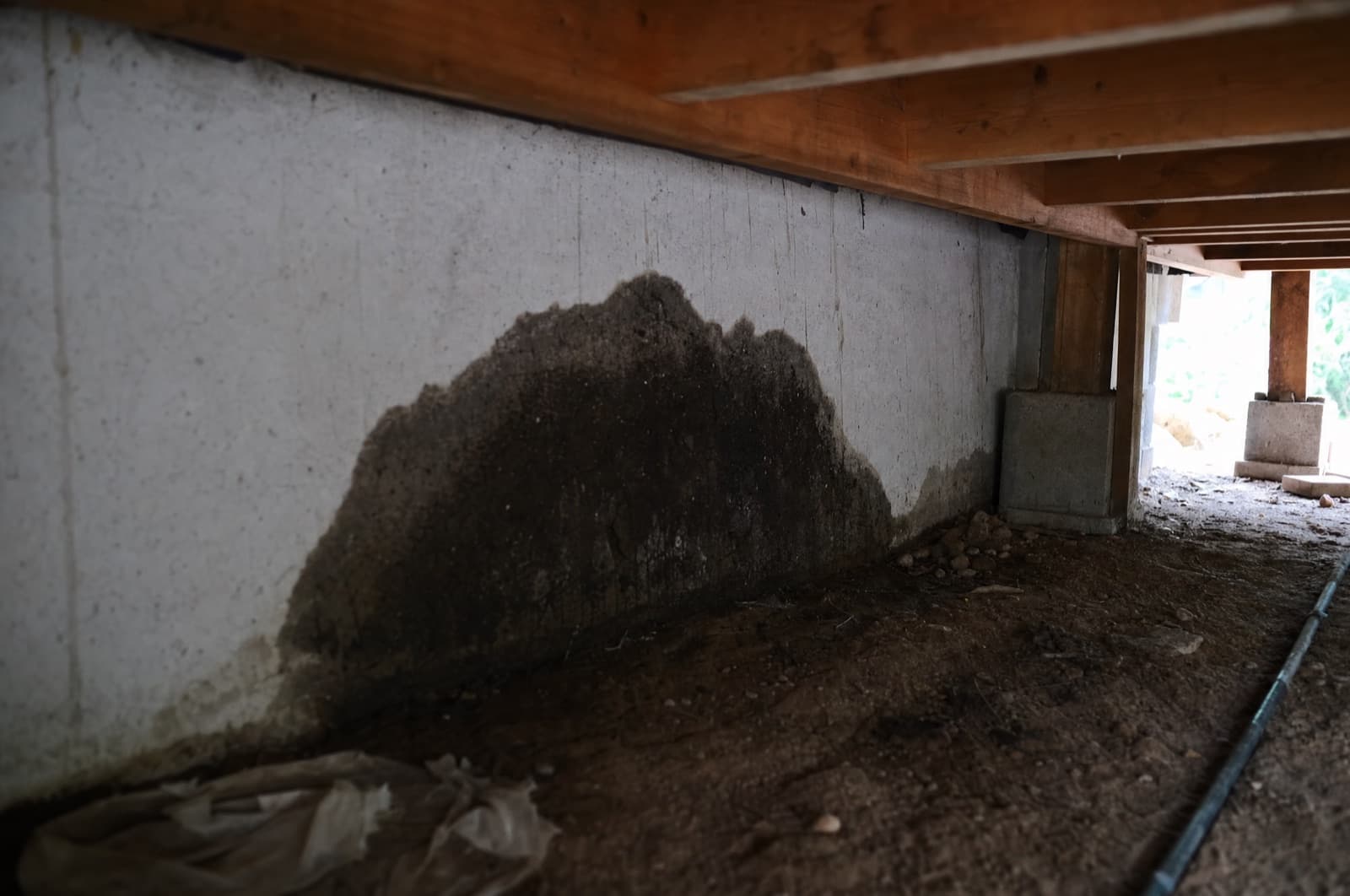
How to Prevent Termites in Homes with Poor Crawl Space Ventilation and High Humidity
This is a genuine termite-risk scenario, and one where a piece of conventional advice needs an honest correction: high crawl-space humidity really is a termite driver, but the older guidance to 'add more vents' is contradicted by current building science, which favors sealing and conditioning the space instead.
Real risk, but the popular fix is outdated. In humid weather, extra vents can pull in moist outdoor air that condenses on cooler wood — sealing plus a vapor barrier plus drying the space is the modern, better-supported approach.
At a glance
- What it is: Real termite risk
- The driver: High crawl-space humidity, worsened rather than helped by open venting
- Who fixes it: A moisture or building pro
This is a genuine termite-risk scenario, and one where a piece of conventional advice needs an honest correction: high crawl-space humidity really is a termite driver, but the older guidance to 'add more vents' is contradicted by current building science, which favors sealing and conditioning the space instead.
Real risk, but the popular fix is outdated. In humid weather, extra vents can pull in moist outdoor air that condenses on cooler wood — sealing plus a vapor barrier plus drying the space is the modern, better-supported approach.
Pull the right lever, not the sprayer
The organism is downstream of one condition. Remove that condition and it has no foothold — which is why prevention here is rarely a pesticide.
The driver
High crawl-space humidity, worsened rather than helped by open venting
Humid, poorly dried crawl spaces keep wood moist and conducive to termite activity — older Extension guidance recommended increasing ventilation, but building-science research now shows that in humid climates, vents can actually import moist outdoor air that condenses on cooler crawl-space wood, making the moisture problem worse rather than better.
Source:Building America Solution Center (PNNL/DOE)— Termite-Resistant Foundations and Walls / crawl-space moisture guidance
3 levers, honestly ranked
Sorted by what actually moves the driver — primary first, theatre last. Effort is graded so you know what's a five-minute fix and what's a real project.
- Primary — moves the driverWeekend project
Control moisture at the source — vapor barrier plus drying, not more vents
Install continuous polyethylene floor sheeting across the entire crawl-space floor and manage humidity with a dehumidifier or a conditioned-air strategy, rather than assuming that adding more outdoor venting will dry the space. This reflects the current building-science consensus and is the durable fix for the actual driver — do not add crawl-space vents as a termite- or moisture-control measure; that advice is outdated.
- Primary — moves the driverHire a pro
If encapsulating the space, preserve termite inspectability
Any sealed or encapsulated crawl space must retain an open termite inspection strip below the sill — typically 3 to 4 inches per code guidance — because full encapsulation otherwise hides the soil-to-wood junction entirely, and some pest professionals will decline to warrant a space they can't actually inspect.
- SupportingWeekend project
Fix drainage and maintain clearance
Correct any standing water entering the crawl space and keep at least 18 inches of clearance between soil and the beams or joists above, removing both the moisture source and the direct wood-to-soil contact that termites depend on.
Whose job is this, really?
Who actually fixes it
A moisture or building pro
Installing a vapor barrier, sealing the space, and setting up dehumidification or conditioned-air handling is building-contractor and homeowner work. A pest professional's specific contribution is verifying the inspection strip is preserved and monitoring for activity.
Persistent condensation or visible mold continues despite sealing efforts, or a mud tube appears on a pier — get a professional evaluation rather than adding vents as a next step.
How this calibrates for NH
In New Hampshire's climate, sealed and insulated crawl spaces are increasingly the standard retrofit approach rather than open venting, and the honest guidance for the state's moderate termite-probability zone is 'dry the space and keep it inspectable' — not 'add vents,' which is the piece of older advice this page specifically corrects.
NH-licensed applicator #782664 (NHDAMF, RSA 430) · NEPMA member · family-owned since 2017.
Frequently asked
Sources(2)
- [1]Building America Solution Center (PNNL/DOE)
Termite-Resistant Foundations and Walls / crawl-space moisture management
- [2]University of Kentucky Entomology
ENTFACT-605: Protecting Your Home Against Termites (older ventilation view, contrasted)
Written & reviewed by
VerifiedDaniel Brady
NH-Licensed Pesticide Applicator · License #782664 (NHDAMF, RSA 430)
Daniel Brady is the New Hampshire–licensed applicator behind Anchor Pest Services, a family-owned pest control company serving the Manchester area since 2017.
Anchor Pest Services
Have a different pest question?
This one may not be a pesticide job — but if you're facing something that is, we serve Southern New Hampshire with a free inspection and same-day service.
- NH-licensed applicator
- Same-day service
- Pet & family-conscious
NH License #782664 · No obligation · We answer in person