
How to Prevent Termites in a Home With a Chimney Chase Made of Wood Framing
A wood-framed chimney chase is a subterranean-termite target mainly where it meets the ground or where chronic flashing leaks sustain moisture — an above-grade-only chase, kept dry, is low risk absent one of those two conditions.
The popular framing of this as a major termite target is overstated for a purely above-grade chase; the honest priority is fixing the flashing, which also solves New Hampshire's more common decay and carpenter-ant risk at the same spot.
At a glance
- What it is: Real termite risk
- The driver: Chronic flashing leaks, plus any ground contact at the chase base
- Who fixes it: A moisture or building pro
A wood-framed chimney chase is a subterranean-termite target mainly where it meets the ground or where chronic flashing leaks sustain moisture — an above-grade-only chase, kept dry, is low risk absent one of those two conditions.
The popular framing of this as a major termite target is overstated for a purely above-grade chase; the honest priority is fixing the flashing, which also solves New Hampshire's more common decay and carpenter-ant risk at the same spot.
Pull the right lever, not the sprayer
The organism is downstream of one condition. Remove that condition and it has no foothold — which is why prevention here is rarely a pesticide.
The driver
Chronic flashing leaks, plus any ground contact at the chase base
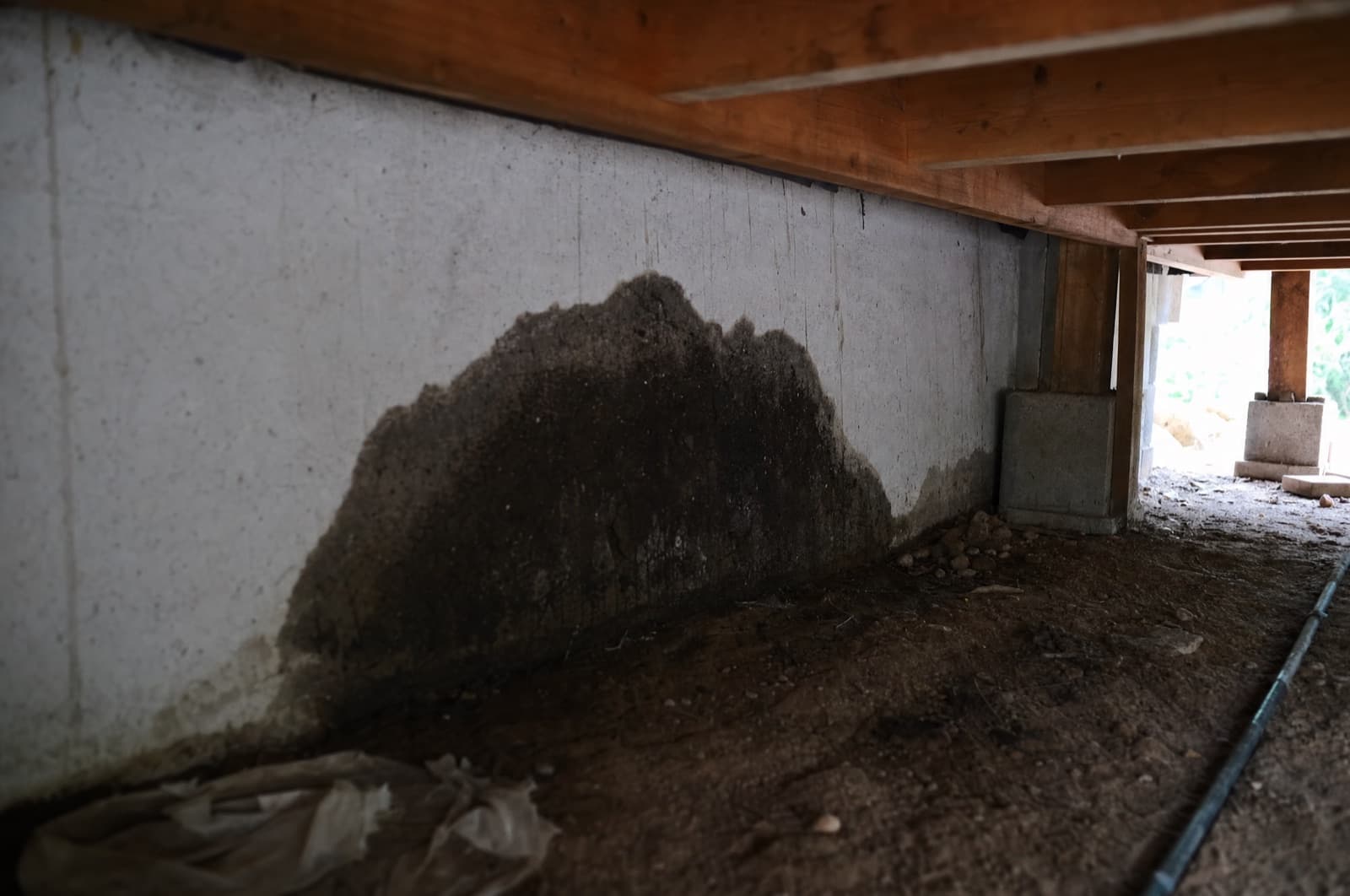
Subterranean termites need either a soil connection or a sustained moisture source to persist away from the ground, and chimney flashing leaks are a named moisture source that can enable a rare above-ground colony in the chase framing. Where the chase meets grade at its base, termites can also tube up directly from the soil, which is the more direct — and more common — of the two pathways.
Source:Mississippi State University Extension— Signs of Termite Infestation
3 levers, honestly ranked
Sorted by what actually moves the driver — primary first, theatre last. Effort is graded so you know what's a five-minute fix and what's a real project.
- Primary — moves the driverHire a pro
Keep chimney flashing watertight
Maintain and promptly repair the flashing, crickets, and saddles around the chimney so water doesn't chronically wet the chase framing behind the exterior finish. Chronic leaks are the specific condition that could sustain termites — or, more likely in New Hampshire, decay and carpenter ants — in an above-grade chase, so fixing the water is the real lever here, not a termite-specific treatment.
- SupportingWeekend project
Break any ground contact at the chase base
Where the chase meets grade, make sure there's proper clearance, no wood-to-soil contact, and a clear, inspectable base rather than wood disappearing into soil or a planting bed.
- SupportingQuick DIY
Inspect the base and interior for tubes
Check where the chase framing meets the foundation, and any accessible interior chase points, for mud tubes each spring, since the base is the one spot on an above-grade chase where a genuine ground connection could exist.
Whose job is this, really?
Who actually fixes it
A moisture or building pro
Flashing repair is typically a roofer's or exterior-contractor's job, and it's the step that actually resolves the real driver. A pest professional's role only becomes relevant if activity is actually confirmed at the base.
You find mud tubes at the chase base, or persistent flashing leaks have left the framing soft — either is worth a professional look.
How this calibrates for NH
For most New Hampshire homes, an above-grade wood chimney chase is a low subterranean-termite risk on its own; the honest message is to fix the flashing, since any real termite risk at a chase runs through the ground connection at its base, not the roofline.
NH-licensed applicator #782664 (NHDAMF, RSA 430) · NEPMA member · family-owned since 2017.
Frequently asked
Sources(3)
- [1]Mississippi State University Extension
Signs of Termite Infestation
- [2]Clemson Cooperative Extension (HGIC)
Subterranean Termite Control
- [3]NC State Extension
Monitoring & Management of Eastern Subterranean Termites
Written & reviewed by
VerifiedDaniel Brady
NH-Licensed Pesticide Applicator · License #782664 (NHDAMF, RSA 430)
Daniel Brady is the New Hampshire–licensed applicator behind Anchor Pest Services, a family-owned pest control company serving the Manchester area since 2017.
Your next step
- termite-mite-prevention-guides
Preventing termites in roof eaves and soffits with wood components
Read the answer - termite-mite-prevention-guides
Preventing termites in porch columns and wooden railings
Read the answer - faq-pest-damage-and-risks
How do termite infestations weaken homes over time?
Read the answer
Anchor Pest Services
Have a different pest question?
This one may not be a pesticide job — but if you're facing something that is, we serve Southern New Hampshire with a free inspection and same-day service.
- NH-licensed applicator
- Same-day service
- Pet & family-conscious
NH License #782664 · No obligation · We answer in person