
Skip to content
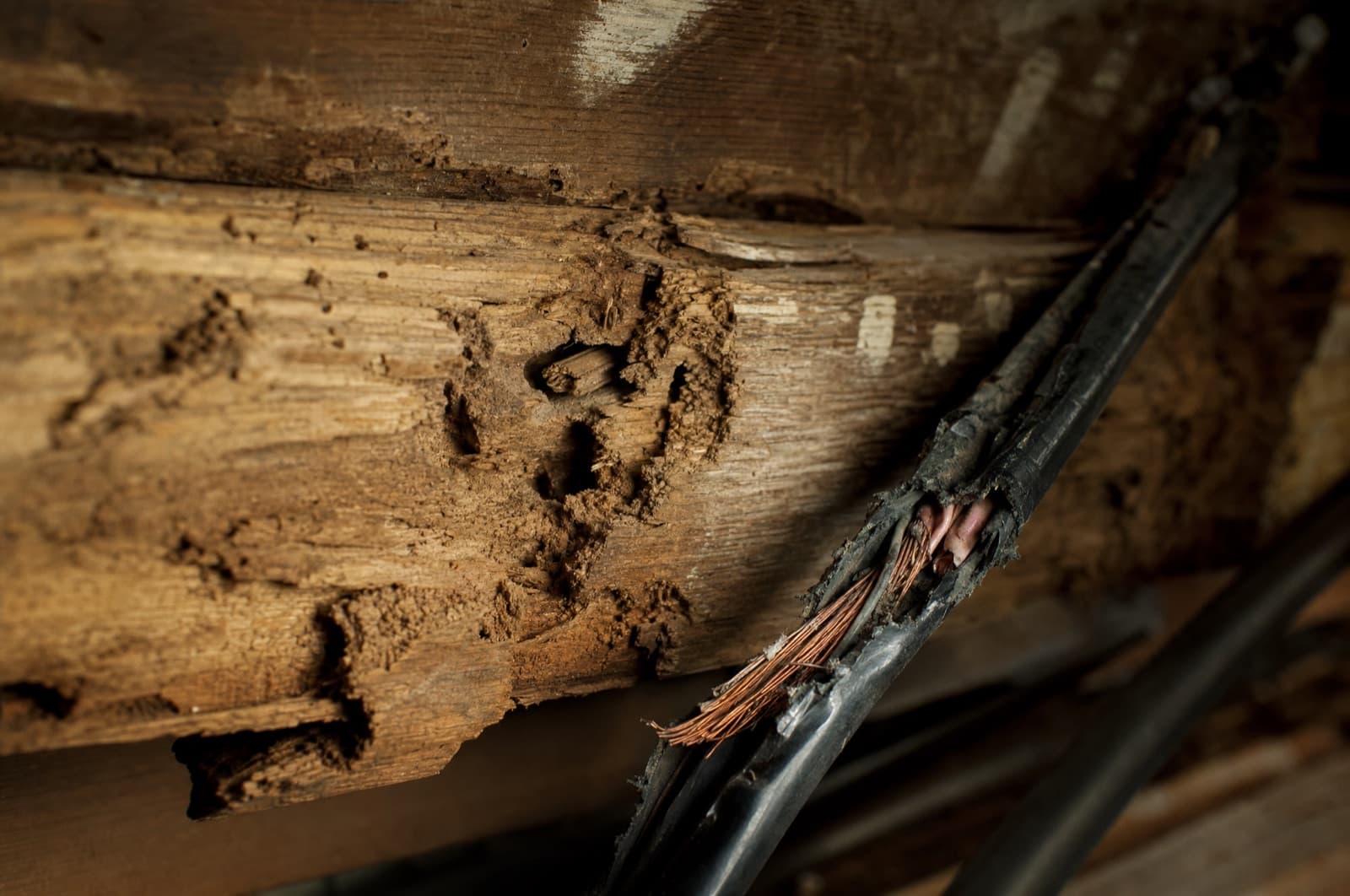
Pest damage evidence — a gnawed structural beam and a chewed electrical wire
Daniel Brady · NH-Licensed Pesticide Applicator · License #782664
Reviewed by Daniel Brady

How do termite infestations weaken homes over time?

Compounds continuously — but slowly, over years
Yes, termite damage compounds — a colony keeps feeding as long as it's established and untreated, and the loss accumulates. But an average eastern subterranean termite colony of around 60,000 workers eats only about a fifth of an ounce of wood a day, and per NC State Extension, serious structural damage takes three to eight years of ongoing feeding to occur. New Hampshire winters slow the colony further. The threat is real and worth acting on; the 'your home could collapse any day' framing compresses a genuinely slow, multi-year process into false urgency.

At a glance

  • Hype: Wildly overstated
  • Evidence: Well documented
  • Who fixes it: Pest pro first
  • ~60,000 workers

    Size of an average eastern subterranean termite colony

    NC State Extension

  • 1/5 ounce/day

    Wood an average colony eats daily — about a foot of a 2x4 every 5-6 months

    NC State Extension

  • 3-8 years

    Ongoing feeding required before serious structural damage occurs

    NC State Extension

The honest answer

The short of it

The verdict
Compounds continuously — but slowly, over years

Termite damage does compound the longer it goes untreated — that threat is genuine and well documented. What's invented is the speed: this is a years-long process, not the 'collapse overnight' story that sells urgency.

The correction

What they claim vs. what the evidence supports

One shared severity track, two markers. The span between them is the hype delta — named out loud.

The claim — how fast an untreated termite infestation actually compromises a home's structure

That termites can destroy a home's structure 'in the blink of an eye' or cause it to 'collapse' if the problem isn't caught almost immediately — framing termite damage as a fast-moving emergency on the same timescale as a flood or a storm.

Where the claim comes from: Pest-control marketing copy and viral home-inspection content that compresses a multi-year biological process into an urgent countdown.

Severity, 0–100
Hype says95
45Evidence says
Hype delta50point gapWell documented
The evidence

Subterranean termite feeding genuinely compounds the longer a colony goes untreated, and the underlying threat to structural wood is real and well documented — this is not a debunk of termites themselves. But per NC State Extension, 'serious structural damage takes between 3 to 8 years of ongoing feeding and infestation to occur,' and an average colony of roughly 60,000 workers consumes only about a fifth of an ounce of wood a day — around a foot of a two-by-four every five to six months. New Hampshire's cold season slows feeding further for months at a time.

The gap

The structural threat termites pose is genuine — that part of the fear is earned, and we're not softening it. What's invented is the timeline: 'collapse in the blink of an eye' describes a process that actually takes three to eight years of continuous, largely undetected feeding, slowed further by a New Hampshire winter that all but stalls termite activity for months at a stretch.

The compounding clock

Does it get worse if you ignore it?

Over time
Compounds

Compounds the entire time a colony is active — but the honest pace is years, not weeks.

The timeline
4 stages
  1. WeeksReversible

    A newly established colony causes no measurable structural loss. Feeding is minimal and there is no visible sign inside or outside the home.

  2. MonthsReversible

    Internal galleries begin developing in wood near soil contact, still invisible without opening the wood. Consumption remains slow and steady — an average colony eats only about a fifth of an ounce of wood a day.

  3. YearsReversible

    Feeding continues across multiple years; localized weakening becomes genuinely meaningful in the fed-upon members, and mud tubes or winged swarmers may finally reveal the colony. Per NC State Extension, serious structural damage takes three to eight years of ongoing feeding to occur.

  4. DecadesReversible

    The rare untreated endpoint: sagging or spongy flooring and significant structural compromise after many years of undetected feeding. Still repairable with a licensed contractor, but by now it's a structural rebuild rather than a patch.

What stops the clock
A soil termiticide barrier or bait system that eliminates the colony. Once the termites are gone, the wood stops losing material — what remains is a repair job for a contractor, not an ongoing threat.
Repair scope

Who actually fixes this

Scope, not dollars — the honest answer to “how expensive is it,” routed to the right trade.

Who fixes it
Pest pro first
Effort
A project

Eliminating the colony is the only way to stop the ongoing structural loss — repairing or replacing wood while the colony is still active nearby just gives it more to feed on.

The right order
  1. 1
    Resolve the termite colony via a soil barrier or bait system (Anchor's lane)
  2. 2
    Have a licensed contractor assess affected framing, subflooring, and sill plates
  3. 3
    Replace or reinforce any structural members the assessment finds compromised
Route by symptom
  • Licensed contractorVisible sagging, spongy flooring, or mud tubes on the foundation suggest multi-year activity — get a structural assessment before any cosmetic repair
Do not
  • Don't wait for a visible sign — internal feeding can precede any visible clue by a long stretch of the timeline above
  • Don't patch cosmetic damage over an area with an active colony without treating it first — you're just covering up an ongoing loss
Where we help — and where we don't

Anchor treats and prevents termite colonies — that's genuinely our work. The structural rebuild itself, if years of undetected feeding have compromised a beam, joist, or sill, routes out to a licensed contractor, and we'll tell you plainly when a repair is beyond our lane.

In depth

The full picture

01

The threat is real — this isn't a debunk

It's worth being direct about this before anything else: eastern subterranean termites, the only termite species established in New Hampshire, genuinely eat structural wood, and an untreated colony genuinely gets worse the longer it goes unaddressed. This page is not arguing that termite fear is manufactured. Among the pests covered in this cluster, subterranean termites are one of the clearest cases where the underlying concern is earned, well documented, and worth acting on promptly.

What this page audits is something more specific: the timeline. The claim that shows up constantly in marketing copy isn't 'termites cause structural damage' — it's 'termites will destroy your home almost overnight if you don't act now.' That specific speed claim is the part the evidence does not support.

02

The clock, honestly: weeks, months, years, decades

An average eastern subterranean termite colony contains roughly 60,000 workers and eats only about a fifth of an ounce of wood a day — enough to consume roughly a foot of a two-by-four over five to six months. In the first weeks after a colony establishes near a structure, there's no measurable loss at all. Over the following months, feeding begins inside wood near soil contact, invisibly, without any external sign.

The timeline where the threat becomes genuinely serious is measured in years. NC State Extension states plainly that 'serious structural damage takes between 3 to 8 years of ongoing feeding and infestation to occur.' That's the honest clock: not days, not weeks — years of continuous, mostly hidden feeding before a homeowner is looking at meaningful structural loss. The rare worst-case endpoint — sagging floors, compromised framing — sits at the far end of that range, typically after a decade or more of a colony going completely undetected and untreated.

03

Why New Hampshire's winters matter to this timeline

The 3-to-8-year figure already assumes ongoing feeding, and New Hampshire's climate slows that clock further. Subterranean termite activity drops off sharply as soil temperatures fall toward Manchester's first hard frost, historically around October 19 to 29 (NOAA), and feeding stays minimal through the cold months before resuming as the ground warms in spring. That seasonal pause doesn't stop an infestation, but it does mean a New Hampshire colony has fewer active feeding months per year than the same colony would have in a warmer climate — one more reason 'overnight collapse' doesn't match how this actually unfolds here.

04

The other invented number: the cost claim

Alongside the speed claim, you'll frequently see a dollar figure attached to termite damage nationally, often framed as exceeding the combined cost of fires, floods, and storms. That widely-repeated multi-billion-dollar annual termite figure is a pest-industry association's own estimate, not the output of a measured government damage survey — a trade-press investigation into its origin found it to be an extrapolation from insecticide-sales data rather than a systematic count of actual repairs. The peer-reviewed number it's often confused with is a global total, and the largest single share of that global figure is attributed to a termite species that isn't established in New Hampshire at all. None of that changes the honest local picture: eastern subterranean termites are a genuine, slow-moving structural risk here — it just means the number attached to the headline isn't one to repeat.

Key takeaways
5 points
  • Termite damage genuinely compounds the longer a colony is left untreated — this fear is earned, not manufactured.
  • The honest pace is years: NC State Extension puts serious structural damage at three to eight years of ongoing feeding.
  • An average colony eats only about a fifth of an ounce of wood a day — roughly a foot of a two-by-four every five to six months.
  • New Hampshire winters slow feeding for months at a stretch, further stretching an already slow timeline.
  • The widely-cited multi-billion-dollar annual cost figure is a pest-industry estimate, not a measured survey — treat it as a talking point, not a fact.
New Hampshire context

What this timeline looks like in New Hampshire

Southern New Hampshire sits in a zone the industry rates as slight-to-moderate termite risk, and eastern subterranean termites are the only species established here — drywood and Formosan termites, which drive much of the scarier national cost figures, are not found in this climate. Locally, the pattern that actually plays out is a colony working a sill plate or floor joist near grade for several years, largely invisible, before a spring swarm of winged reproductives or a line of mud tubes on the foundation finally gives it away. Given that timeline, a periodic inspection — not a panic response to a viral claim — is the practical move for southern and central New Hampshire homeowners.

  • NH-licensed #782664

    Southern New Hampshire

  • Family-owned

    Since 2017

  • Honest routing

    Even when it isn’t us

We serve these communities

ManchesterNashuaConcordDerryBedfordSalemHudsonAmherstAuburnGoffstownHooksettLitchfieldLoudonMilfordBristol

Service Area Map

Southern New Hampshire

BristolPop. 3,200LoudonPop. 5,500ConcordPop. 43,900HooksettPop. 14,800GoffstownPop. 18,000AuburnPop. 5,700ManchesterPop. 115,600BedfordPop. 23,300LitchfieldPop. 8,500AmherstPop. 11,300DerryPop. 34,500MilfordPop. 15,700HudsonPop. 25,600NashuaPop. 91,100SalemPop. 30,000HQCityHover for info

Termite damage is real and it compounds — the clock is just longer than you've been told.

Anchor treats and prevents subterranean termite colonies across southern and central New Hampshire, and routes any structural rebuild to a licensed contractor.

Follow-up questions

Frequently asked

Sources & citations(4)
  1. NC State Extension — Eastern Subterranean Termites

    'Serious structural damage takes between 3 to 8 years of ongoing feeding and infestation to occur'

    extensionverified 2026-07-16
  2. Connecticut Agricultural Experiment Station — Eastern Subterranean Termite fact sheet

    Eastern subterranean termite biology, mud tube construction, susceptible structural timbers

    govverified 2026-07-16
  3. USDA Forest Products Laboratory — Wood Handbook GTR-282, ch.14 Biodeterioration

    Wood biodeterioration timescales; context for slow, multi-year feeding-driven structural loss

    govverified 2026-07-16
  4. Utah State University Extension — Subterranean Termites

    Gut-protozoa dependence for cellulose digestion; colony biology

    extensionverified 2026-07-16

Written & reviewed by

Verified

Daniel Brady

NH-Licensed Pesticide Applicator · License #782664 (NHDAMF, RSA 430)

Daniel Brady is the New Hampshire–licensed applicator behind Anchor Pest Services, a family-owned pest control company serving the Manchester area since 2017.

Verify license

Last updated Jul 2026

Honest pest help for New Hampshire homes

We Stop the Colony. A Contractor Handles the Rebuild.

Termites are one of the few genuinely earned fears in this hub — but the timeline is years, not days, and there's time to act correctly rather than in a panic. Anchor Pest Services installs and monitors soil barrier and bait treatments; if years of feeding have compromised a structural member, we'll tell you and point you to a licensed contractor for the rebuild. Family-owned since 2017, NH license #782664, serving Manchester, Nashua, Concord and nearby towns.

  • Honest advice — we won't manufacture urgency the evidence doesn't support
  • NH-licensed applicators (#782664) — free inspection, same-day service
  • Termite treatment and prevention across southern and central New Hampshire

NH License #782664 · No obligation · We answer in person