
Skip to content
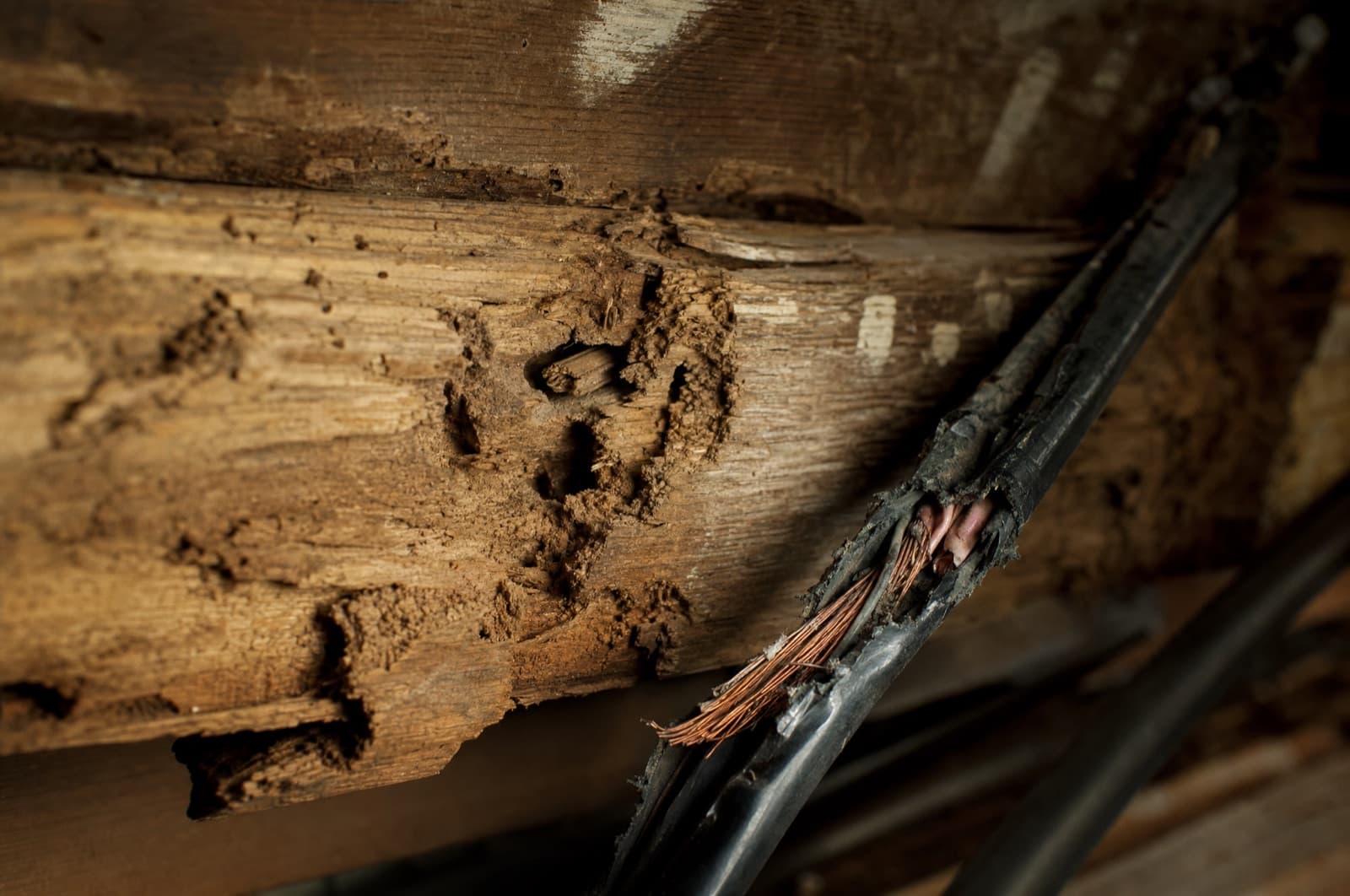
Pest damage evidence — a gnawed structural beam and a chewed electrical wire
Daniel Brady · NH-Licensed Pesticide Applicator · License #782664
Reviewed by Daniel Brady

Can termites damage flooring or wall supports?

Structural — a precisely correct target list, earned
Yes. Sill plates, floor joists, subflooring, and wall studs near soil contact are precisely the building elements most susceptible to eastern subterranean termite damage, because the colony works its way up from the soil beneath and around the foundation. This is a genuinely earned structural fear in southern New Hampshire, not an overstated one — but it plays out on a multi-year timescale. NC State Extension estimates that serious structural damage takes three to eight years of ongoing, untreated feeding to occur, not the overnight collapse implied by 'your floors will give way' marketing language.

At a glance

  • Can it?: Yes
  • How common: Occasional
  • Hype: About right
  • Evidence: Well documented
  • 3 to 8 years

    Ongoing, untreated infestation it takes subterranean termites to cause serious structural damage

    NC State Extension — Eastern Subterranean Termites

The honest answer

The short of it

The verdict
Structural — a precisely correct target list, earned

Yes. Sill plates, floor joists, subflooring, and wall studs near soil contact are exactly what subterranean termites attack — the target list is accurate; the only distortion is how fast people assume it happens.

The correction

What they claim vs. what the evidence supports

One shared severity track, two markers. The span between them is the hype delta — named out loud.

The claim — termites damaging flooring and structural wall supports

That termite activity near flooring or wall supports means imminent structural failure — floors collapsing or walls giving way in short order once an infestation is discovered.

Where the claim comes from: Pest-control marketing copy that pairs a genuinely correct target list (floors, supports) with an invented sense of speed to create urgency.

Severity, 0–100
Hype says85
74Evidence says
The hype is fairWell documented
The evidence

The target list itself is accurate and well documented: sill plates, floor joists, subflooring, and studs near soil are exactly where subterranean termites cause real damage. What isn't accurate is the implied timeline — NC State Extension puts serious structural damage at three to eight years of continuous, untreated feeding, and New Hampshire winters slow that feeding considerably for months at a stretch.

The gap

This is one of the honest pages in this hub: the threat to flooring and wall supports is genuinely real, not manufactured. The only correction worth making is urgency — sagging or spongy floors from termite damage are the endpoint of years of undetected feeding, not a sudden failure, which gives a homeowner real time to catch it first.

Damage assessment

What is actually harmed

Damage verdict
Structural — a precisely correct target list, earned
StructuralCan it?Yes
The specimen
Pest
Eastern subterranean termites (Reticulitermes flavipes)
What is in question
Sill plates, floor joists, subflooring, wall studs, and girder ends near soil contact
How common
Occasional
Evidence
Well documented
Mechanism

Worker termites tunnel from an underground colony through soil and build mud tubes to bridge exposed gaps such as a foundation wall, reaching wood at the sill plate or floor framing level. Once they reach wood, they feed along the grain, hollowing it out from the inside while leaving a thin outer shell largely intact — which is why damage frequently isn't visible until a floor feels spongy or a support member is probed directly. Because the colony works from soil upward, the building elements closest to grade — sills, joists, subflooring, and stud bottoms — are consistently the most exposed targets.

Actually at risk4
  • Sill plates and rim joists in contact with or near soil
  • Floor joists and subflooring reached via mud tubes from below
  • Wall studs and framing near foundation penetrations or grade contact
  • Girder ends and other structural wood close to the ground
Not at risk — despite the myth3
  • Concrete slabs, masonry foundations, and steel — termites cannot eat or breach any of these, though their mud tubes may run across their surfaces
  • Wood well above grade with no soil contact and an intact treatment barrier
  • Any part of the home not reached by an active colony's tunneling — termite damage stays localized to the specific framing a colony has accessed
Worst realistic case
Sagging or spongy flooring from hollowed joists discovered only after years of undetected feeding — a genuine structural repair, but reached slowly, through continuous multi-year activity rather than a sudden event.

Assessed from: Connecticut Agricultural Experiment Station Eastern Subterranean Termite fact sheet; NC State Extension eastern subterranean termites; Colonial Pest Control termite consumption-rate guidance

The compounding clock

Does it get worse if you ignore it?

Over time
Compounds

Compounds continuously but slowly — years of ongoing feeding, not weeks, separate first contact from serious weakening.

The timeline
3 stages
  1. MonthsReversible

    A colony reaches sill plates or floor framing via mud tubes and begins feeding along the grain. Damage is internal and typically invisible from the surface at this stage.

  2. YearsReversible

    Continuous feeding — roughly one-fifth of an ounce of wood per day for a mature colony — gradually hollows the affected framing members, though New Hampshire winters slow the pace considerably for months at a time.

  3. DecadesReversible

    NC State Extension notes serious structural damage takes 3 to 8 years of ongoing, untreated infestation to occur; left far longer without detection, floors can become noticeably sagging or spongy where joists have been significantly hollowed.

What stops the clock
A professional termiticide soil barrier or bait system that eliminates the colony. Feeding stops entirely once the colony is gone — the wood already consumed needs repair, but no further hollowing accrues.
Repair scope

Who actually fixes this

Scope, not dollars — the honest answer to “how expensive is it,” routed to the right trade.

Who fixes it
Pest pro first
Effort
A project

The colony has to be eliminated before any joist, subfloor, or sill repair is worth undertaking — replacing wood while termites remain active simply gives them a fresh target in the same spot.

The right order
  1. 1
    Have the colony professionally treated with a soil termiticide barrier or bait system
  2. 2
    Have a licensed contractor assess the extent of hollowing in affected joists, subflooring, or sill plates
  3. 3
    Repair or replace compromised structural members as the contractor recommends
Route by symptom
  • Licensed contractorJoists, subflooring, or sill plates show significant hollowing and need sistering or replacement
Do not
  • Don't repair or refinish flooring over an active, untreated colony — it will simply continue feeding on the repaired material
  • Don't wait for visibly sagging floors before having a suspected infestation inspected — most feeding happens invisibly, well before that point
Where we help — and where we don't

Termite treatment and colony elimination are core Anchor work. We do not perform the structural repair of joists, subflooring, or wall supports ourselves — that's a licensed contractor's job, and we'll route you there rather than quote you for it.

In depth

The full picture

01

Yes — and the target list is precisely accurate

This is a case where the common claim gets the facts right. Sill plates, floor joists, subflooring, and wall studs near soil contact are exactly the building elements subterranean termites attack, because the colony originates in the ground and tunnels upward, building mud tubes to bridge any exposed gap like a foundation wall on the way to accessible wood. There's no need to soften this answer — floors and wall supports genuinely are the parts of a house most exposed to termite feeding.

02

How the damage actually develops

Termites feed along the wood grain from the inside, often leaving a thin, largely intact outer shell while hollowing out the interior — which is exactly why a floor can feel spongy or a joist can sound hollow when tapped well before any obvious visual damage appears from the outside. That internal, hidden progression is part of why this pest earns real concern: the damage can be substantial before it's discovered through casual observation alone, which is why probing and professional inspection matter more than a visual walkthrough.

03

Where the honest correction belongs: speed, not target

The one place marketing language distorts this otherwise accurate picture is timing. Phrases implying floors could give way or wall supports could fail in short order overstate how fast subterranean termite damage actually progresses. NC State Extension's figure — three to eight years of ongoing, untreated feeding before serious structural damage occurs — is the honest clock, and New Hampshire's cold winters slow termite activity for a meaningful part of each year on top of that baseline.

That correction isn't a reason to dismiss the risk; it's the reason there's real time to catch it. Mud tubes on a foundation wall, discarded swarmer wings near windows, or a joist that sounds slightly hollow when tapped are all signs worth investigating well before a floor becomes visibly compromised — and because the target list here is accurate, those signs deserve to be taken seriously rather than second-guessed.

Key takeaways
5 points
  • Yes — sill plates, floor joists, subflooring, and wall studs near soil contact are exactly what subterranean termites attack.
  • This is a genuinely earned structural fear, well documented rather than exaggerated by pest marketing.
  • The honest timescale is years, not weeks — serious structural damage takes three to eight years of ongoing, untreated feeding.
  • Damage is often invisible from the surface until a floor feels spongy or a joist sounds hollow when tapped.
  • The colony must be professionally eliminated before any structural repair to affected joists or supports is worthwhile.
New Hampshire context

What this looks like in New Hampshire homes

Southern New Hampshire falls in a zone of slight-to-moderate termite pressure per pest-industry Termite Infestation Probability mapping, meaning infestations do occur but at a lower baseline rate than warmer regions further south. Combined with the multi-year timescale involved and winters that slow feeding for months at a time, homeowners across Manchester, Nashua, and Concord typically have a genuine window to catch mud tubes, swarmers, or a suspiciously hollow-sounding joist before floors or wall supports reach serious compromise.

  • NH-licensed #782664

    Southern New Hampshire

  • Family-owned

    Since 2017

  • Honest routing

    Even when it isn’t us

We serve these communities

ManchesterNashuaConcordDerryBedfordSalemHudsonAmherstAuburnGoffstownHooksettLitchfieldLoudonMilfordBristol

Service Area Map

Southern New Hampshire

BristolPop. 3,200LoudonPop. 5,500ConcordPop. 43,900HooksettPop. 14,800GoffstownPop. 18,000AuburnPop. 5,700ManchesterPop. 115,600BedfordPop. 23,300LitchfieldPop. 8,500AmherstPop. 11,300DerryPop. 34,500MilfordPop. 15,700HudsonPop. 25,600NashuaPop. 91,100SalemPop. 30,000HQCityHover for info

Spongy floor or a hollow-sounding sill? Worth checking before it goes further.

Anchor's termite treatment stops active feeding before years of undetected damage reach your floors or wall supports.

Follow-up questions

Frequently asked

Sources & citations(3)
  1. Connecticut Agricultural Experiment Station — Eastern Subterranean Termite fact sheet

    Sill plates, joists, subflooring, and studs near soil as the primary targets; mud tube mechanism

    govverified 2026-07-16
  2. NC State Extension — Eastern Subterranean Termites

    Serious structural damage takes 3-8 years of ongoing feeding and infestation to occur

    extensionverified 2026-07-16
  3. Colonial Pest Control — How Much Wood Can Termites Eat (citing U.S. Forest Service)

    Consumption rate figures used to describe the pace of ongoing feeding

    extensionverified 2026-07-16

Written & reviewed by

Verified

Daniel Brady

NH-Licensed Pesticide Applicator · License #782664 (NHDAMF, RSA 430)

Daniel Brady is the New Hampshire–licensed applicator behind Anchor Pest Services, a family-owned pest control company serving the Manchester area since 2017.

Verify license

Last updated Jul 2026

Honest pest help for New Hampshire homes

We Confirm the Damage. We Route the Structural Repair Right.

Termites genuinely target flooring and wall supports near soil contact — this is a real, earned concern, and the honest correction is only about speed: it takes years, not weeks. Anchor Pest Services eliminates the colony; the joist, subfloor, or sill repair itself routes to a licensed contractor. Family-owned since 2017, NH license #782664, serving Manchester, Nashua, Concord and nearby towns.

  • Honest advice — we confirm the damage before recommending any repair
  • NH-licensed applicators (#782664) — free inspection, same-day service
  • Termite treatment and structural pest control across southern and central New Hampshire

NH License #782664 · No obligation · We answer in person