
How to Prevent Termites in Wood Siding and Fascia Boards
Wood siding is a genuine termite target where it approaches grade at the bottom courses, because that's where termites can bridge from soil to wood; fascia high on the wall is low risk absent a chronic leak.
Real at the base, qualified higher up. The key driver is simply how close the bottom of the siding sits to the soil, not the siding material itself.
At a glance
- What it is: Real termite risk
- The driver: Siding-to-soil clearance at the bottom courses
- Who fixes it: You can handle this
Wood siding is a genuine termite target where it approaches grade at the bottom courses, because that's where termites can bridge from soil to wood; fascia high on the wall is low risk absent a chronic leak.
Real at the base, qualified higher up. The key driver is simply how close the bottom of the siding sits to the soil, not the siding material itself.
Pull the right lever, not the sprayer
The organism is downstream of one condition. Remove that condition and it has no foothold — which is why prevention here is rarely a pesticide.
The driver
Siding-to-soil clearance at the bottom courses
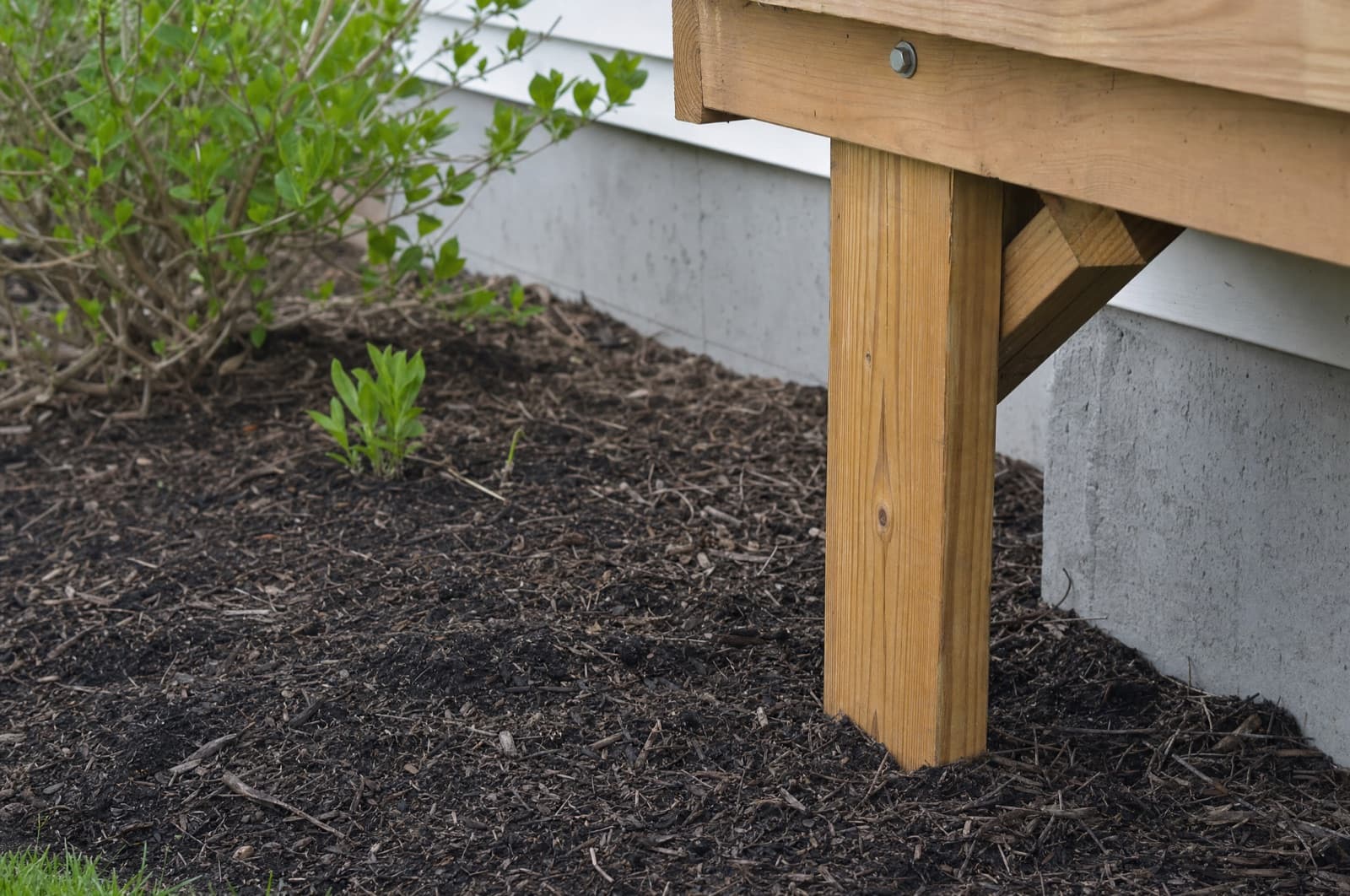
Siding within a few inches of grade lets termites bridge directly from soil to wood without needing much of a visible tube, which is why building-science and Extension guidance both recommend keeping wood siding at least six inches, and ideally eight to twelve, above the soil surface.
Source:Building America Solution Center (PNNL/DOE)— Termite-Resistant Foundations and Walls
3 levers, honestly ranked
Sorted by what actually moves the driver — primary first, theatre last. Effort is graded so you know what's a five-minute fix and what's a real project.
- Primary — moves the driverWeekend project
Maintain a 6-inch siding-to-soil clearance
Ensure wood siding stops at least six inches above soil, ideally eight to twelve, and regrade or pull back soil and mulch anywhere siding sits low; cut back any siding that currently reaches grade. This exposes a visible inspection band at the foundation and removes the soil-to-siding bridge that is the actual entry mechanism at low points, while also preventing the moisture wicking that rots bottom courses regardless of termite pressure.
- SupportingWeekend project
Keep siding and fascia dry and painted
Maintain paint, caulk, and functioning gutters so siding and fascia shed water and don't stay damp, which protects against decay and, where a chronic leak exists, removes the moisture that could otherwise sustain termites even above the clearance zone.
- SupportingQuick DIY
Inspect the bottom courses for tubes
Check where siding nears grade for pencil-width mud tubes each spring, since the bottom few courses are by far the most likely spot on the whole wall for activity to appear.
Whose job is this, really?
Who actually fixes it
You can handle this
Regrading a low spot, pulling back mulch, and cutting back low-hanging siding are homeowner-level tasks. A carpenter is the right call if whole courses of siding need to be replaced or reset higher.
You find mud tubes on the foundation reaching up to siding, or soft wood in the bottom courses — either warrants a professional termite inspection.
How this calibrates for NH
The 6-inch clearance rule is the core control across southern and central New Hampshire's TIP Zone 3, and high fascia in the state is a low termite risk that's much more often a decay or carpenter-ant concern instead.
NH-licensed applicator #782664 (NHDAMF, RSA 430) · NEPMA member · family-owned since 2017.
Frequently asked
Sources(2)
- [1]Building America Solution Center (PNNL/DOE)
Termite-Resistant Foundations and Walls
- [2]University of Kentucky Entomology
ENTFACT-605: Protecting Your Home Against Termites (Potter)
Written & reviewed by
VerifiedDaniel Brady
NH-Licensed Pesticide Applicator · License #782664 (NHDAMF, RSA 430)
Daniel Brady is the New Hampshire–licensed applicator behind Anchor Pest Services, a family-owned pest control company serving the Manchester area since 2017.
Your next step
Anchor Pest Services
Have a different pest question?
This one may not be a pesticide job — but if you're facing something that is, we serve Southern New Hampshire with a free inspection and same-day service.
- NH-licensed applicator
- Same-day service
- Pet & family-conscious
NH License #782664 · No obligation · We answer in person