
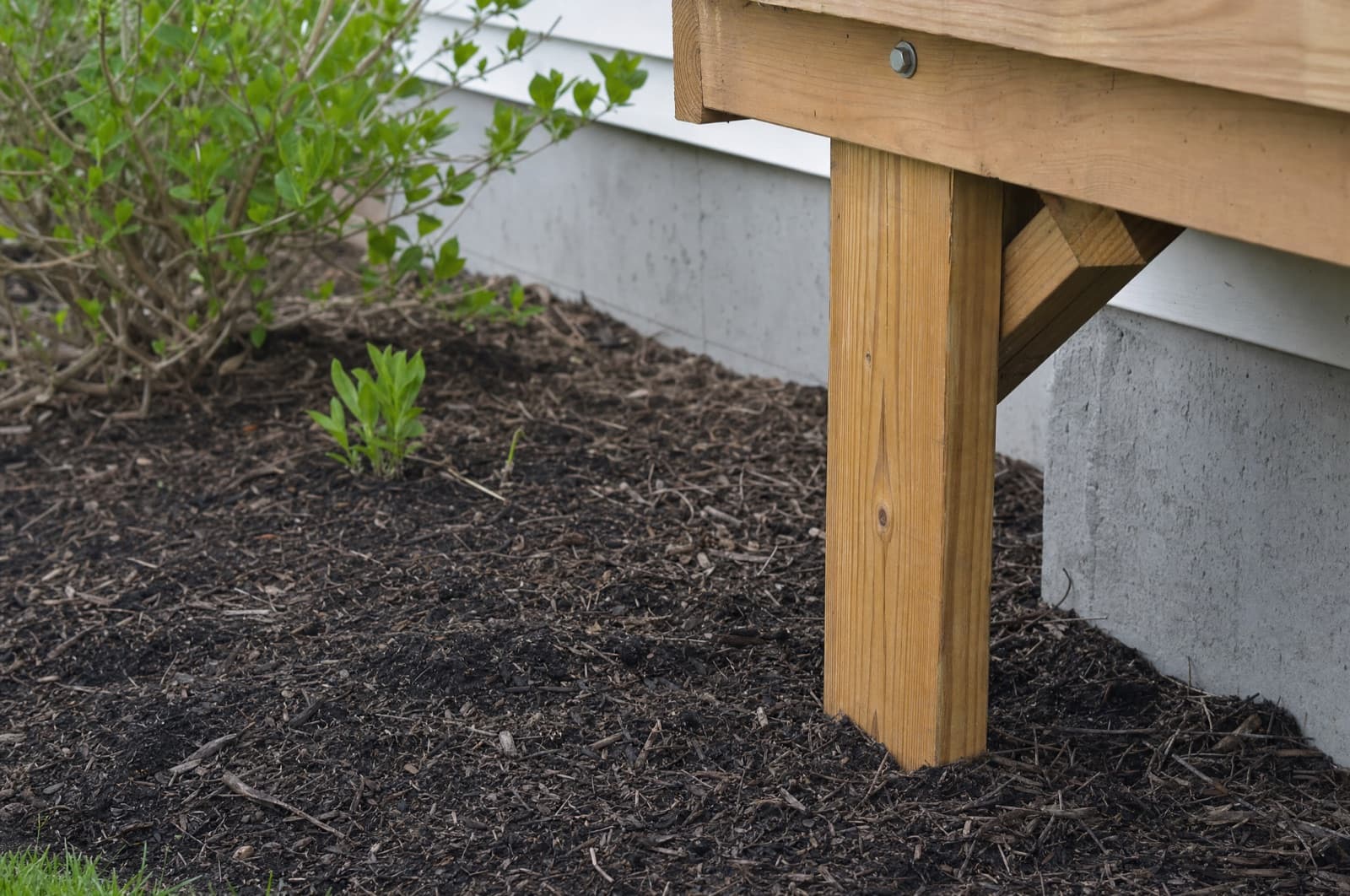
How to Prevent Termites Where Soil Touches Wood Siding or Trim
Soil in direct contact with wood siding or trim is the single most-cited termite risk condition in Extension literature — it provides food, moisture, shelter, and hidden entry all in one place.
A strong, legitimate risk worth correcting promptly. This is the condition Extension guidance ranks at the top of every prevention list, not an exaggerated or borderline case.
At a glance
- What it is: Real termite risk
- The driver: Direct soil-to-wood contact
- Who fixes it: You can handle this
Soil in direct contact with wood siding or trim is the single most-cited termite risk condition in Extension literature — it provides food, moisture, shelter, and hidden entry all in one place.
A strong, legitimate risk worth correcting promptly. This is the condition Extension guidance ranks at the top of every prevention list, not an exaggerated or borderline case.
Pull the right lever, not the sprayer
The organism is downstream of one condition. Remove that condition and it has no foothold — which is why prevention here is rarely a pesticide.
The driver
Direct soil-to-wood contact
Earth-to-wood contact gives termites concealed, direct entry and is the number-one item on Extension prevention lists, because when soil physically touches wood siding or trim, termites don't even need to build a visible mud tube to reach it — the contact point itself is the pathway.
Source:University of Kentucky Entomology— ENTFACT-605: Protecting Your Home Against Termites (Potter)
3 levers, honestly ranked
Sorted by what actually moves the driver — primary first, theatre last. Effort is graded so you know what's a five-minute fix and what's a real project.
- Primary — moves the driverWeekend project
Break the soil-to-wood contact and restore clearance
Regrade or excavate so soil, mulch, and general grade no longer touch siding or trim, restoring at least a six-inch exposed foundation band (eight to twelve is preferable), and where wood must sit near grade, replace it with masonry or a durable, properly based material instead. Eliminating direct earth-to-wood contact is the decisive, evidence-backed action for this condition — it removes the concealed highway that otherwise lets termites enter completely undetected, with no tube to give them away.
- SupportingQuick DIY
Keep the corrected zone dry and inspectable
Slope the regraded area for drainage and keep the band clear of mulch, plantings, or debris so you can do an effective annual tube check along the whole restored clearance.
- SupportingQuick DIY
Inspect the former contact line
Probe any wood that was previously in soil contact for hidden damage before assuming the correction alone solved everything — clearing the soil back doesn't undo damage that already happened.
Whose job is this, really?
Who actually fixes it
You can handle this
Regrading, excavating a strip along the foundation, and pulling back mulch are homeowner or landscaping tasks with no pesticide involved. A licensed pest professional's role is confirming and treating any damage that's found once the contact is broken.
You find soft or hollow wood at the former contact line, or mud tubes present — either warrants a professional termite inspection.
How this calibrates for NH
This is a real risk across southern New Hampshire and the leading enabler of exterior wood decay generally, so correcting it is worthwhile in TIP Zone 3 regardless of how much termite pressure any individual property actually has.
NH-licensed applicator #782664 (NHDAMF, RSA 430) · NEPMA member · family-owned since 2017.
Frequently asked
Sources(3)
- [1]University of Kentucky Entomology
ENTFACT-605: Protecting Your Home Against Termites (Potter)
- [2]Building America Solution Center (PNNL/DOE)
Termite-Resistant Foundations and Walls
- [3]Clemson Cooperative Extension (HGIC)
Subterranean Termite Control
Written & reviewed by
VerifiedDaniel Brady
NH-Licensed Pesticide Applicator · License #782664 (NHDAMF, RSA 430)
Daniel Brady is the New Hampshire–licensed applicator behind Anchor Pest Services, a family-owned pest control company serving the Manchester area since 2017.
Your next step
Anchor Pest Services
Have a different pest question?
This one may not be a pesticide job — but if you're facing something that is, we serve Southern New Hampshire with a free inspection and same-day service.
- NH-licensed applicator
- Same-day service
- Pet & family-conscious
NH License #782664 · No obligation · We answer in person