
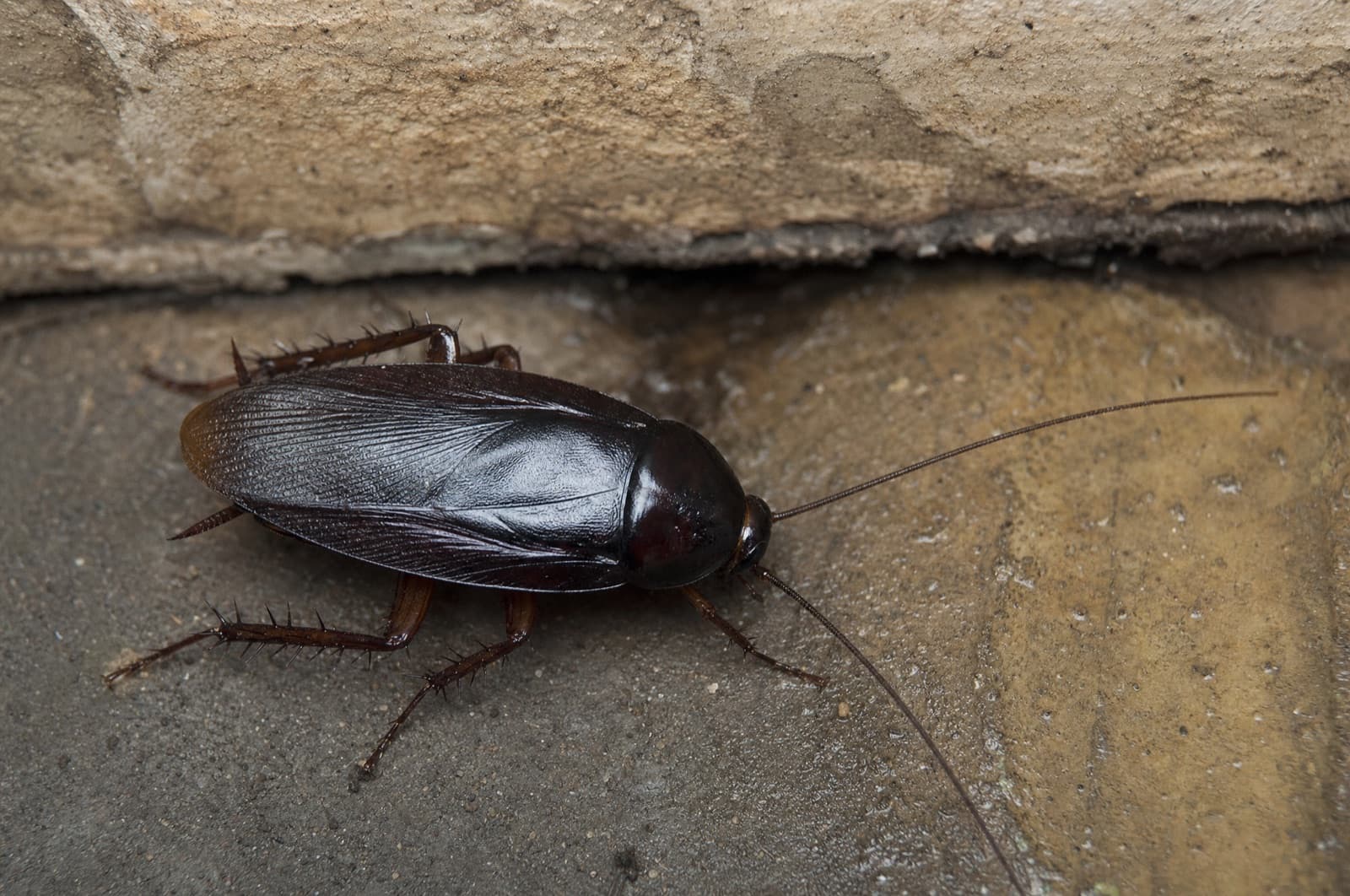
How to Get Rid of Oriental Cockroaches
At a glance
- Difficulty: Intermediate
- Time: A weekend to dry out and seal entry areas; 2-4 weeks for bait to knock down activity
- Cost: Low — a dehumidifier, drain screens, caulk, and labeled gel bait
- Success: Good once the moisture source is corrected; poor if the damp area stays wet
Can you DIY Oriental Cockroach?
The verdict on Oriental Cockroach DIY
Doable DIY, but moisture control decides whether it works.
The Oriental cockroach (Blatta orientalis) is the roach most literally called a 'water bug' — Penn State describes it as 'often called water bugs due to their preference for dark, damp, and cool areas.' It's slower-moving and a poorer climber than the American cockroach, and even more dependent on damp basements, floor drains, and crawlspaces. That makes it genuinely DIY-addressable, but the single biggest lever is drying out the space it's living in — bait and sealing without moisture control just slows a persistent problem instead of solving it.
The 5 DIY methods — honestly graded
Every approach graded for this species, in IPM order — prevention first, chemistry late. Pick a method to see how it works, the steps, and what it actually takes.
Prevention / Exclusion
Works wellThe decisive method for this species — moisture correction matters more here than for any other common house roach.
Oriental cockroaches are the most moisture-obligate of the pest roaches, favoring cool, damp basements, floor drains, and crawlspaces, and entering low from outside. Drying out and sealing those spaces removes the habitat they need to survive, not just the entry point.
Best for: Solving the root cause — a damp basement or crawlspace
Fix leaks and dehumidify
Repair leaking pipes and fixtures and run a dehumidifier in basements and crawlspaces — this is the single biggest control lever for this species.
Screen and maintain floor drains
Oriental cockroaches enter from outside and from drains; make sure floor drains have functioning covers or traps and stay clear of debris.
Seal foundation, door, and utility gaps
Caulk foundation cracks and gaps around doors and utility penetrations — this species enters low, so focus on ground-level gaps.
TipA 6-12 inch gravel band around the foundation reduces perimeter moisture, per UC IPM.
Tools & materials
Why DIY falls short here
Not scare tactics — the specific, proportionate reasons a home attempt can stall for this species.
Damp basement or crawlspace never dried out
This is the most moisture-obligate common house roach; without correcting the underlying dampness, sealing and bait only slow down a problem that keeps regenerating.
Standard gel bait placed in genuinely wet areas
Gel bait dries out and loses effectiveness in the humid spots this species prefers — humid-rated stations are needed there instead.
Foggers and aerosol sprays used as a first response
Per UC IPM, foggers and sprays disperse roaches to new areas instead of controlling them, and repellent residue near bait causes roaches to avoid feeding on it.
How risky is it, really?
An honest read — most nuisance species are genuinely low risk, and we say so.
Oriental cockroaches don't bite or sting meaningfully, so this isn't a physical-injury risk. The genuine, sourced concerns are mechanical contamination — they travel through sewers and drains and, per Penn State, 'live on filth' — and cockroach allergens, a documented asthma trigger. Both are proportionate reasons to act promptly, not to panic.
- Mechanical contamination of food-prep surfacesCommon
This species frequently travels through sewers and drains before reaching living spaces
Penn State Extension
- Allergen contribution to asthma and allergy symptomsCommon
Common where an infestation is established; a real, CDC-documented asthma trigger, especially for children
CDC (Healthy Homes) / Asthma and Allergy Foundation of America
- Bite or sting to people or petsRare
Not a meaningful risk from this species
Penn State Extension
Still Seeing Oriental Cockroaches After Drying Out the Basement?
Some moisture sources — a failing sump, an inaccessible crawlspace — are hard to fully correct on your own. Anchor Pest Services finds and treats the source across southern and central New Hampshire. Family-owned since 2017, NH license #782664.
Call a pro when…
- A basement, crawlspace, or drain system you can't practically dry out or access on your own
- Repeated sightings that persist after moisture correction, sealing, and bait
- Uncertainty distinguishing this species from the American cockroach when planning treatment
General Pest Control
Oriental cockroaches are a manageable DIY project once the moisture problem is fixed. Call a pro when the damp source is hard to reach or correct yourself, or when activity keeps returning despite consistent moisture control and bait.
Keep them out
- Keep basements and crawlspaces dehumidified year-round
- Screen and maintain floor drains — a common entry and harborage point
- Seal ground-level foundation and door gaps
Oriental cockroaches in New Hampshire
In New Hampshire, Oriental cockroaches show up in the same damp basements, crawlspaces, and drain systems that make other moisture-loving pests common in older housing stock. Because this species is slow-moving and doesn't fly, sightings tend to stay concentrated near the moisture source rather than spreading through the house — which is good news for DIY control, provided that source actually gets dried out.
Peak season
Year-round indoors in damp basements and crawlspaces; more outdoor activity in warmer months
First-frost anchor
Manchester first hard frost ~Oct 19 (50%) / Oct 29 (80%), NOAA 1991-2020
Make sure it's a Oriental Cockroach
Two quick detours worth taking — confirm the ID, then learn what drew it in so it doesn't come back.
Frequently asked
Sources & further reading(5)
- [1]Penn State Extension — Oriental Cockroaches
Water-bug naming, moisture dependence, filth-association
extensionverified 2026-07-13 - [2]University of Maryland Extension — Cockroaches
Identification (size, color, wing development)
extensionverified 2026-07-13 - [3]UC IPM — Cockroaches
Outdoor bait placement, foggers/aerosols disperse rather than control
extensionverified 2026-07-13 - [4]CDC — Healthy Homes (cockroach allergen exposure)
Cockroach allergen exposure as an asthma trigger
govverified 2026-07-13 - [5]Asthma and Allergy Foundation of America — Cockroach Allergy
Cockroach allergens and asthma triggering
medicalverified 2026-07-13
Written & reviewed by
VerifiedDaniel Brady
NH-Licensed Pesticide Applicator · License #782664 (NHDAMF, RSA 430)
Daniel Brady is the New Hampshire–licensed applicator behind Anchor Pest Services, a family-owned pest control company serving the Manchester area since 2017.
Last updated July 2026
Other species you can tackle
Same category — the dot shows each one's DIY verdict at a glance (green = friendly, amber = doable with care, red = call a pro).
Professional Pest Control
Still Seeing Oriental Cockroaches After Drying Out the Basement?
Some moisture sources — a failing sump, an inaccessible crawlspace — are hard to fully correct on your own. Anchor Pest Services finds and treats the source across southern and central New Hampshire. Family-owned since 2017, NH license #782664.
- Moisture-source-focused treatment
- NH-licensed applicators (#782664)
- Free inspection — same-day service across southern NH
NH License #782664 · No obligation · We answer in person