
How to Get Rid of Pillbugs
At a glance
- Difficulty: Beginner
- Time: A weekend to reduce moisture and seal gaps
- Cost: Low — a dehumidifier, caulk, and a rake for mulch
- Success: High once outdoor moisture and harborage near the foundation are addressed
Can you DIY Pillbug?
The verdict on Pillbug DIY
A simple, low-stakes DIY — the roly-poly is a moisture problem, not a pest problem.
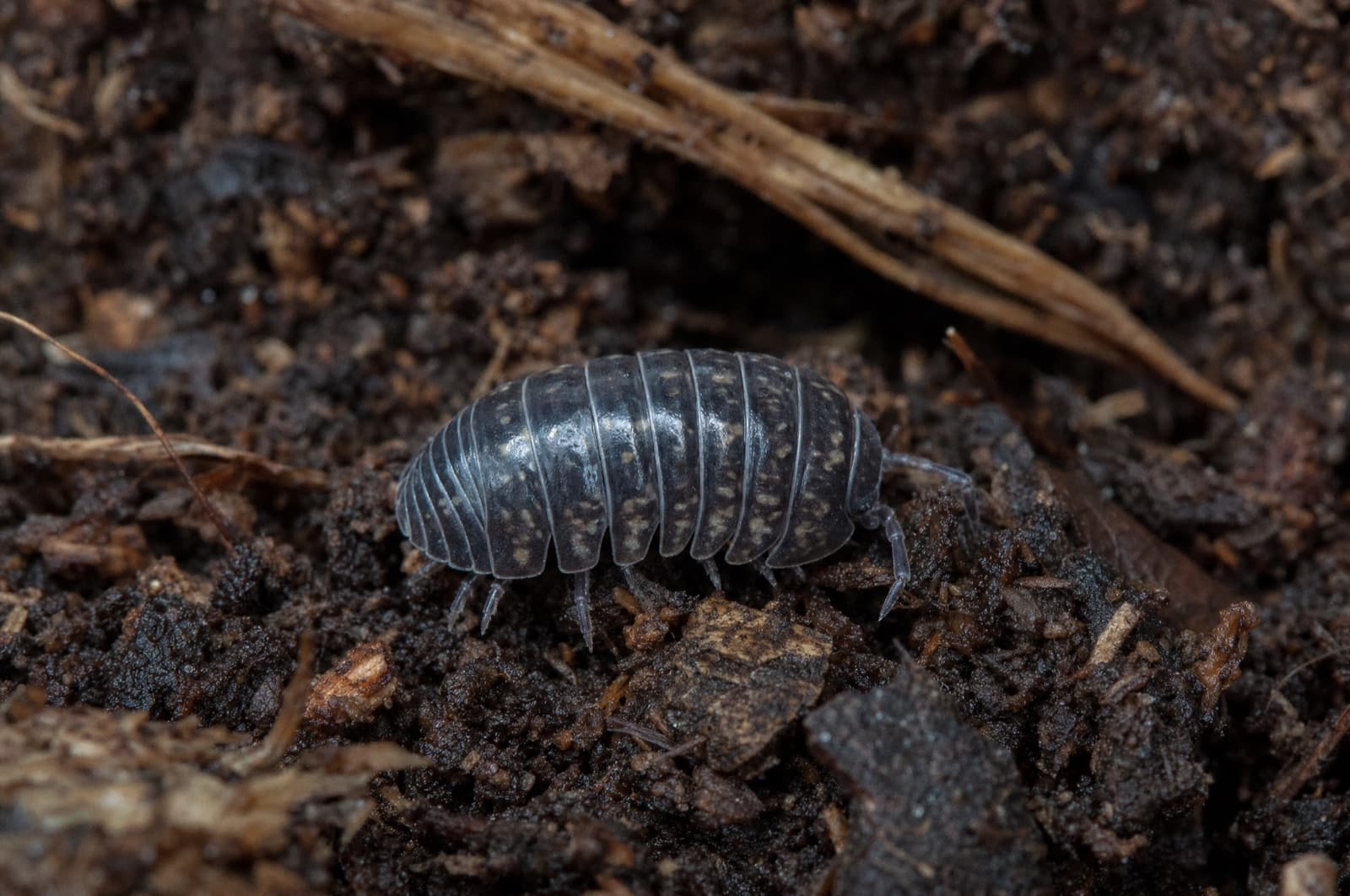
The pillbug (Armadillidium vulgare), commonly called a roly-poly, is a terrestrial isopod — a land crustacean, not an insect — that breathes through gill-like structures and needs moisture to survive. When disturbed it rolls into a tight, complete ball (conglobation), the trait that sets it apart from its close relative the sowbug, which can't roll up. Pillbugs are harmless decomposers that wander indoors from damp areas near the foundation and typically die quickly without moisture. Control is simply drying out and sealing what draws them in.
The 5 DIY methods — honestly graded
Every approach graded for this species, in IPM order — prevention first, chemistry late. Pick a method to see how it works, the steps, and what it actually takes.
Prevention / Exclusion
Works wellMoisture and harborage reduction is the core, most effective control — pillbugs simply can't establish where it's dry.
As land crustaceans, pillbugs need consistent moisture to breathe and survive. Removing damp harborage and sealing entry points removes the habitat that supports an outdoor population near your home, rather than just addressing individual strays.
Best for: Solving the underlying outdoor moisture problem long-term
Reduce moisture near the foundation
Fix leaks, ventilate crawl spaces, and grade soil so water drains away from the house.
TipPillbugs thrive under consistently damp mulch, leaf litter, and stacked debris.Clear harborage and seal cracks
Move mulch, leaf litter, and wood piles away from the foundation, and seal cracks where the foundation meets the ground.
Tools & materials
Why DIY falls short here
Not scare tactics — the specific, proportionate reasons a home attempt can stall for this species.
Treating the bug instead of the moisture
Sprays or repeated sweeping without fixing the underlying dampness don't stop new pillbugs from wandering in — the moisture, not the pillbugs, is the actual driver.
Large outdoor population left unaddressed
Finding several indoors usually signals a large, healthy population living in damp mulch or debris just outside; ignoring that reservoir means new strays keep arriving.
Mulch and debris left against the foundation
A mulch bed touching the house acts as a bridge from outdoor harborage straight to your foundation, funneling pillbugs toward entry points no matter how many you remove.
How risky is it, really?
An honest read — most nuisance species are genuinely low risk, and we say so.
Pillbugs are completely harmless — no bite, sting, disease, or structural damage. They're beneficial decomposers outdoors, and indoors their presence is simply a useful signal of excess moisture near your home, not a threat of any kind.
- Bite, sting, or disease transmissionRare
Not documented — pillbugs pose no direct health risk to people or pets
UC IPM
- Structural or property damageRare
Pillbugs are decomposers that feed on decaying organic matter, not wood or building materials
University of Florida/IFAS
- Indicator of elevated outdoor moisture near the foundationCommon
A practical flag worth acting on for drainage and moisture management, not a health risk from the pillbug itself
University of Florida/IFAS
Persistent Pillbugs Despite Your Own Efforts?
A hidden moisture or drainage issue can be hard to track down alone. Anchor Pest Services offers a full moisture and exclusion assessment across southern and central New Hampshire. Family-owned since 2017, NH license #782664.
Call a pro when…
- Large numbers persist indoors despite dehumidifying and clearing harborage
- You suspect a hidden leak or grading problem you can't locate
- You want a full exterior moisture and exclusion assessment
General Pest Control
You almost never need a pro for pillbugs — this is a moisture-and-exclusion job most homeowners handle themselves. The exception is a persistent, heavy population that keeps entering despite consistent moisture control, which usually points to a moisture source you haven't found.
Keep them out
- Move mulch, leaf litter, and wood debris away from the foundation
- Fix leaks and improve drainage near the house
- Seal foundation cracks and crawl space vents
Pillbugs in New Hampshire
New Hampshire's humid summers and older homes with mulched beds close to the foundation create steady pillbug habitat outdoors for much of the growing season. Activity is most noticeable after heavy rain, when damp harborage floods and drives more of the outdoor population toward the drier ground near the foundation — and occasionally through gaps into the house.
Peak season
Warm, humid months; spikes after heavy rain
First-frost anchor
Manchester first hard frost ~Oct 19 (50%) / Oct 29 (80%), NOAA 1991–2020
Make sure it's a Pillbug
Two quick detours worth taking — confirm the ID, then learn what drew it in so it doesn't come back.
Frequently asked
Sources & further reading(2)
- [1]UC Statewide IPM Program — Pillbugs and Sowbugs
Biology, roll-up behavior, moisture dependency, control recommendations
extensionverified 2026-07-13 - [2]University of Florida IFAS Extension — Pillbugs and Sowbugs (IN1099)
Harmless decomposer status, indoor moisture-indicator role
extensionverified 2026-07-13
Written & reviewed by
VerifiedDaniel Brady
NH-Licensed Pesticide Applicator · License #782664 (NHDAMF, RSA 430)
Daniel Brady is the New Hampshire–licensed applicator behind Anchor Pest Services, a family-owned pest control company serving the Manchester area since 2017.
Last updated July 2026
Professional Pest Control
Persistent Pillbugs Despite Your Own Efforts?
A hidden moisture or drainage issue can be hard to track down alone. Anchor Pest Services offers a full moisture and exclusion assessment across southern and central New Hampshire. Family-owned since 2017, NH license #782664.
- Moisture-source diagnosis
- NH-licensed applicators (#782664)
- Free inspection — same-day service across southern NH
NH License #782664 · No obligation · We answer in person