
How to Get Rid of Earwigs
At a glance
- Difficulty: Beginner
- Time: A weekend to reduce harborage and seal gaps; traps work overnight
- Cost: Low — a dehumidifier, caulk, and simple household traps
- Success: High once moisture and outdoor harborage near the foundation are addressed
Can you DIY Earwig?
The verdict on Earwig DIY
An easy DIY — the pincers look scarier than anything they actually do.
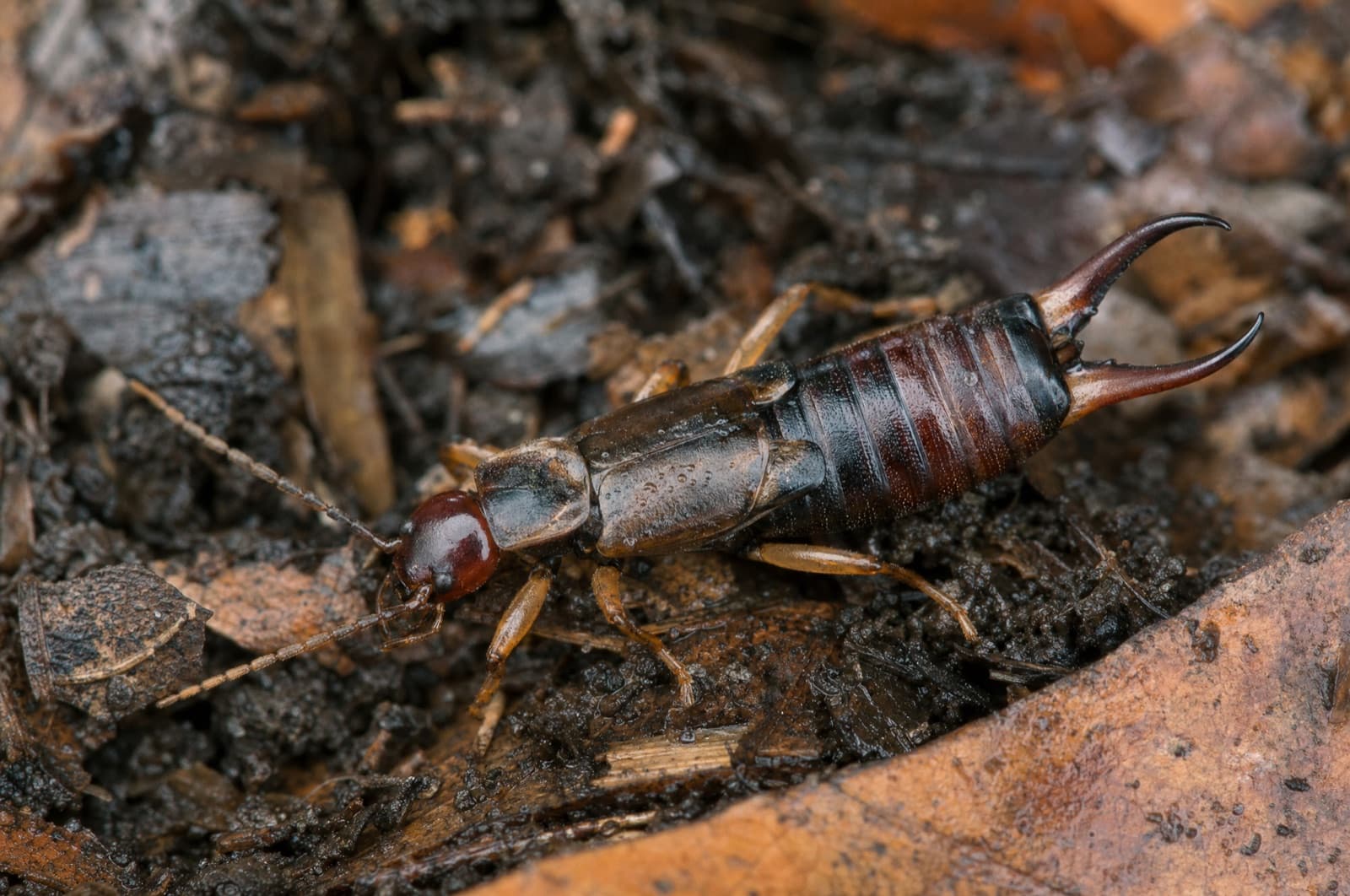
The European earwig (Forficula auricularia) is the species homeowners in New Hampshire encounter, and despite the intimidating rear pincers (cerci) and the old "crawls into your ear and brain" legend, it's harmless: earwigs don't crawl into ears, aren't venomous, don't transmit disease, and only rarely deliver a mild, harmless pinch if handled roughly. They're drawn indoors by moisture and harborage — mulch, leaf litter, and wood debris near the foundation — so the whole job is drying out and sealing those entry points, plus simple traps for stragglers.
The 5 DIY methods — honestly graded
Every approach graded for this species, in IPM order — prevention first, chemistry late. Pick a method to see how it works, the steps, and what it actually takes.
Prevention / Exclusion
Works wellThe dominant lever — moisture and harborage reduction near the foundation solves the underlying cause.
Earwigs need moist, dark hiding spots and are drawn indoors from damp harborage right outside the house. Removing that harborage and moisture, and sealing the gaps they'd use to enter, addresses the source rather than just the bugs you can see.
Best for: Solving the underlying cause of an outdoor earwig population near the house
Reduce moisture
Fix leaks, improve drainage so water moves away from the foundation, and dehumidify damp basements or crawl spaces.
TipEarwigs concentrate wherever soil and mulch stay consistently damp.Clear harborage and seal gaps
Move mulch, leaf litter, and wood/debris piles away from the foundation, and seal gaps around pipes, doors, and the foundation itself.
Tools & materials
Why DIY falls short here
Not scare tactics — the specific, proportionate reasons a home attempt can stall for this species.
Moisture and harborage left in place
Leaving mulch, leaf litter, or damp soil against the foundation keeps funneling earwigs toward the house no matter how many you trap or vacuum indoors.
Overreacting with indoor chemicals
Because the pincers look alarming, people reach for indoor sprays on a harmless bug when a damp newspaper trap or exclusion would solve it just as well without the chemical exposure.
Ignoring the outdoor reservoir
A large population lives under mulch, boards, and garden debris outside; ignoring that reservoir while only addressing what's indoors means new earwigs keep arriving each season.
How risky is it, really?
An honest read — most nuisance species are genuinely low risk, and we say so.
Earwigs are harmless to people despite their intimidating look. They don't carry venom, don't transmit disease, and the "crawls into your ear" legend isn't true. The only real-world nuisance is an occasional mild pinch if handled and minor nibbling on tender garden plants.
- "Crawls into ears and brain" legendRare
Not true — this is a persistent folk myth, not a documented behavior
University of Wisconsin Horticulture
- Mild pinch from the rear pincers if handled roughlyRare
Harmless and momentary — earwigs are not venomous and don't sting
University of Maine Extension
- Nibbling on tender garden seedlings and flowersOccasional
A minor garden nuisance, not an indoor or health concern; earwigs also eat aphids and insect eggs, offsetting some plant damage
University of Wisconsin Horticulture
- Disease transmission to people or petsRare
Not documented — earwigs pose no direct disease risk
University of Wisconsin Horticulture
Heavy Earwig Pressure Every Summer?
A large outdoor population near the foundation can outlast simple traps. Anchor Pest Services offers a full moisture and exclusion assessment across southern and central New Hampshire. Family-owned since 2017, NH license #782664.
Call a pro when…
- Heavy outdoor pressure continues despite dehumidifying and clearing harborage
- You suspect a hidden moisture source you can't locate
- You'd rather have a professional exterior perimeter treatment applied correctly
General Pest Control
You almost never need a pro for earwigs — this is a moisture-and-trapping job most homeowners handle in a weekend. The exception is a persistently heavy outdoor population pressing into the house despite consistent moisture control.
Keep them out
- Move mulch, leaf litter, and wood debris away from the foundation
- Fix leaks and improve drainage near the house
- Seal gaps around pipes, doors, and the foundation
Earwigs in New Hampshire
New Hampshire's humid summers and mulched garden beds close to foundations create ideal earwig harborage for much of the growing season. Activity typically peaks in warm, humid stretches and tapers as temperatures drop toward the first hard frost, when earwigs retreat underground to overwinter rather than seeking to move indoors the way fall invaders like Asian lady beetles do.
Peak season
Warm, humid months (late spring through summer)
First-frost anchor
Manchester first hard frost ~Oct 19 (50%) / Oct 29 (80%), NOAA 1991–2020
Make sure it's a Earwig
Two quick detours worth taking — confirm the ID, then learn what drew it in so it doesn't come back.
Frequently asked
Sources & further reading(2)
- [1]University of Wisconsin Horticulture — Earwigs
Biology, myth-correction, harborage/moisture control, trapping, garden impact
extensionverified 2026-07-13 - [2]University of Maine Cooperative Extension — Home & Garden IPM Fact Sheets
Harmless status, pincer myth-correction
extensionverified 2026-07-13
Written & reviewed by
VerifiedDaniel Brady
NH-Licensed Pesticide Applicator · License #782664 (NHDAMF, RSA 430)
Daniel Brady is the New Hampshire–licensed applicator behind Anchor Pest Services, a family-owned pest control company serving the Manchester area since 2017.
Last updated July 2026
Other species you can tackle
Same category — the dot shows each one's DIY verdict at a glance (green = friendly, amber = doable with care, red = call a pro).
Professional Pest Control
Heavy Earwig Pressure Every Summer?
A large outdoor population near the foundation can outlast simple traps. Anchor Pest Services offers a full moisture and exclusion assessment across southern and central New Hampshire. Family-owned since 2017, NH license #782664.
- Moisture-source diagnosis
- NH-licensed applicators (#782664)
- Free inspection — same-day service across southern NH
NH License #782664 · No obligation · We answer in person
Your next step
- Book a NH pro
Pest Control Services
Licensed, family-owned pest control across southern NH.
Book now - What to do next
Earwigs in New Hampshire — ID, the Ear Myth & Control
Read the answer - What to do next
Do earwigs damage garden plants or flowers?
Read the answer - Also relevant
Earwigs in New Hampshire — ID, the Ear Myth & Control
Read the answer - Also relevant
Household Pest Prevention: Seal, Store, and Time It Right
Read the answer - Also relevant
Natural Control for Roaches, Crickets, Earwigs & Termites in NH
Read the answer