
Can Boiling Water Be Used to Destroy a Wasp Nest?
At a Glance
- The call: Boiling water occasionally works on a shallow, exposed ground nest. It does nothing for aerial, wall-void, or attic nests, and carrying near-boiling water to an agitated colony is its own hazard.
The short of it
Boiling water occasionally works on a shallow, exposed ground nest. It does nothing for aerial, wall-void, or attic nests, and carrying near-boiling water to an agitated colony is its own hazard.
The remedy, graded honestly
A useless remedy is harmless — this is a fact-check, not a safety warning.
Pouring boiling (or hot soapy) water into a wasp nest
Cooperative extension sources describe pouring hot soapy water, followed by boiling water, into a ground nest's entrance as a non-chemical option people use — but effectiveness depends almost entirely on how the nest sits underground, per the Northwest Center for Alternatives to Pesticides. A shallow, single-entrance nest close to the surface can be reached; a nest in a deeper or angled chamber, or one with more than one entrance, often isn't, and wasps have been documented surviving repeated pourings and rebuilding the entrance. The method does nothing at all for aerial paper-wasp or hornet nests, or for nests inside a wall or attic void, since there's no way to direct water into those spaces. Even where it can work, it is not a gentle option: the water has to be carried, in the dark, to within a few feet of an active nest entrance, and a failed or partial pour provokes exactly the defensive response it's meant to avoid.
It's cheap, requires no purchased product, and a successful pour on a small, shallow nest genuinely can kill much of the colony in one attempt — so the anecdote spreads even though it doesn't generalize to nests with a different structure.
For a ground nest you've confirmed is shallow and single-entrance, extension guidance treats it after dark with proper protective clothing, since that's when the colony is least active. For anything deeper, multi-entrance, aerial, or inside a structure, a targeted insecticide dust or spray reaches the colony far more reliably than water — and for a large or defended colony, that's a job for a professional rather than a homeowner with a kettle. See /top-diy-methods for what's realistic by species.
Harmless, not dangerous — this is a “doesn’t work,” not a safety warning. The danger call is the router’s job, not this one’s.
The full picture
Where boiling water can work, and where it flatly can't
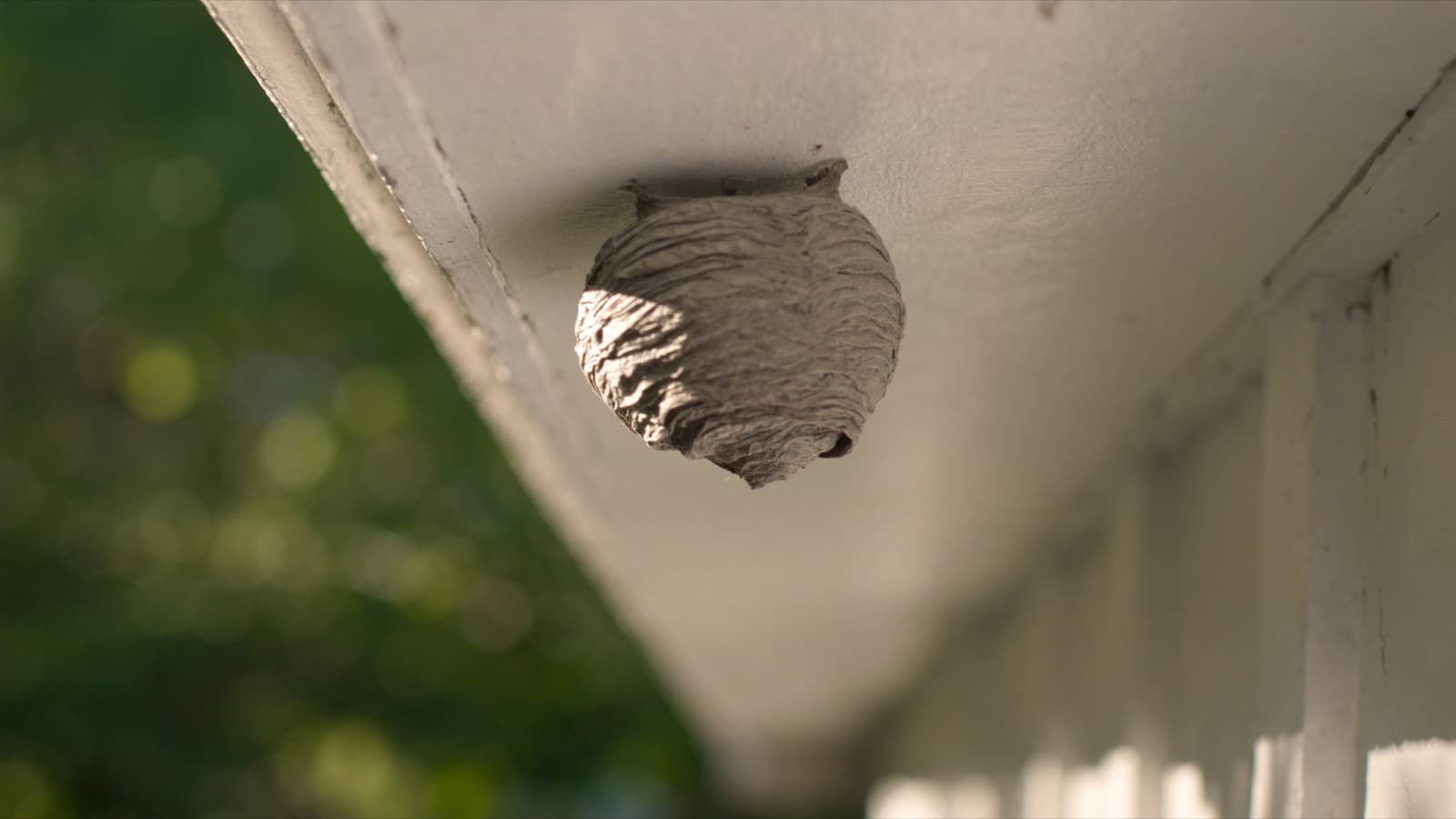
The method only has a real shot on an underground yellowjacket nest with a shallow, single, accessible entrance. Extension guidance describes pouring hot soapy water first, then a full kettle of boiling water into the hole. It has no application at all to an aerial paper-wasp or bald-faced hornet nest, or to a nest inside a wall void or attic — there's no way to pour water into a space you can't see or reach, and the heat dissipates long before it would reach a concealed comb.
The real hazard this remedy carries
This is not a purely harmless failure. Approaching an active ground nest at close range with a container of near-boiling water means real risk of scalding yourself or splashing hot water on skin while working in the dark near an entrance hole. If the pour doesn't reach or kill the colony — which extension sources say is common outside the narrow shallow-nest case — the disturbance alone can provoke a defensive response from the surviving wasps, and you're now retreating from an agitated nest while carrying a hot container. The honest picture is that this remedy is both unreliable and genuinely dangerous to attempt, which is a different problem from most of the myths on this list.
What a shallow ground nest actually calls for, if you try it
If you've confirmed a single, shallow entrance hole and want to attempt it yourself, extension sources recommend working after dark, wearing protective clothing sealed at the wrists, ankles, and neck, and keeping hands, face, and feet well clear of both the water and the rising steam. If the nest is deep, has more than one opening, or you aren't certain what's underground, that uncertainty is itself a reason to treat it as a professional job rather than experiment with water.
The honest line — Boiling water occasionally works on a shallow, exposed ground nest. It does nothing for aerial, wall-void, or attic nests, and carrying near-boiling water to an agitated colony is its own hazard.
Key takeaways
- Boiling water only has a real chance against a shallow, single-entrance underground nest.
- It does nothing for aerial, wall-void, or attic nests — there's no way to direct water into them.
- Wasps have been documented surviving pourings and rebuilding the entrance, even on nests where the method is theoretically viable.
- This is not a purely harmless myth — carrying near-boiling water to an active nest entrance carries a real scald and sting risk.
- A targeted insecticide treatment, or a professional, is more reliable than water for anything beyond a shallow ground nest.
Where to go next
Identification, sting treatment, per-species DIY viability, and nest-reuse facts each live on the hub that owns them. We route, we don't rebuild.
DIY viability by species
The router's source of truth — which nests are DIY-able.
Go thereIdentify the species
Tell the wasps, hornets, and lookalikes apart.
Go thereSting & allergy treatment
What to do about a sting or a reaction.
Go thereNest reuse & winter
The colony dies at frost; the nest is never reused.
Go there
Not sure how deep or shallow the nest is?
Guessing wrong with boiling water means real risk of getting scalded or stung for nothing. Anchor can assess and treat it properly.
Frequently asked questions
Sources(3)
- [1]Ask Extension (Cooperative Extension System)
Hot soapy water followed by boiling water as a ground-nest option; protective clothing and timing guidance
extensionverified 2026-07-17 - [2]UNH Cooperative Extension — Controlling Wasps, Bees and Hornets Around Your Home
Wall-void nests require professional treatment; protective clothing does not make removal risk-free
extensionverified 2026-07-17 - [3]Penn State Extension — Getting Rid of Paper Wasps, Yellowjackets and Other Stinging Insects
Nest treatment differs by location; concealed nests are not reachable by surface methods
extensionverified 2026-07-17
Written & reviewed by
VerifiedDaniel Brady
NH-Licensed Pesticide Applicator · License #782664 (NHDAMF, RSA 430)
Daniel Brady is the New Hampshire–licensed applicator behind Anchor Pest Services, a family-owned pest control company serving the Manchester area since 2017.
Last updated 2026-07-17
Before you fill the kettle
A shallow-looking hole can hide a deep nest
If you're not certain what's underground, a licensed technician can confirm it and treat it without the scald and sting risk of a DIY attempt.
- Family-owned since 2017
- NH License #782664, category F1 (RSA 430, NHDAMF)
- Member, NEPMA