
What Attracts American Dog Ticks to Your House?
At a glance
- Short answer: American dog ticks aren't attracted to your house. A host that walked through their habitat carried them to it.
- The verdict: You didn't attract it — you carried it in
The attractant verdict
Four possible answers to why this species turned up. Three stay unlit — and that's the argument: the honest answer could have been any of them, and for this species it wasn't.
American dog ticks aren't attracted to your house. A host that walked through their habitat carried them to it.
Most pest advice — including our own previous page — says the American dog tick is drawn indoors by "availability of hosts, suitable environment, and landscaping," as if the tick were scouting your house the way a mouse might. That framing suggests the house itself is doing the attracting.
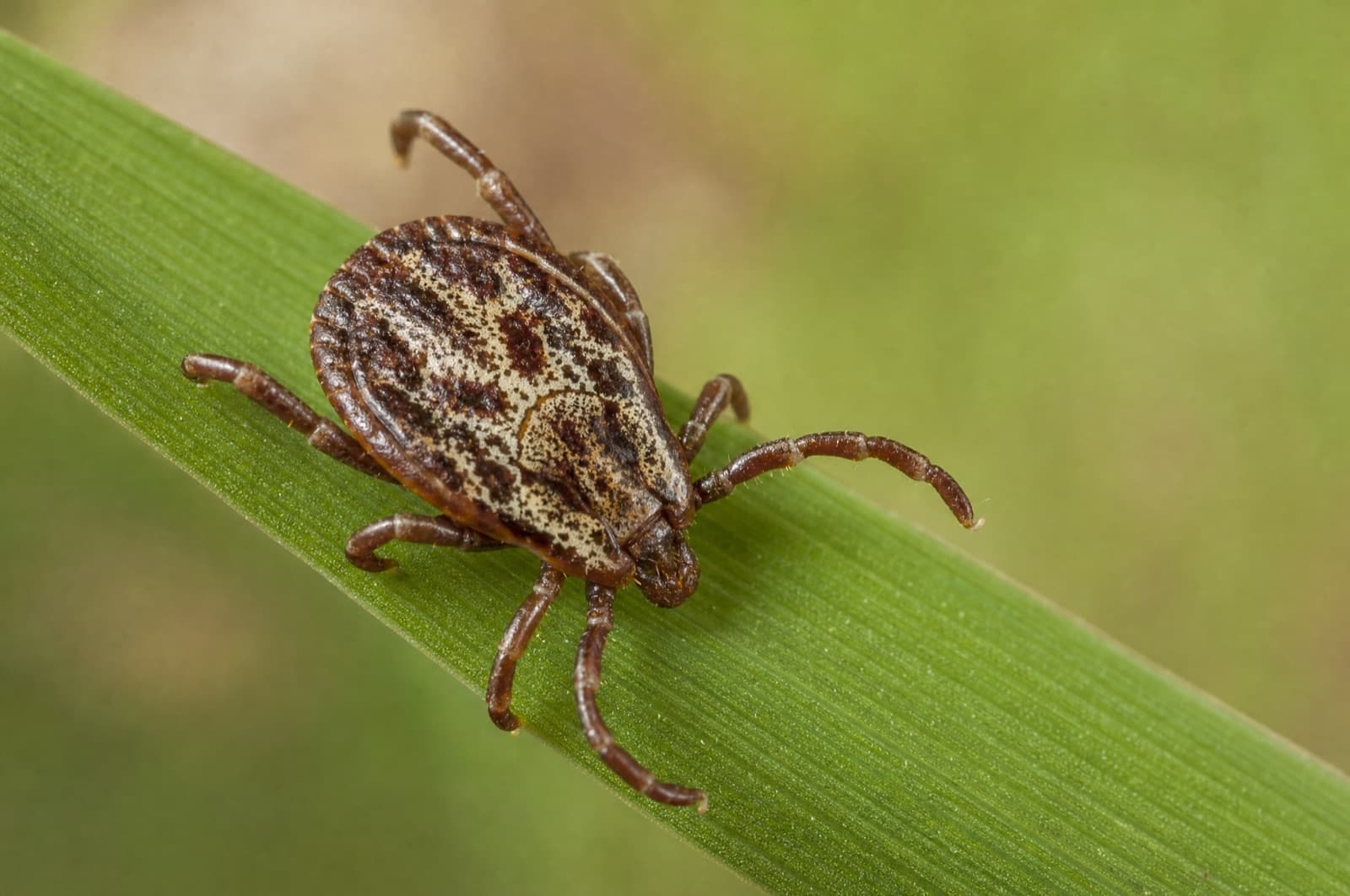
A tick that climbed a grass stem or a low shrub and grabbed onto a passing dog, person, or wild animal using an ambush strategy called questing. It doesn't decide to head for a house; it's carried wherever its host goes, including through the door.
“American dog ticks don't come for your house. They wait in grass and brush for a host, and the host is what brings them the rest of the way.”
Why it's here, in full
Why the framing is backwards
The American dog tick doesn't search for houses; it searches for a blood meal, and it does that from a fixed ambush position. UNH Cooperative Extension describes the questing behavior directly: the tick climbs vegetation — often at the edge of a trail, a mowed lawn, or a grassy field — and holds out its front legs to grab whatever brushes past. It doesn't travel toward a structure and doesn't respond to anything the house itself emits. If it ends up inside, a host carried it there.
That host is usually a dog that ranged through tall grass, a person who walked a brushy trail, or, less often, a wild animal that got close enough to a door or porch. The old framing — "availability of hosts, suitable environment, and landscaping" attracting the tick to your house — inverts the actual mechanism: the tick was already positioned in habitat nearby, and a host moving through that habitat is what closed the distance.
What actually predicts whether you'll see one
Two things matter, and neither one is about the house's cleanliness or construction: whether your yard (or a place you or your pet recently visited) has the grassy, open, or trail-edge habitat this species quests from, and whether a host — dog, person, or wildlife — moved through that habitat recently. UNH Extension notes the American dog tick favors more open, grassy areas rather than deep woods, which is why it turns up along mowed-lawn edges, trails, and fields as often as in true forest.
The indoor sighting itself is downstream of an outdoor event. A tick found on a person or pet is nearly always one that quested successfully outside, not one that made its way indoors independently looking for anything a house provides.
How to tell it's actually this species
Real signs only — a species with four honest tells gets four, and stops. Where a sign is weak on its own, we say so.
Finding an attached or crawling tick on a person or pet after time outdoors, especially after walking through tall grass or brushy trail edges
A pet that has been in grassy or wooded areas picking up ticks repeatedly during warm months
Could be something else: This tells you the yard or a recent walk had tick habitat — it doesn't mean anything about the house itself attracted the tick.
Ticks noticed on outdoor gear, blankets, or car seats after time in open, grassy terrain
Overgrown grass, brush piles, or a lawn edge bordering fields or woods, where this species is known to quest
Could be something else: This is habitat that supports questing ticks outdoors, not evidence of an indoor problem.
Want american dog ticks gone?
This page only answers why it's here. Every removal step for this exact species — what to seal, what to set, what actually works — lives on its own dedicated guide.
Two questions, two pages
Here: why it turned up at all — the honest answer, blame removed.
There: the step-by-step removal guide for this exact species.
Key takeaways
- American dog ticks don't come for your house. They wait in grass and brush for a host, and the host is what brings them the rest of the way.
- Cleanliness isn't the deciding factor here — the actual vector is what matters.
- What actually matters: an animal host, the outdoors nearby.
- If it's already inside, removal is a different question — see /top-diy-methods/american-dog-tick.
Already finding ticks on people or pets?
This page is about why they showed up. Removal and yard treatment options are covered at /top-diy-methods/american-dog-tick.
Frequently asked
Sources(2)
- [1]UNH Cooperative Extension — Biology and Management of Ticks in New Hampshire (Eaton)
American dog tick habitat (open, grassy areas) and questing behavior as the host-finding mechanism
extensionverified 2026-07-17 - [2]U.S. CDC — Preventing Ticks on Pets
Pets transport ticks from outdoor habitat into the home
govverified 2026-07-17
Written & reviewed by
VerifiedDaniel Brady
NH-Licensed Pesticide Applicator · License #782664 (NHDAMF, RSA 430)
Daniel Brady is the New Hampshire–licensed applicator behind Anchor Pest Services, a family-owned pest control company serving the Manchester area since 2017.
Last updated Jul 2026
Ticks don't come for your house — a host brings them
Worried about ticks around your property?
Same-day inspections across southern and central New Hampshire, with honest advice about your yard's actual risk.
- Family-owned in Manchester since 2017
- NH commercial applicator #782664, category F1
- We will tell you when the answer is do nothing
NH License #782664 · No obligation · We answer in person