
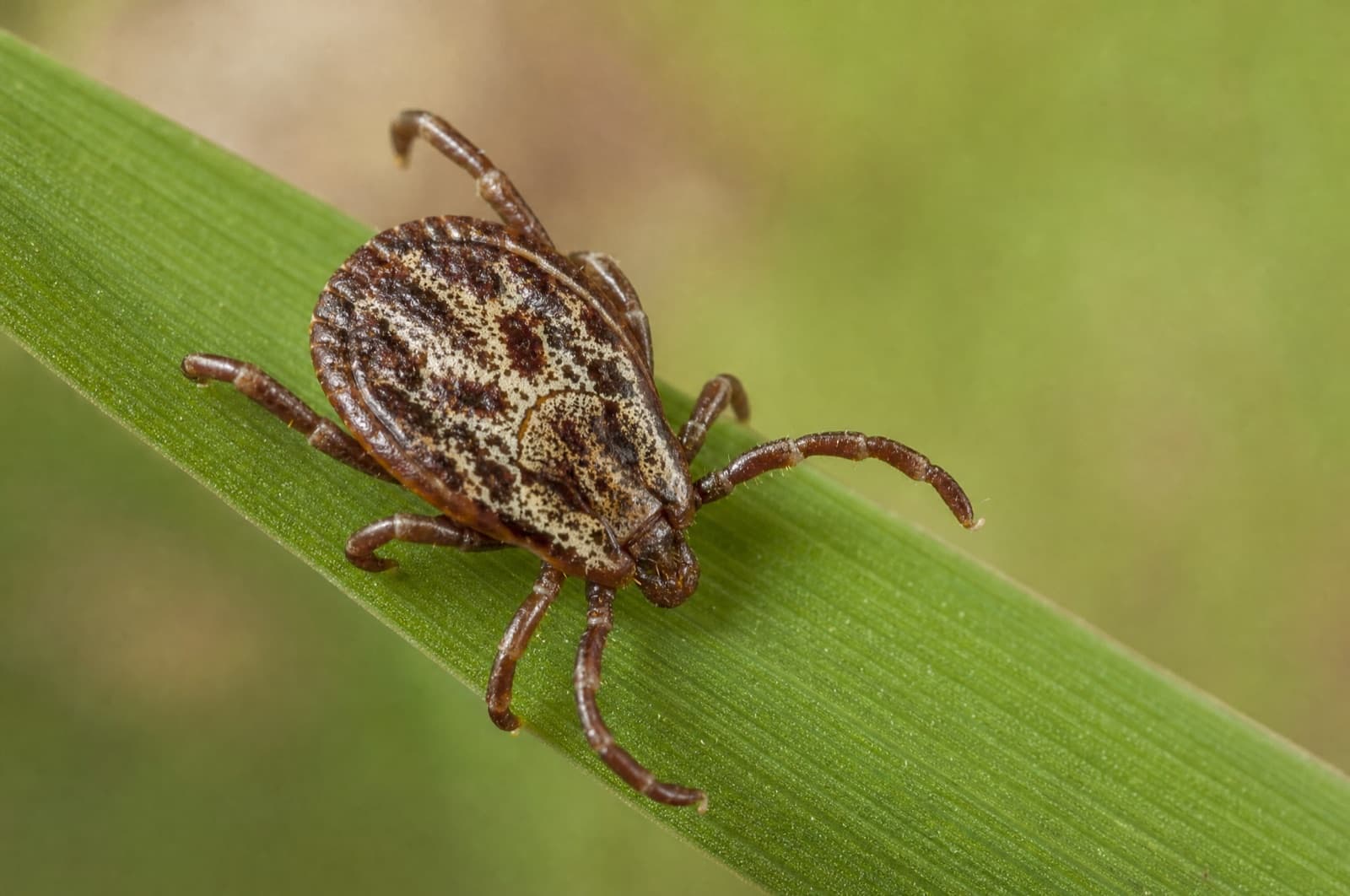
How to Get Rid of American Dog Ticks
At a glance
- Difficulty: Intermediate
- Time: Ongoing through peak season, May through July, with some activity into fall
- Cost: Low for personal protection; moderate if adding yard management or treatment
- Success: Good for reducing personal exposure with consistent habits; can't eliminate ticks from surrounding habitat
Can you DIY American Dog Tick?
The verdict on American Dog Tick DIY
NH's common 'wood tick' — doesn't carry Lyme, but personal protection and correct removal still matter.
The American dog tick (Dermacentor variabilis) is New Hampshire's most commonly encountered tick, most active May through July, and it does not transmit Lyme disease. Personal protection, yard management, and prompt correct removal are genuinely within a homeowner's ability. It's not risk-free, though — it can transmit Rocky Mountain spotted fever and tularemia, both rare in NH but real, so the same care about removal and symptom-watching that applies to other ticks still applies here.
The 5 DIY methods — honestly graded
Every approach graded for this species, in IPM order — prevention first, chemistry late. Pick a method to see how it works, the steps, and what it actually takes.
Prevention / Exclusion
Works wellPersonal protection and habitat measures reliably reduce exposure to this species.
American dog ticks quest from grass and low vegetation along trails, fields, and yard edges, so reducing that habitat near where you spend time and blocking skin access both cut exposure.
Best for: Anyone spending time in NH fields, trails, or brushy yard edges in season
Manage the yard
Keep lawns mowed, clear leaf litter, and maintain a mulch or gravel border between lawn and adjoining fields or woods.
Dress to block access
Tuck pant legs into socks and wear light-colored clothing when in fields, trails, or brushy areas.
Check after outdoor time
Do a full-body tick check after hiking, gardening, or yard work, especially May through July.
Tools & materials
Why DIY falls short here
Not scare tactics — the specific, proportionate reasons a home attempt can stall for this species.
Over-worrying about Lyme disease specifically
The American dog tick does not transmit Lyme disease — but it can transmit RMSF and tularemia, so it's not risk-free either; misdirected worry can mean missing the symptoms that actually matter for this species.
Expecting yard-wide DIY spraying to fully suppress ticks
Broadcast spraying is easy to misapply and under-perform compared to a correctly-timed, professionally applied perimeter treatment targeting the field edges and brush where this species actually quests.
Delaying tick removal
Unlike Lyme disease, RMSF bacteria can spread within 24 hours of attachment, so the 'wait and see' approach some people take with deer ticks is riskier with this species.
How risky is it, really?
An honest read — most nuisance species are genuinely low risk, and we say so.
Rocky Mountain spotted fever (RMSF) is serious and potentially fatal but genuinely rare in New Hampshire — this risk should be stated honestly as real but uncommon, not glossed over and not exaggerated.
- Rocky Mountain spotted fever (RMSF)Rare
UNH Extension cites just one confirmed NH human case from 1997-2002 and twelve from 2010-2014, with no evidence of local transmission at that time; potentially severe if untreated
UNH Extension; CDC
- TularemiaRare
Documented but uncommon in NH
UNH Extension
- Lyme diseaseRare
Not transmitted by this species — a common misconception worth correcting
UNH Extension
Recurring Wood Tick Encounters?
Personal protection is yours to own — yard-wide suppression is where Anchor adds real value with correctly-timed perimeter treatment across southern and central New Hampshire. Family-owned since 2017, NH license #782664.
Call a pro when…
- Recurring tick encounters on your property despite personal protection
- A field or brushy lot where DIY yard treatment isn't keeping pace
- You want a correctly-timed perimeter acaricide treatment rather than DIY broadcast spraying
General Pest Control
Personal protection and tick checks are genuinely yours to own for this species. A pro adds value for property-wide yard suppression on high-exposure fields or brushy lots.
Keep them out
- Keep lawns mowed and field edges maintained through peak season
- Maintain a mulch or gravel barrier between lawn and adjoining fields
- Do a tick check after every outdoor exposure, May through July
American dog ticks in New Hampshire
The American dog tick is NH's most commonly encountered tick species — the classic 'wood tick' people find on themselves or pets after time in fields, trails, or brushy yard edges. It's most active May through July, unlike the deer tick, which has activity that extends further into fall and even winter thaws. Because it doesn't transmit Lyme disease, an American dog tick bite carries a different, generally lower, disease-risk profile than a deer tick bite.
Peak season
May through July
Make sure it's a American Dog Tick
Two quick detours worth taking — confirm the ID, then learn what drew it in so it doesn't come back.
Frequently asked
Sources & further reading(4)
- [1]UNH Extension — Biology and Management of Ticks in New Hampshire
Species biology, RMSF/tularemia case counts, Lyme non-transmission
extensionverified 2026-07-13 - [2]
- [3]Massachusetts DPH — Rocky Mountain Spotted Fever
24-hour attachment transmission window
govverified 2026-07-13 - [4]
Written & reviewed by
VerifiedDaniel Brady
NH-Licensed Pesticide Applicator · License #782664 (NHDAMF, RSA 430)
Daniel Brady is the New Hampshire–licensed applicator behind Anchor Pest Services, a family-owned pest control company serving the Manchester area since 2017.
Last updated July 2026
Other species you can tackle
Same category — the dot shows each one's DIY verdict at a glance (green = friendly, amber = doable with care, red = call a pro).
Professional Pest Control
Recurring Wood Tick Encounters?
Personal protection is yours to own — yard-wide suppression is where Anchor adds real value with correctly-timed perimeter treatment across southern and central New Hampshire. Family-owned since 2017, NH license #782664.
- Correctly-timed perimeter tick treatment
- NH-licensed applicators (#782664)
- Free inspection — same-day service across southern NH
NH License #782664 · No obligation · We answer in person
Your next step
- Book a NH pro
Tick Control in New Hampshire
Adult deer ticks peak in fall. Yard tick control across Manchester and southern NH.
Book now - What to do next
American Dog Tick in NH: ID, Disease Risk & Removal
Read the answer - What to do next
Brown Dog Tick in NH: The Tick That Infests Houses
Read the answer - Related guide
How to Get Rid of Dog Ticks
Read the answer - Also relevant
What Attracts Dog Ticks to Your House?
Read the answer