
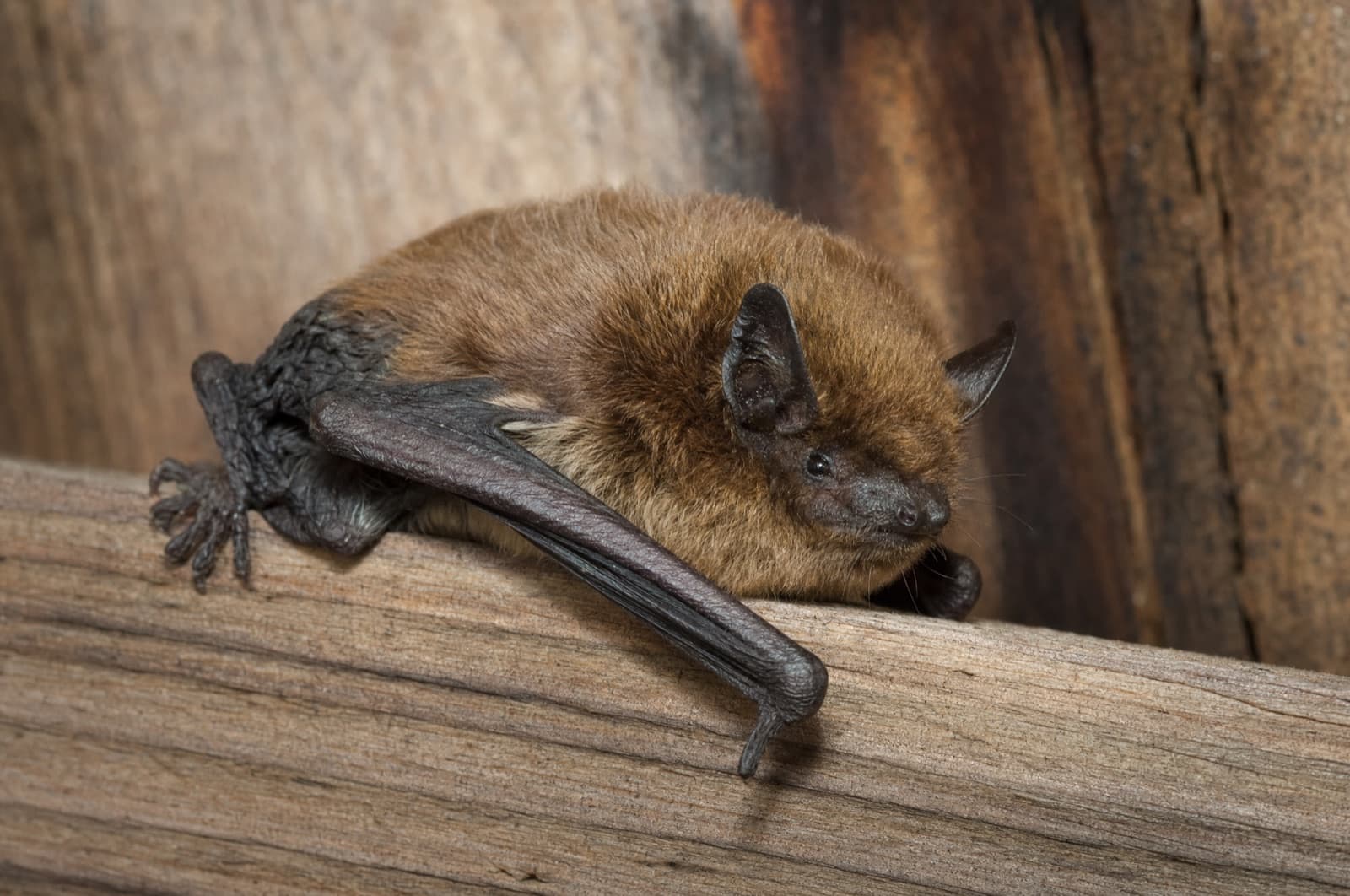
What Attracts Bats to Your House?
At a glance
- Short answer: Bats pick your attic mainly as a warm nursery — heat lets mother bats spend energy on pups instead of on staying warm themselves.
- The verdict: Something specific
The attractant verdict
Four possible answers to why this species turned up. Three stay unlit — and that's the argument: the honest answer could have been any of them, and for this species it wasn't.
Bats pick your attic mainly as a warm nursery — heat lets mother bats spend energy on pups instead of on staying warm themselves.
Most advice, including our own previous page, lists shelter, food, and warmth together as the reasons bats are drawn to a house, as if the three carried equal weight. That flattens a more specific finding: warmth isn't just one factor among three, it's the dominant reason a building gets chosen at all.
In summer, female bats form maternity colonies specifically to give birth and raise pups, and they select roost sites that run warmer than a random building nearby. A multi-year study of big brown bats in Fort Collins, Colorado found that bats select roost sites in buildings that are warmer than randomly sampled structures. A warm attic or wall void reduces the energy a mother bat has to spend regulating her own body temperature, leaving more energy for milk production and faster pup development. Food (flying insects) is caught outdoors, not indoors, so it isn't really an indoor draw at all.
“Bats pick your attic for the same reason a nursery is kept warm — heat lets mother bats spend energy on pups instead of on staying warm.”
An attic, chimney, soffit gap, or wall void that runs warmer than the surrounding structure or than nearby buildings, used as a summer maternity roost by female bats raising pups.
It shifts the useful question from 'does my house have an opening bats could use' to 'does my house have a specific warm gap or void a maternity colony would select over a cooler one' — which is a narrower, more findable thing than general shelter-seeking, and it explains why bats often return to the same building summer after summer.
Calibrated from: Colorado Natural Heritage Program, summarizing Neubaum et al. (2006), a multi-year Fort Collins, Colorado study of big brown bats: bats select roost sites in buildings that are warmer than randomly sampled buildings.
Why it's here, in full
Why warmth, specifically, is the driver
Bats are the one species on this hub for which true hibernation is the correct word — but hibernation happens in a cold, humid winter hibernaculum, usually not a house. What draws bats into an attic or wall void is a different season and a different need entirely: summer maternity roosting. Female big brown bats and little brown bats form maternity colonies to give birth and raise pups together, and they don't pick roost sites at random. Research on big brown bats in Fort Collins, Colorado, summarized by the Colorado Natural Heritage Program, found that bats select roost sites in buildings warmer than randomly sampled buildings nearby.
The reason is straightforward thermoregulation: a warmer roost means a mother bat spends less of her own energy budget just maintaining body temperature, leaving more available for producing milk and for her pup's development. A sun-heated attic, a warm chimney, or a snug wall void near a heat source all function the same way — as a low-cost nursery. Food isn't part of the indoor equation at all, since bats catch flying insects outdoors at night and only return to the roost to rest and nurse.
How to tell it's actually this species
Real signs only — a species with four honest tells gets four, and stops. Where a sign is weak on its own, we say so.
Small, dark, pellet-like droppings (guano) accumulating below an attic vent, soffit, or wall gap
Could be something else: Guano can resemble mouse droppings at a glance; guano crumbles into a powder and often contains shiny insect fragments, while rodent droppings do not.
A faint, musty odor concentrated in one part of an attic or upper wall, strongest near a roost
Bats seen emerging from a specific gap at dusk, often in a steady stream over several minutes during summer
Scratching or shuffling noises from an attic or wall void, most active around dusk and dawn
Want bat gone?
This page only answers why it's here. Every removal step for this exact species — what to seal, what to set, what actually works — lives on its own dedicated guide.
Two questions, two pages
Here: why it turned up at all — the honest answer, blame removed.
There: the step-by-step removal guide for this exact species.
Key takeaways
- The specific driver is roost warmth for a summer maternity colony, not generic shelter.
- Bats catch food outdoors; a house plays no role in their food supply.
- Bats are New Hampshire's one true hibernator, but that happens in winter hibernacula, not typically in a house.
- Exclusion has a legal maternity-season timing window — see /top-diy-methods/bat for what to do and when.
Bats already in the attic? Timing matters.
This page is about why bats chose the roost. Legal exclusion timing and methods are covered at /top-diy-methods/bat.
Frequently asked
Sources(3)
- [1]Colorado Natural Heritage Program — Excluding Bats from Buildings (summarizing Neubaum et al. 2006)
Big brown bats select roost sites in buildings warmer than randomly sampled buildings
stateverified 2026-07-17 - [2]PMC — Thermoregulatory energetics of maternity-roosting bats
Warmer roost microclimates reduce thermoregulatory energy costs for maternity colonies
academicverified 2026-07-17 - [3]PLOS ONE — Roost selection and thermal microclimate in maternity colonies
Maternity colonies preferentially select warmer positions within available roosts
academicverified 2026-07-17
Written & reviewed by
VerifiedDaniel Brady
NH-Licensed Pesticide Applicator · License #782664 (NHDAMF, RSA 430)
Daniel Brady is the New Hampshire–licensed applicator behind Anchor Pest Services, a family-owned pest control company serving the Manchester area since 2017.
Last updated Jul 2026
Bats are protected — timing matters
We handle bat exclusion within the legal season
Inspections across southern and central New Hampshire, with maternity-season timing respected from the start.
- Family-owned in Manchester since 2017
- NH commercial applicator #782664, category F1
- We will tell you when the answer is do nothing
NH License #782664 · No obligation · We answer in person