
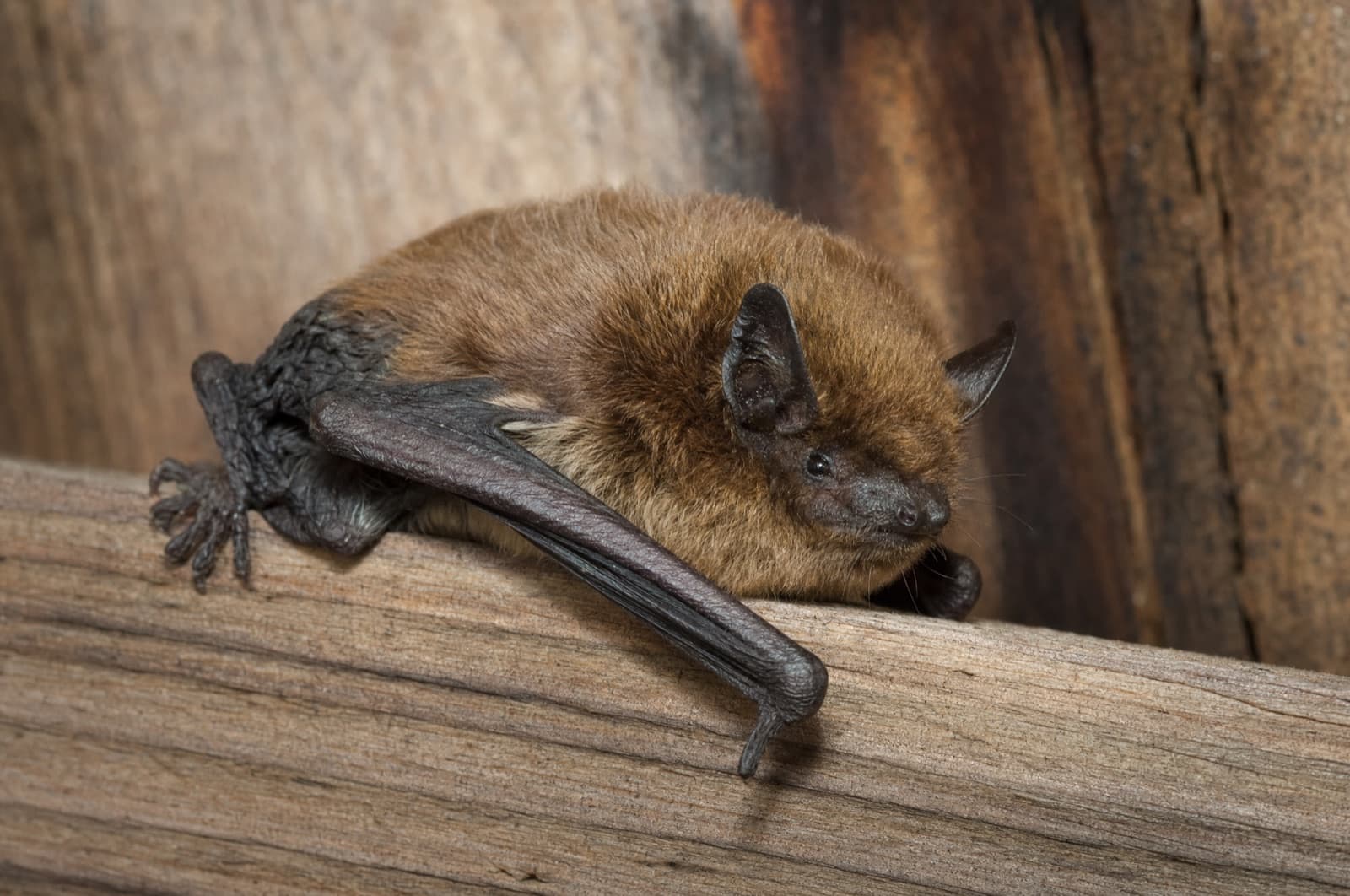
How to Get Rid of Bats
At a glance
- Difficulty: Pro only
- Time: Professional exclusion typically runs days to a few weeks, timed to the legal window
- Cost: Varies by structure — get a professional inspection and quote
- Success: Low and legally risky for unsupervised DIY; high when done professionally, in-window, with confirmed exclusion points
Can you DIY Bat?
The verdict on Bat DIY
Not a DIY job — bats are legally protected in NH and a real rabies-exposure risk.
New Hampshire is home to eight bat species, all of conservation concern, and four of the five species that hibernate here — little brown bat, northern long-eared bat, eastern small-footed bat, and tricolored bat — are state-listed as Endangered after catastrophic white-nose syndrome losses (the northern long-eared bat is also federally endangered). NH law prohibits bat exclusion from May 15 through August 15 to protect flightless maternity-roost pups, and DIY sealing without confirming every entry point traps bats inside rather than keeping them out. Bats are also the leading U.S. rabies-vector species. This combination — protected-species law, a legal timing window, and a real disease-exposure pathway — is exactly why this page teaches identification and avoidance, not DIY removal.
The 5 DIY methods — honestly graded
Every approach graded for this species, in IPM order — prevention first, chemistry late. Pick a method to see how it works, the steps, and what it actually takes.
Prevention / Exclusion
Works wellHighly effective long-term — but only when executed by a professional in the legal window, after confirming no dependent pups remain.
One-way exclusion devices let bats leave a roost through primary entry points but not return; once all bats have exited, the openings are permanently sealed. Bats can use gaps as small as 3/8 inch, so identifying every entry point matters as much as the timing.
Best for: Long-term exclusion — but only as a professional job
Identify entry points — don't seal them
Look for brown staining or accumulated droppings (guano) below gaps at rooflines, soffits, and chimneys. Note the locations for a professional; do not seal them yourself.
CautionSealing any suspected entry point between May 15 and August 15 can trap flightless pups inside, where they die — and it violates NH's maternity-season exclusion rule.Call a professional for exclusion
A licensed wildlife control operator installs one-way exclusion devices in the legal window (roughly mid-August through mid-May), confirms all bats have exited, then permanently seals the structure.
Tools & materials
Why DIY falls short here
Not scare tactics — the specific, proportionate reasons a home attempt can stall for this species.
Maternity-season exclusion is illegal and lethal to pups
New Hampshire prohibits bat exclusion from May 15 through August 15; sealing entry points during this window traps flightless young inside, where they die, and violates state wildlife rules.
Unrecognized rabies exposure
Bat bites can be small and painless enough to go unnoticed. A bat found in a room with a sleeping person or unattended child is treated by CDC and NH DHHS as a potential exposure requiring medical evaluation, whether or not a bite is confirmed.
Protected-species legal status
Four of New Hampshire's five hibernating bat species are state-listed Endangered after white-nose syndrome losses; killing or improperly handling them carries legal penalties under RSA 212-A.
Guano cleanup hazard
Accumulated bat droppings are a genuine histoplasmosis risk during disturbance/cleanup, requiring precautions most homeowners aren't equipped for.
How risky is it, really?
An honest read — most nuisance species are genuinely low risk, and we say so.
Bats carry a uniquely high risk rating in this hub — not because a bat encounter is statistically common, but because the combination of protected-species law, a strict legal timing window, and rabies exposure means mistakes carry real legal and medical consequences. A single bat in a bedroom without recognized contact is a low-probability rabies event, but because untreated rabies is nearly always fatal, medical evaluation is the correct response every time contact can't be ruled out.
- Rabies exposure from bites, scratches, or unrecognized contactRare
Bats surpassed raccoons in 2015 as the most commonly reported rabid animal in the U.S. and are linked to roughly 7 in 10 U.S. rabies deaths; bat bites can be tiny and painless, so any bat found in a room with a sleeping person or unattended child should prompt medical evaluation
CDC Vital Signs (2019)
- Histoplasmosis from disturbing accumulated guanoOccasional
A cleanup-context risk from long-term droppings buildup in attics — not from casual proximity to a flying bat
CDC
- Legal penalties for harming a state-endangered speciesRare
Four of NH's five hibernating bat species are state-listed Endangered; mishandling carries penalties under RSA 212-A
NH Fish & Game
Bats Need a Professional, Not a DIY Fix
Protected-species law, a strict maternity-season timing window, and real rabies-exposure risk make bat exclusion a licensed job. Anchor Pest Services handles legal, humane exclusion across southern and central New Hampshire. Family-owned since 2017, NH license #782664.
Call a pro when…
- Any confirmed or suspected bat roost in your structure
- A bat found loose in a living space, especially near a sleeping person or unattended child
- Guano accumulation in an attic or wall void needing cleanup
General Pest Control
Bats are the one species in this hub where the honest answer is simply: call a professional. Legal, correctly-timed, one-way exclusion — done outside the May 15–August 15 maternity season, after confirming every entry point and that no pups remain — is a licensed wildlife control job, not a weekend project.
Keep them out
- Note staining or droppings at suspected entry points, but don't seal them yourself
- Never attempt exclusion between May 15 and August 15 (NH maternity-season ban)
- Contact NH DHHS immediately if a bat may have contacted a sleeping person, child, or pet
Bats in New Hampshire
New Hampshire is home to eight bat species, all of conservation concern, and white-nose syndrome has devastated the state's hibernating populations — NH Fish & Game reports hibernacula mortality rates of 79 to 100% since the disease was first documented in New Hampshire in the winter of 2008-09, with the four largest surveyed hibernacula holding just 16 bats in 2011, down from 3,230 in 2009. That population collapse is exactly why the maternity-season exclusion ban (May 15–August 15) and state Endangered listings exist, and why DIY exclusion isn't just risky — for most of the year, it's illegal.
Peak season
Maternity roosts May–August (exclusion prohibited); legal exclusion window roughly mid-August through mid-May
Make sure it's a Bat
Two quick detours worth taking — confirm the ID, then learn what drew it in so it doesn't come back.
Frequently asked
Sources & further reading(5)
- [1]NH Fish & Game — White-Nose Syndrome
Hibernacula mortality data, state-endangered bat species
govverified 2026-07-13 - [2]NH Fish & Game — Bats of New Hampshire
NH bat species list, conservation status
govverified 2026-07-13 - [3]UNH Cooperative Extension — Bats in New Hampshire
NH-specific bat exclusion and biology guidance
extensionverified 2026-07-13 - [4]
- [5]
Written & reviewed by
VerifiedDaniel Brady
NH-Licensed Pesticide Applicator · License #782664 (NHDAMF, RSA 430)
Daniel Brady is the New Hampshire–licensed applicator behind Anchor Pest Services, a family-owned pest control company serving the Manchester area since 2017.
Last updated July 2026
Other species you can tackle
Same category — the dot shows each one's DIY verdict at a glance (green = friendly, amber = doable with care, red = call a pro).
Professional Wildlife Exclusion
Bats Need a Professional, Not a DIY Fix
Protected-species law, a strict maternity-season timing window, and real rabies-exposure risk make bat exclusion a licensed job. Anchor Pest Services handles legal, humane exclusion across southern and central New Hampshire. Family-owned since 2017, NH license #782664.
- Legally timed, one-way exclusion
- NH-licensed applicators (#782664)
- Free inspection — same-day service across southern NH
NH License #782664 · No obligation · We answer in person
Your next step
- Book a NH pro
Pest Control Services
Licensed, family-owned pest control across southern NH.
Book now - What to do next
Bats in New Hampshire — ID, Signs & Safe Removal
Read the answer - Also relevant
Bats in New Hampshire — ID, Signs & Safe Removal
Read the answer - Also relevant
Bird & Bat Prevention: Legal, Humane Exclusion in NH
Read the answer - Also relevant
When Do Bats Leave the Attic? NH Legal Timing Guide
Read the answer - Also relevant
Natural Bird & Bat Control in NH: The Legal Limits That Matter
Read the answer