
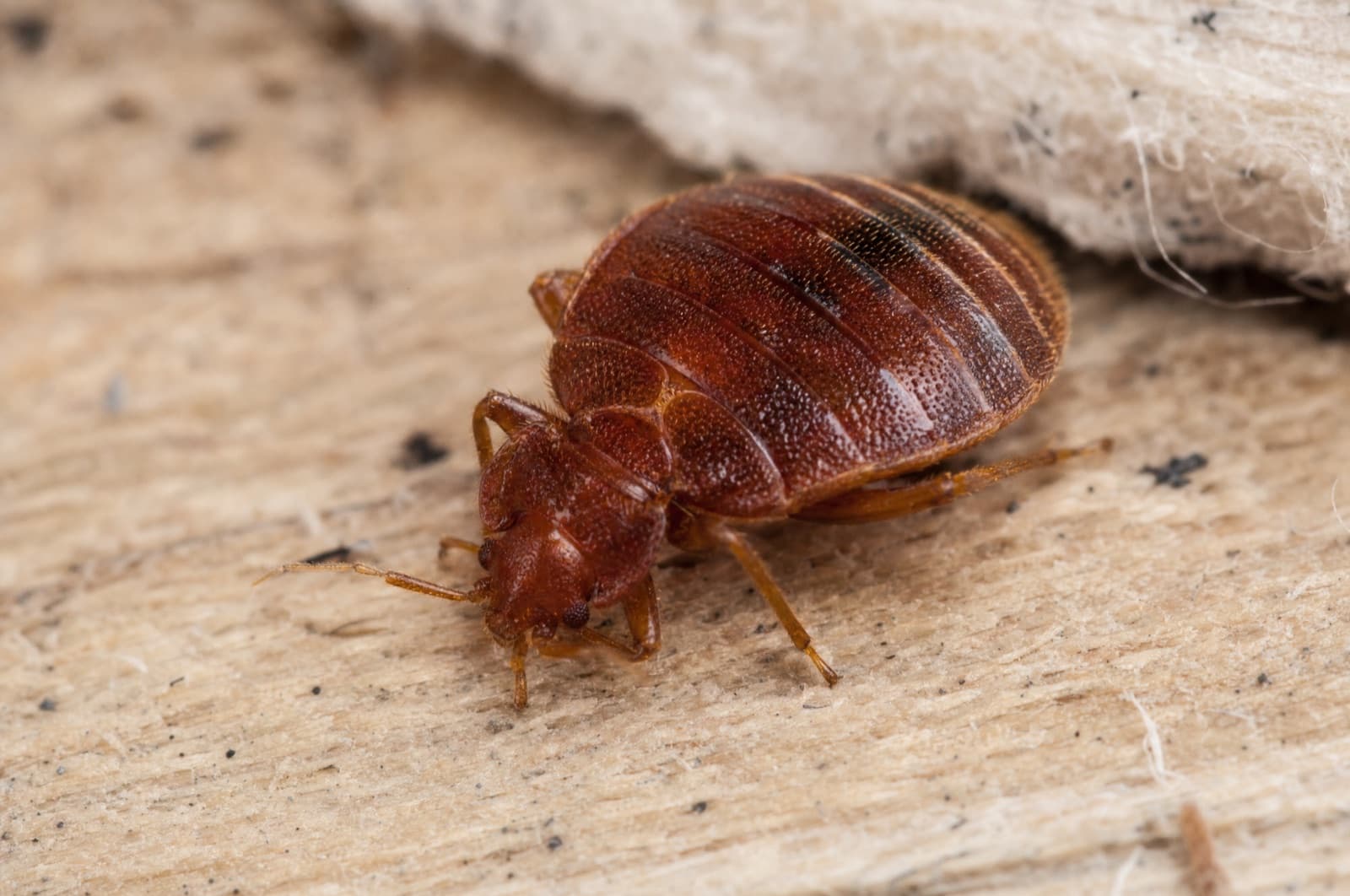
What Attracts Bed Bugs to Your House?
At a glance
- Short answer: Bed bugs aren't attracted to your house. They're carried into it.
- The verdict: You didn't attract it — you carried it in
The attractant verdict
Four possible answers to why this species turned up. Three stay unlit — and that's the argument: the honest answer could have been any of them, and for this species it wasn't.
Bed bugs aren't attracted to your house. They're carried into it.
Most advice about bed bugs — including our own previous page — describes them as attracted to your house by people, warmth, and hiding places, the same language used for ants or cockroaches drawn in by food and moisture. That framing implies a tidier, better-sealed, or less cluttered house would have kept them out.
A suitcase after a trip, a secondhand mattress, couch, or box spring, or a shared wall, hallway, or wiring chase in a multi-unit building. Bed bugs cannot fly and rarely travel more than a few feet outdoors on their own; they move almost entirely by hitchhiking on people and the things people carry.
“You did not attract bed bugs. You cannot attract bed bugs. A spotless house is exactly as likely to have them as a cluttered one.”
Why it's here, in full
Why our own old page got this wrong
Until this page was rewritten, it said bed bugs were attracted to your house by "people, warmth, and hiding places" — the same three words we've used to describe ants, cockroaches, and mice. That's not a fair description of what a bed bug actually does.
Bed bugs don't forage. They don't send out scouts looking for food, and they don't respond to a house the way a colonizing insect responds to a kitchen counter. The entomological literature is direct about this: University of Kentucky Cooperative Extension puts it plainly — "Unlike cockroaches and flies that feed on filth, there is often no relationship between bed bugs and cleanliness. Since the bugs feed solely on blood, pristine dwellings can be as vulnerable to infestation as are places of squalor." A five-star hotel and a neglected apartment are equally exposed, because what decides whether either one gets bed bugs isn't hygiene — it's whether an infested person, bag, or piece of furniture passed through.
What actually brings them in
Bed bugs arrive as cargo, not as foragers, and the evidence for how ranks fairly clearly. Travel is the strongest single vector — the bed bug resurgence of the last two decades tracks closely with rising travel volume, and a bag left on a hotel room floor or bed is the classic pickup point. Secondhand furniture, mattresses, and box springs are the second-strongest route: an infested item doesn't need any contact with a person to spread the insects, only a ride into your home. In apartment buildings and condos, bed bugs also move unit to unit through shared walls and the gaps around electrical and plumbing lines — genetic studies of building-wide infestations often trace the whole building's problem back to one original introduction. A visiting guest's bag or coat is a real but comparatively minor pathway.
None of these routes has anything to do with what your house looks like on the inside.
The one honest exception: clutter isn't dirt
There's one nuance worth being precise about, because flattening it would undercut the point. Clutter genuinely matters — not because it attracts bed bugs, but because it gives them more places to hide once they're already in, which makes an infestation harder to find and harder to treat completely. That's a real, practical difference from dirtiness, which does nothing at all. Lower-income households can also end up with worse, longer-running infestations — not because those homes are dirtier, but because professional treatment is costly and hard to access, so a small early problem has more time to grow. None of that is about who deserves an infestation. It's about resources and detection, not blame.
How to tell it's actually this species
Real signs only — a species with four honest tells gets four, and stops. Where a sign is weak on its own, we say so.
Small rust-colored or dark spotting on sheets, mattress seams, or the box spring
Could be something else: Similar dark spotting can come from other small insects or ordinary bedding wear; it's suggestive on its own, not proof.
Clusters or lines of itchy red bite marks that appear after sleeping
Could be something else: Many people never react to bed bug bites at all, and similar-looking marks can come from other insects or skin irritation — bites alone don't confirm bed bugs.
Pale, papery shed skins left in mattress seams, bed frame joints, or nearby furniture
Actually finding a live bed bug in a seam, crack, or fold near where you sleep
Want bed bugs gone?
This page only answers why it's here. Every removal step for this exact species — what to seal, what to set, what actually works — lives on its own dedicated guide.
Two questions, two pages
Here: why it turned up at all — the honest answer, blame removed.
There: the step-by-step removal guide for this exact species.
Key takeaways
- Bed bugs don't forage toward your house — they're carried in on people and belongings.
- Cleanliness does not predict infestation; only exposure through travel, secondhand items, or a shared wall does.
- Clutter doesn't attract bed bugs, but it does make them harder to find and treat once they're in.
- If you already have them, removal is a different question — see /top-diy-methods/bed-bug.
Already have bed bugs? That's a different question.
This page is about why they showed up. Getting rid of them is covered at /top-diy-methods/bed-bug.
Frequently asked
Sources(3)
- [1]University of Kentucky Cooperative Extension — Bed Bugs (ENTFACT-636)
"There is often no relationship between bed bugs and cleanliness... pristine dwellings can be as vulnerable to infestation as are places of squalor."
extensionverified 2026-07-17 - [2]U.S. EPA — Bed Bug Myths
Bed bugs are not attracted to dirt and grime; clutter offers more hiding spots but does not cause infestation
govverified 2026-07-17 - [3]Sutherland, Greenlee & Schneider (2020), People and Nature
Neighborhood-level predictors of bed bug prevalence are structural (income, eviction rate, crowding), not household cleanliness
academicverified 2026-07-17
Written & reviewed by
VerifiedDaniel Brady
NH-Licensed Pesticide Applicator · License #782664 (NHDAMF, RSA 430)
Daniel Brady is the New Hampshire–licensed applicator behind Anchor Pest Services, a family-owned pest control company serving the Manchester area since 2017.
Last updated Jul 2026
Bed bugs don't care how clean your house is
If you already have them, we handle the rest
Same-day inspections across southern and central New Hampshire. We'll tell you honestly what it will take.
- Family-owned in Manchester since 2017
- NH commercial applicator #782664, category F1
- We will tell you when the answer is do nothing
NH License #782664 · No obligation · We answer in person