
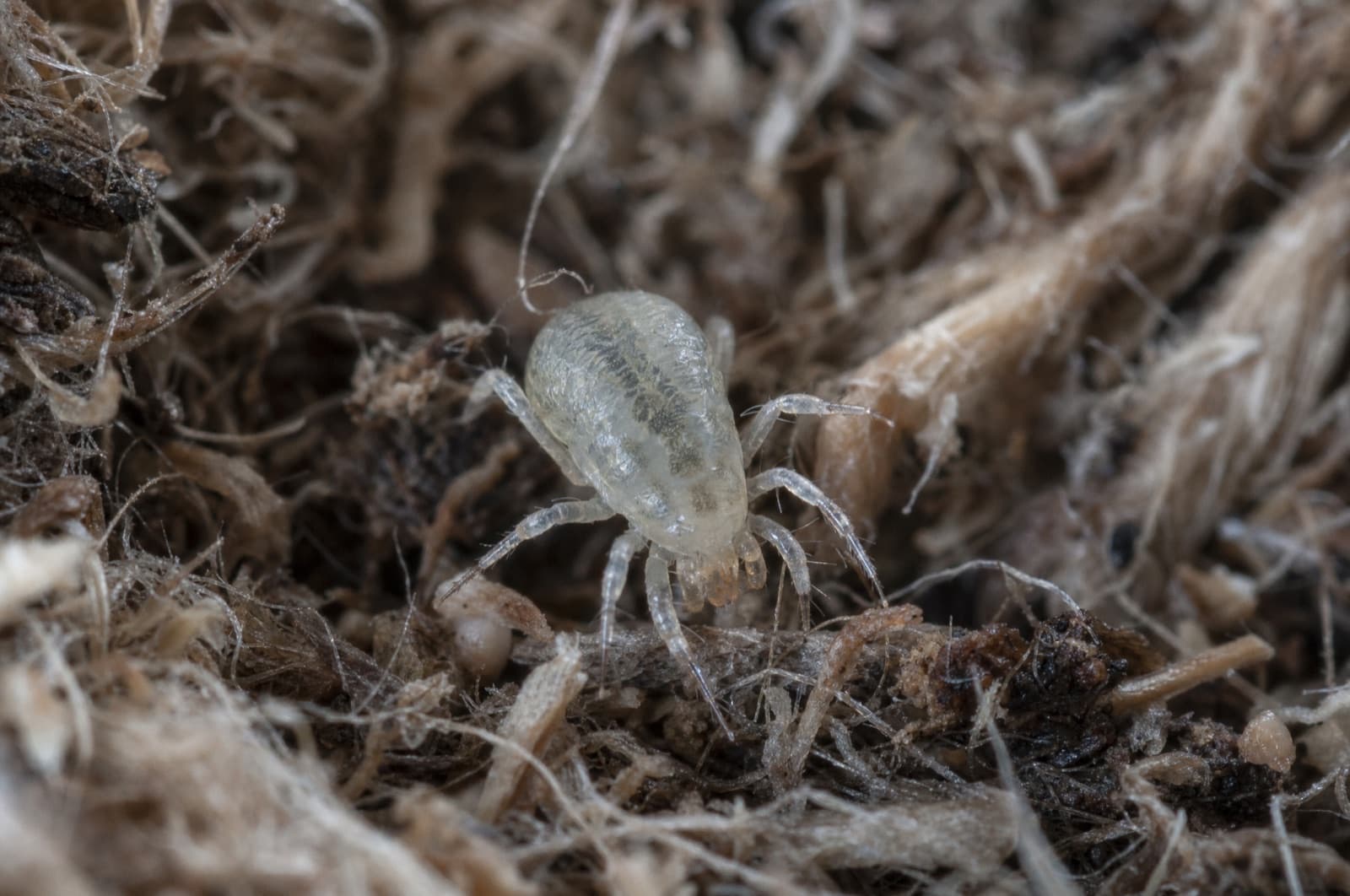
What Attracts Bird Mites to Your House?
At a glance
- Short answer: Bird mites don't want your house — they want a bird. You meet them only after the nest they were feeding from is abandoned.
- The verdict: Something specific
The attractant verdict
Four possible answers to why this species turned up. Three stay unlit — and that's the argument: the honest answer could have been any of them, and for this species it wasn't.
Bird mites don't want your house — they want a bird. You meet them only after the nest they were feeding from is abandoned.
Most advice, including our own previous page, describes bird mites as coming indoors looking for "a warm place to live" after feeding on birds — language that makes the house itself sound like the goal. That's backwards: the house was never the target, the bird was.
Bird mites are blood parasites of birds, most often starlings, house sparrows, and pigeons nesting in eaves, attic vents, chimneys, or gutters directly on or in the structure. As long as the birds are present, the mites stay with the nest and rarely bother anyone. Only when the nestlings fledge or the adult birds die and the nest is abandoned do the now-hostless mites disperse in large numbers, migrating into living space through cracks, vents, and light fixtures in search of a replacement blood source. They bite people incidentally and cannot reproduce on human blood, so an indoor bird-mite problem always traces back to a bird nest that existed on the building.
“Bird mites don't want your house — they want a bird. You only meet them when the birds they were feeding on leave, and the mites come looking for a replacement.”
A bird nest — starling, sparrow, or pigeon — built directly on or inside the structure: a soffit, attic vent, chimney, or gutter. The mite population lives on the nesting birds, not on the house.
It means the real trigger isn't anything about the house's warmth or cleanliness, but the presence of an active or recently abandoned bird nest on the building itself. Finding and removing the nest source explains the problem far better than any household condition would.
Calibrated from: University of Minnesota Extension and Washington State University Extension (PestSense): bird mites migrate into a structure in search of alternative hosts once the young mature and the nest is abandoned.
Why it's here, in full
The nest is the attractant, not the house
Bird mites are parasites, and a parasite's whole biology is organized around its host, not around the structure the host happens to be resting on. University of Minnesota Extension and Washington State University's PestSense describe the same pattern: mites live in and around a bird's nest, feeding on the bird while it's present, and only migrate away from the nest and into living space once the nest is abandoned — typically when nestlings fledge or an adult bird dies. That migration is a dispersal event driven by losing a food source, not an attraction to anything about the house.
That's why an indoor bird-mite problem so reliably traces back to one specific thing: a bird nest built directly on or in the structure — in a soffit, an attic louver, a chimney, or a gutter. Remove that context and the framing collapses the same way it does for bed bugs: nothing about a house's warmth, cleanliness, or design explains bird mites showing up. A bird chose that ledge or vent to nest on, and the mites were only ever along for the ride.
How to tell it's actually this species
Real signs only — a species with four honest tells gets four, and stops. Where a sign is weak on its own, we say so.
An active or recently vacated bird nest visible in a soffit, attic vent, chimney, gutter, or eave on the exterior of the structure
Tiny, slow-moving specks — barely visible without magnification — appearing on walls, ceilings, or bedding, especially in a room near the nest location
Itchy bite marks appearing on skin, typically in a room close to where a nest sat outside
Could be something else: Similar bite marks can come from other small arthropods; bites alone don't confirm bird mites without a nearby nest source.
The mite problem appearing suddenly after birds that had been nesting nearby stop returning, and fading within a few weeks without any change to the house itself
Want bird mite gone?
This page only answers why it's here. Every removal step for this exact species — what to seal, what to set, what actually works — lives on its own dedicated guide.
Two questions, two pages
Here: why it turned up at all — the honest answer, blame removed.
There: the step-by-step removal guide for this exact species.
Key takeaways
- Bird mites are bird parasites; the attractant is a nest on or in the structure, not the house itself.
- Mites disperse indoors only after the nest is abandoned or the birds fledge, seeking a replacement host.
- They cannot reproduce on human blood, so an indoor problem is usually temporary once the nest source is gone.
- Nest removal and exclusion are covered at /top-diy-methods/bird-mite.
Found a bird nest on the house?
This page is about why bird mites show up. Nest removal and exclusion are covered at /top-diy-methods/bird-mite.
Frequently asked
Sources(3)
- [1]University of Minnesota Extension — Bird Mites
Bird mites migrate into structures once a nest is abandoned and the birds have left
extensionverified 2026-07-17 - [2]University of Maryland Extension — Bird Mites
Bird mites are nest-associated parasites that invade living space when the host bird is no longer present
extensionverified 2026-07-17 - [3]Washington State University — PestSense: Bird Mites
Bird mite biology, host dependence, and dispersal behavior after nest abandonment
extensionverified 2026-07-17
Written & reviewed by
VerifiedDaniel Brady
NH-Licensed Pesticide Applicator · License #782664 (NHDAMF, RSA 430)
Daniel Brady is the New Hampshire–licensed applicator behind Anchor Pest Services, a family-owned pest control company serving the Manchester area since 2017.
Last updated Jul 2026
It's the nest, not the house
We find the nest source, not just the mites
Inspections across southern and central New Hampshire that trace a bird-mite problem back to its nest.
- Family-owned in Manchester since 2017
- NH commercial applicator #782664, category F1
- We will tell you when the answer is do nothing
NH License #782664 · No obligation · We answer in person