
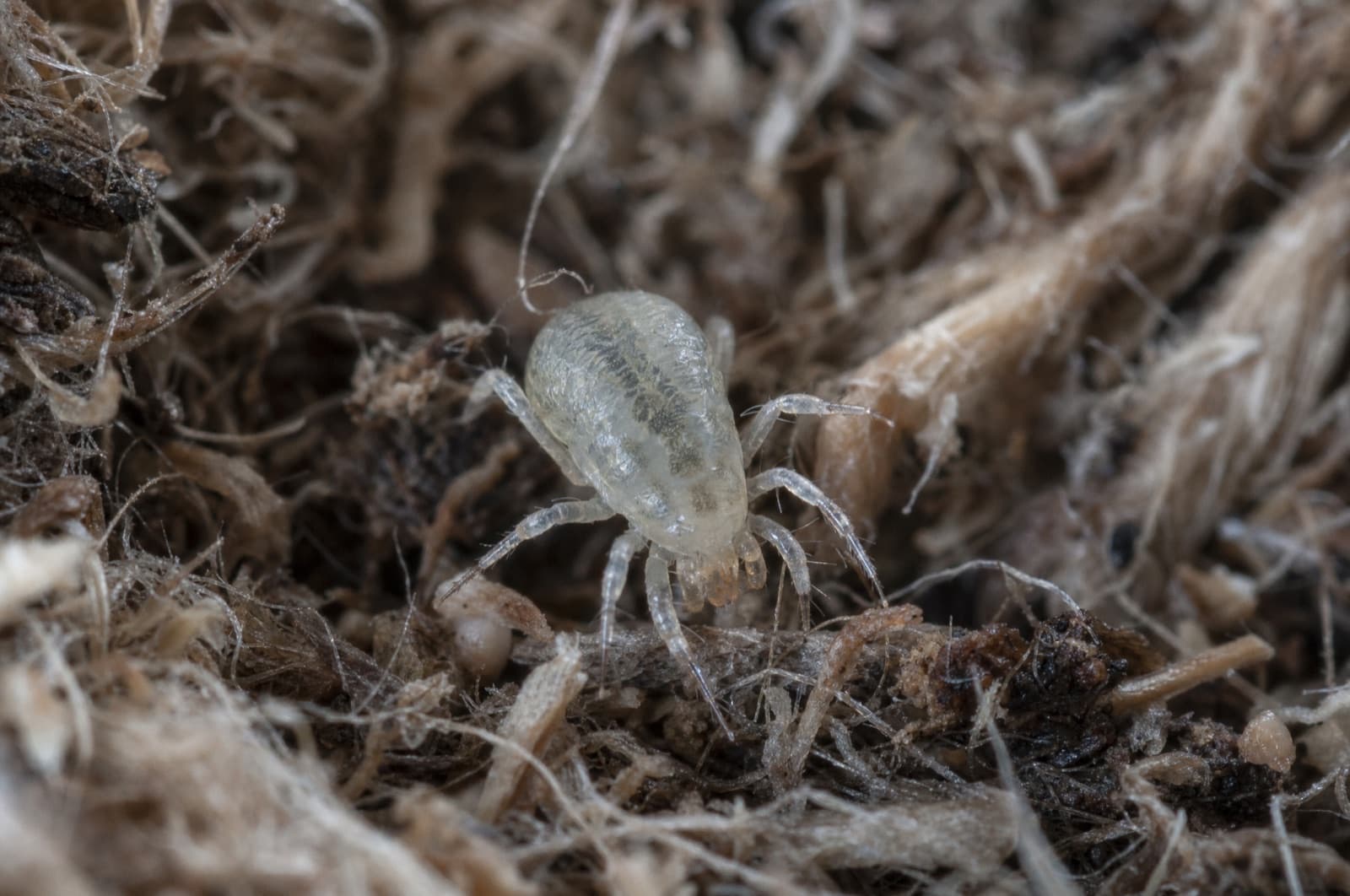
How to Get Rid of Bird Mites
At a glance
- Difficulty: Advanced
- Time: Bites can persist for weeks if the nest isn't found; resolves within days to two weeks once it's removed
- Cost: Low for interim relief (laundering, vacuuming); the nest-access job is where cost and effort concentrate
- Success: Low without finding the nest source; high once the nest is professionally located and excluded
Can you DIY Bird Mite?
The verdict on Bird Mite DIY
The mites biting you are a symptom — the nest is the real problem, and that's usually a job for a pro.
Bird mites (commonly Dermanyssus gallinae or Ornithonyssus sylviarum) can't survive or reproduce on people — they're blood-feeders whose actual home is a bird nest tucked into an attic, soffit, eave, chimney, or wall void. Bites will keep happening as long as that nest exists, so success depends on finding and safely excluding a nest that's often in a space homeowners can't reach or legally/safely disturb. Spraying or vacuuming without removing the nest is the textbook DIY-failure pattern here.
The 5 DIY methods — honestly graded
Every approach graded for this species, in IPM order — prevention first, chemistry late. Pick a method to see how it works, the steps, and what it actually takes.
Prevention / Exclusion
Works wellThe definitive fix — but only once the nest is found and safely removed; sealing without removing it does nothing.
The nest is the mite reservoir. Locating it, removing it without scattering mites and debris, then sealing the spot so birds can't re-nest is the only approach that stops the biting for good rather than knocking down today's mites.
Best for: The only track that actually stops the biting for good
Locate the nest
Search attics, soffits, eaves, chimneys, and wall voids near where bites are worst — often the room directly below or beside the nest.
CautionConfirm the nest location before disturbing anything; scattering an active nest can worsen mite dispersal into living space.Remove it safely
Wearing gloves and an N95 respirator, use the inverted-bag technique to bag and remove the nest without scattering mites and debris; double-bag and dispose.
Clean and seal
Clean the contact surface, then caulk gaps and install hardware cloth or screening so birds can't re-nest in the same spot.
Tools & materials
Why DIY falls short here
Not scare tactics — the specific, proportionate reasons a home attempt can stall for this species.
Treating the mites, not the nest
Mites keep migrating and biting until the host nest is found and removed — spraying or vacuuming without source removal just buys a few days before more mites arrive (MDedge; USU Extension).
Persistence after the birds leave
Dermanyssus gallinae can survive for weeks to months in an abandoned nest without a blood meal, so bites can continue even after the host birds themselves have moved on (MDedge).
Nest in an unreachable spot
Bird nests commonly sit in high soffits, chimneys, or tight wall/attic voids that aren't safely or practically DIY-accessible — this is the most common reason to hand the job to a pro.
How risky is it, really?
An honest read — most nuisance species are genuinely low risk, and we say so.
Bird mites aren't a disease threat to people in the typical NH home — humans are a dead-end host, so the mites can't live or breed on you. The real, correctly-elevated concern is a persistent, genuinely miserable biting and dermatitis problem that continues until the nest source is excluded.
- Pruritic (itchy) dermatitis from bitesCommon
Common while the nest remains active and mites are migrating into living space
MDedge Dermatology
- A lasting infestation establishing on peopleRare
Humans are a dead-end host — bird mites can't complete their life cycle on a person, so the problem is self-limiting once the nest is gone
MDedge Dermatology
- Secondary skin infection from scratchingOccasional
As with any itchy bite, scratching can break skin and invite infection
MDedge Dermatology
Bird Mite Bites Won't Stop?
Finding and safely removing a bird nest in your attic, soffit, or chimney is a structural job — Anchor handles nest exclusion and mite knockdown across southern and central New Hampshire. Family-owned since 2017, NH license #782664.
Call a pro when…
- The nest is in a high soffit, chimney, or tight attic void you can't safely reach
- Bites continue after your own cleaning and laundering
- You want the nest professionally excluded so birds can't re-nest in the same spot
General Pest Control
This is one of the clearest pro-recommended calls in the hub: locating and safely excluding a bird nest in an attic, soffit, chimney, or wall void is a structural-access job, and treating the mites without it just delays the same bites.
Keep them out
- Screen attic and soffit vents so birds can't nest there in the first place
- Address bird nesting promptly each spring before mites build up
- Seal gaps around chimneys, eaves, and rooflines
Bird mites in New Hampshire
Bird mites show up in NH homes most often in spring and early summer, when pigeons, house sparrows, and European starlings are actively nesting in attics, soffits, chimneys, and eaves. When the young birds fledge or a nest is abandoned, the mites that were feeding on them disperse into living space looking for a new blood meal — which is usually when homeowners first notice bites.
Peak season
Spring through early summer, tied to bird nesting and fledging
Make sure it's a Bird Mite
Two quick detours worth taking — confirm the ID, then learn what drew it in so it doesn't come back.
Frequently asked
Sources & further reading(3)
- [1]MDedge Dermatology — Avian Mite Dermatitis
Bites, persistence after birds leave, dead-end host
medicalverified 2026-07-13 - [2]Utah State University Extension — Bird Mites
Nest removal technique, exclusion, PPE
extensionverified 2026-07-13 - [3]ScienceDirect Topics — Dermanyssus gallinae
Off-host survival, species biology
academicverified 2026-07-13
Written & reviewed by
VerifiedDaniel Brady
NH-Licensed Pesticide Applicator · License #782664 (NHDAMF, RSA 430)
Daniel Brady is the New Hampshire–licensed applicator behind Anchor Pest Services, a family-owned pest control company serving the Manchester area since 2017.
Last updated July 2026
Other species you can tackle
Same category — the dot shows each one's DIY verdict at a glance (green = friendly, amber = doable with care, red = call a pro).
Professional Pest Control
Bird Mite Bites Won't Stop?
Finding and safely removing a bird nest in your attic, soffit, or chimney is a structural job — Anchor handles nest exclusion and mite knockdown across southern and central New Hampshire. Family-owned since 2017, NH license #782664.
- Nest-source exclusion, not just spraying
- NH-licensed applicators (#782664)
- Free inspection — same-day service across southern NH
NH License #782664 · No obligation · We answer in person
Your next step
- Book a NH pro
Tick Control
Book now - What to do next
Bird Mites in New Hampshire: Bites Mean a Nest Nearby
Read the answer - Also relevant
Bird Mites in New Hampshire: Bites Mean a Nest Nearby
Read the answer - Also relevant
Tick Prevention in NH: Tickscaping + Personal Protection
Read the answer - Also relevant
Natural Mite & Tick Control: The Honest, No-Instant-Cure Guide
Read the answer - Related guide
How to Get Rid of Chicken Mites
Read the answer