
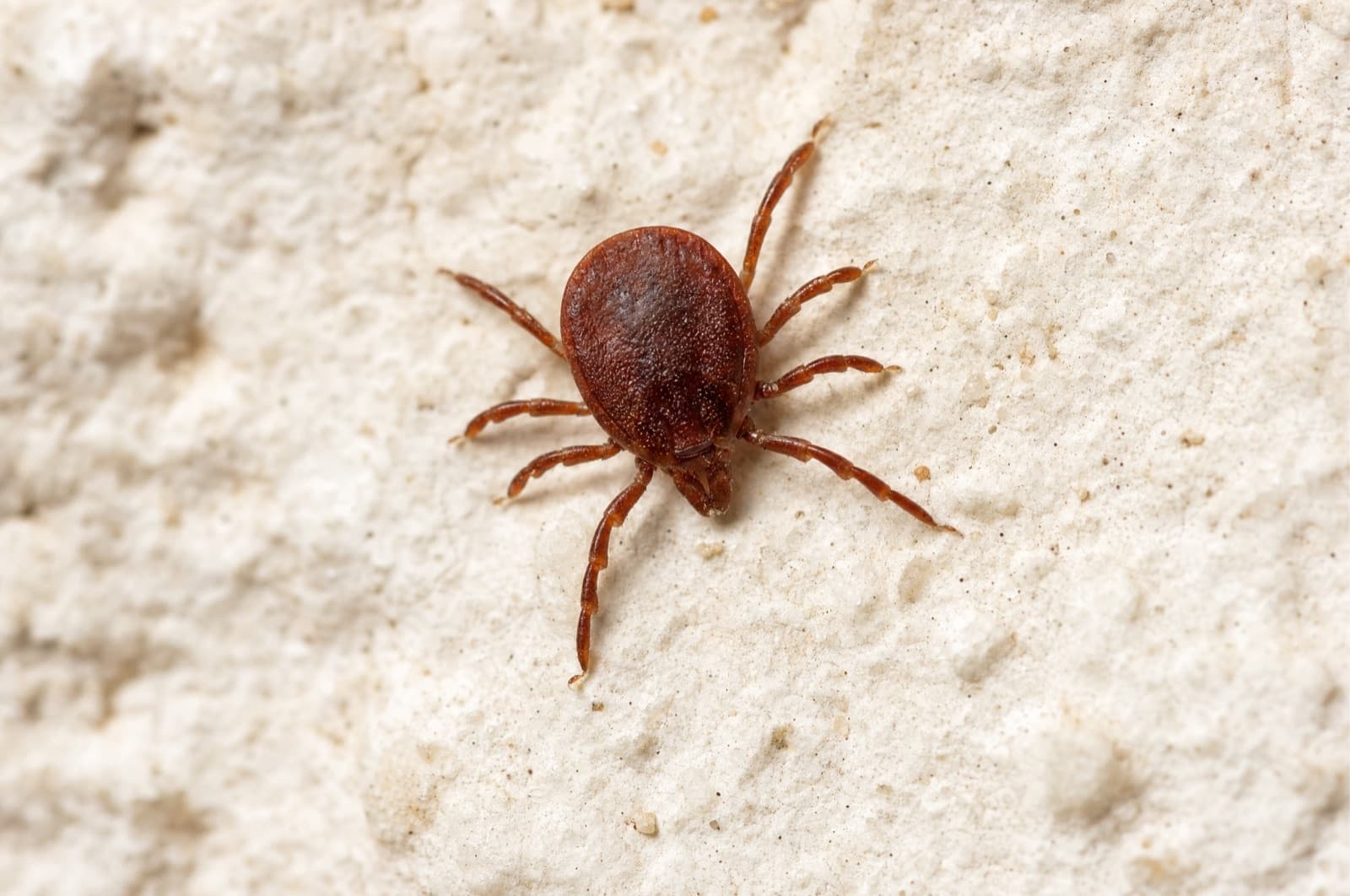
What Attracts Brown Dog Ticks to Your House?
At a glance
- Short answer: Brown dog ticks aren't attracted to your house. An infested dog is — and this is the one tick that can then breed there.
- The verdict: You didn't attract it — you carried it in
The attractant verdict
Four possible answers to why this species turned up. Three stay unlit — and that's the argument: the honest answer could have been any of them, and for this species it wasn't.
Brown dog ticks aren't attracted to your house. An infested dog is — and this is the one tick that can then breed there.
Our own previous page described the brown dog tick as attracted to your home "primarily because they seek a host for feeding and a warm, sheltered place to thrive," language that makes the house itself sound like the draw. That's backwards for how this tick actually arrives.
A dog — usually one that picked up the tick elsewhere (a kennel, a shelter, another dog, or an outdoor exposure) and brought it inside. Unlike other ticks on this list, the brown dog tick doesn't need the outdoors at all once it's in; a fed female can drop off the dog and lay eggs directly in the cracks of a house, garage, or kennel.
“Brown dog ticks don't come for your house. A dog carries the first one in — but this is the one tick that can then keep going without ever going back outside.”
Why it's here, in full
Arrival is about the dog — persistence is the exception
Every route by which a brown dog tick reaches a house starts with a dog: one dog picks it up somewhere else, and it rides in attached to that animal. UF/IFAS entomology (EENY-221) confirms that dogs are the required host for this species in the U.S., and that the tick reaches new locations by traveling on an infested animal — not by anything happening at the house end. Our old page's language about the tick seeking "a warm, sheltered place to thrive" mistakes the house for the attractant when the actual attractant, if there is one, is another dog.
What sets this species apart from every other tick on this hub is what happens after arrival. A blood-fed female brown dog tick doesn't need to go back outside to lay eggs — she drops off the host and lays them directly in cracks, crevices, and moldings nearby, and UF/IFAS notes she can produce several thousand eggs. That's a real, structural difference: this is the only tick species that can complete its entire life cycle indoors and become self-sustaining in a home or kennel without any additional outdoor exposure.
Why that doesn't change the verdict on attraction
Persistence and attraction are different questions, and it's important not to conflate them. The house doesn't attract the first tick — a dog does. What the house provides afterward is simply the physical space (cracks, crevices, the underside of furniture) where an already-arrived, already-fed female can lay eggs. That's a structural fact about where this species can complete development, not evidence that indoor conditions drew the tick in from outside. The practical takeaway is the opposite of blame: if a fed female made it in on a dog, an indoor infestation can develop even in an otherwise unremarkable house, and it typically calls for a different level of response than an outdoor tick that hitchhiked in and left.
How to tell it's actually this species
Real signs only — a species with four honest tells gets four, and stops. Where a sign is weak on its own, we say so.
Ticks found on a dog that has recently been to a kennel, shelter, groomer, or in contact with other dogs
Ticks appearing in cracks, crevices, behind moldings, or in ceiling corners away from any dog, which reflects this species' strong upward-crawling habit
Could be something else: Finding ticks away from the dog itself is a distinguishing sign for this species specifically — other ticks rarely show this pattern indoors.
A recurring or growing indoor tick problem despite the dog not going outside much, which points toward an established indoor population rather than fresh arrivals
Tiny reddish-brown egg clusters in baseboard gaps, behind curtains, or in kennel seams
Want brown dog ticks gone?
This page only answers why it's here. Every removal step for this exact species — what to seal, what to set, what actually works — lives on its own dedicated guide.
Two questions, two pages
Here: why it turned up at all — the honest answer, blame removed.
There: the step-by-step removal guide for this exact species.
Key takeaways
- Brown dog ticks don't come for your house. A dog carries the first one in — but this is the one tick that can then keep going without ever going back outside.
- Cleanliness isn't the deciding factor here — the actual vector is what matters.
- What actually matters: an animal host, shelter.
- If it's already inside, removal is a different question — see /top-diy-methods/brown-dog-tick.
Finding ticks indoors, away from your dog?
This page explains why they're there. Indoor and kennel treatment options are covered at /top-diy-methods/brown-dog-tick.
Frequently asked
Sources(2)
- [1]UF/IFAS Entomology — Brown Dog Tick, Rhipicephalus sanguineus (EENY-221)
Dogs as the required host; the species' unique ability to complete its life cycle indoors and lay eggs in household cracks and crevices
extensionverified 2026-07-17 - [2]U.S. CDC — Preventing Ticks on Pets
Pets as the vector that transports ticks into homes
govverified 2026-07-17
Written & reviewed by
VerifiedDaniel Brady
NH-Licensed Pesticide Applicator · License #782664 (NHDAMF, RSA 430)
Daniel Brady is the New Hampshire–licensed applicator behind Anchor Pest Services, a family-owned pest control company serving the Manchester area since 2017.
Last updated Jul 2026
The one tick that can move in for good
Suspect an indoor brown dog tick problem?
Same-day inspections across southern and central New Hampshire — we'll tell you honestly whether it's established indoors or just a few hitchhikers.
- Family-owned in Manchester since 2017
- NH commercial applicator #782664, category F1
- We will tell you when the answer is do nothing
NH License #782664 · No obligation · We answer in person