
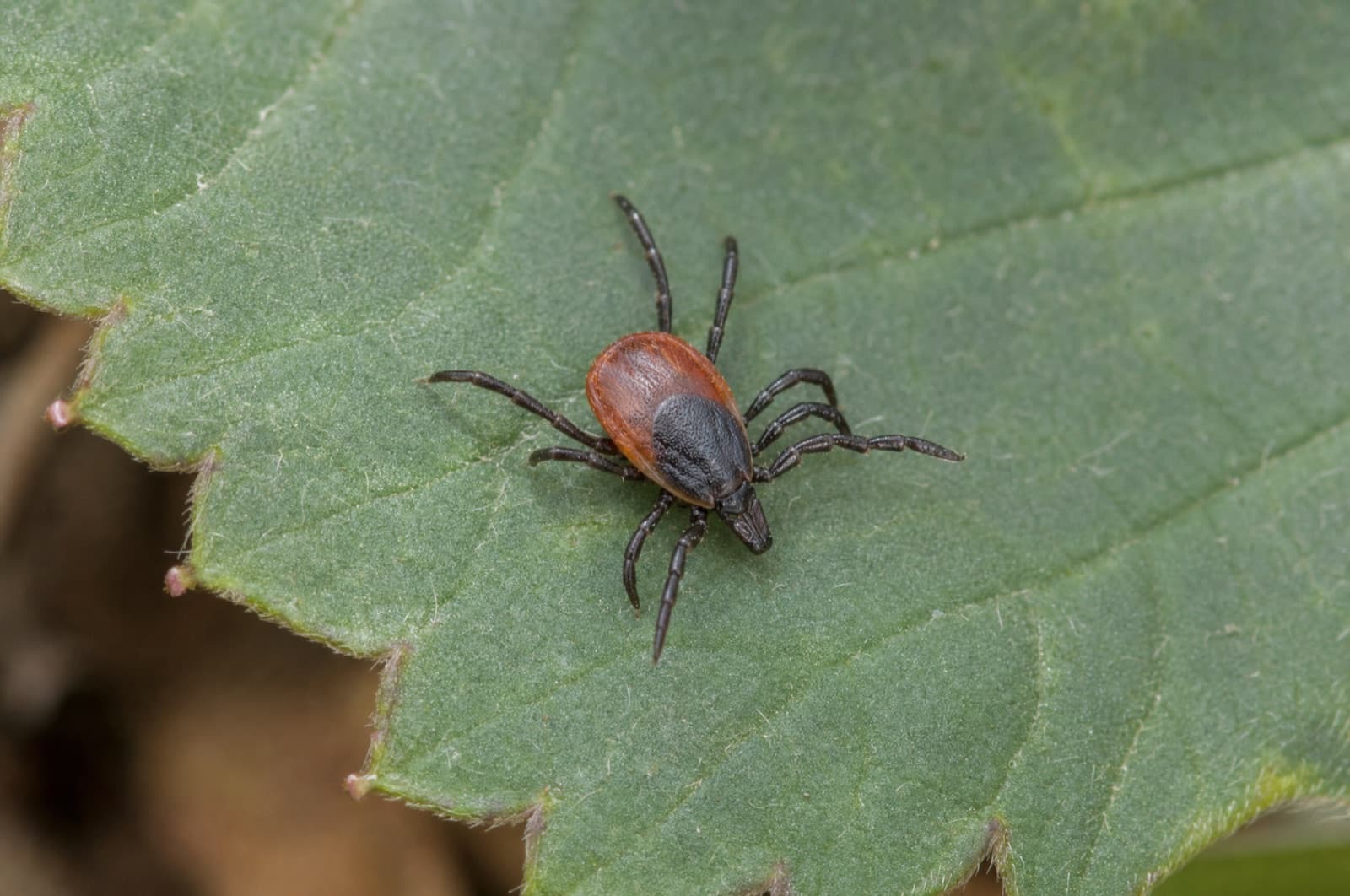
What Attracts Deer Ticks to Your House?
At a glance
- Short answer: Deer ticks aren't attracted to your house. They wait in leaf litter at the woods' edge, and a host carries them the rest of the way.
- The verdict: You didn't attract it — you carried it in
The attractant verdict
Four possible answers to why this species turned up. Three stay unlit — and that's the argument: the honest answer could have been any of them, and for this species it wasn't.
Deer ticks aren't attracted to your house. They wait in leaf litter at the woods' edge, and a host carries them the rest of the way.
Our own previous page said deer ticks are "attracted to areas where they can find hosts... and a suitable environment for survival," phrasing close enough to "attracted to your house" that it blurs the line between outdoor habitat and the structure itself.
A host — a person, a dog, a deer, or a small mammal — that walked through leaf litter or brushy vegetation at a woods edge where the tick was already questing, then carried it toward or into the house.
“Deer ticks don't come for your house. They wait at the woods' edge for a host, and a host is what closes the rest of the distance.”
Why it's here, in full
Why leaf litter matters more than your house
The deer tick — also called the blacklegged tick — quests almost entirely by climbing onto low vegetation or leaf litter at wooded edges and waiting with its front legs extended, a strategy entomologists call ambush questing. It doesn't travel across open ground looking for a house, and nothing a structure gives off draws it closer. UNH Cooperative Extension describes this species as favoring moist, shaded, wooded habitat — different from the more open, grassy ground the American dog tick prefers — which is why deer ticks concentrate at the treeline and in leaf litter rather than in the middle of a lawn.
Our old page's phrase — "attracted to areas where they can find hosts... and a suitable environment for survival" — comes close to implying the house is the destination. It isn't. The tick's whole strategy is to stay put in leaf litter and let a host do the traveling.
The host is the actual vector, and it's rarely just people
A deer, a white-footed mouse, a dog on a walk, or a person doing yard work at the property line can all pick up a questing deer tick and carry it toward the house. CDC guidance notes plainly that pets transport ticks from outdoor habitat indoors, where they may then bite a person — which is exactly the pathway that matters here, more than anything about the house's construction or cleanliness. The honest, actionable factor is how much wooded or leaf-littered edge sits close to the yard and how often hosts move between that habitat and the house, not anything the house is doing to draw the tick in.
How to tell it's actually this species
Real signs only — a species with four honest tells gets four, and stops. Where a sign is weak on its own, we say so.
An attached or crawling tick found on a person or pet after time in leaf litter, brush, or a wooded yard edge
A pet that regularly picks up ticks after being let out near woods, stone walls, or unmown brush at the property line
Could be something else: This is evidence of yard habitat and host exposure, not of the house attracting anything.
Ticks noticed on clothing or gear after walking a wooded trail or brushy path near the property
A property bordered by woods, stone walls, or unmaintained brush — the classic habitat this species quests from
Could be something else: This describes outdoor conditions that support questing ticks nearby; it isn't itself a sign that ticks are indoors.
Want deer ticks gone?
This page only answers why it's here. Every removal step for this exact species — what to seal, what to set, what actually works — lives on its own dedicated guide.
Two questions, two pages
Here: why it turned up at all — the honest answer, blame removed.
There: the step-by-step removal guide for this exact species.
Key takeaways
- Deer ticks don't come for your house. They wait at the woods' edge for a host, and a host is what closes the rest of the distance.
- Cleanliness isn't the deciding factor here — the actual vector is what matters.
- What actually matters: an animal host, the outdoors nearby.
- If it's already inside, removal is a different question — see /top-diy-methods/deer-tick.
Finding deer ticks on people or pets?
This page is about why they showed up. Yard treatment and removal options are covered at /top-diy-methods/deer-tick.
Frequently asked
Sources(2)
- [1]UNH Cooperative Extension — Biology and Management of Ticks in New Hampshire (Eaton)
Deer tick habitat preference for shaded, wooded, leaf-littered edges and its ambush-questing behavior
extensionverified 2026-07-17 - [2]U.S. CDC — Preventing Ticks on Pets
Pets transporting ticks from outdoor habitat into the home
govverified 2026-07-17
Written & reviewed by
VerifiedDaniel Brady
NH-Licensed Pesticide Applicator · License #782664 (NHDAMF, RSA 430)
Daniel Brady is the New Hampshire–licensed applicator behind Anchor Pest Services, a family-owned pest control company serving the Manchester area since 2017.
Last updated Jul 2026
Deer ticks wait at the woods' edge, not your door
Concerned about deer ticks on your property?
Same-day inspections across southern and central New Hampshire, with an honest read on your yard's wooded-edge exposure.
- Family-owned in Manchester since 2017
- NH commercial applicator #782664, category F1
- We will tell you when the answer is do nothing
NH License #782664 · No obligation · We answer in person