
What Attracts Firebrats to Your House?
At a glance
- Short answer: Firebrats want heat, humidity, and something starchy — nothing else about them is unusual.
- The verdict: The usual four
The attractant verdict
Four possible answers to why this species turned up. Three stay unlit — and that's the argument: the honest answer could have been any of them, and for this species it wasn't.
This is the most common answer in this hub — an answer, not a shortfall.
Firebrats want heat, humidity, and something starchy — nothing else about them is unusual.
Our own previous page said firebrats ‘thrive in warm, humid environments’ and are ‘particularly drawn to areas like basements, bathrooms, and kitchens’ — accurate, and we're keeping it.
A space that's both consistently warm (firebrats prefer noticeably hotter conditions than their close relative, the silverfish) and humid — near boilers, furnaces, ovens, or hot water heaters — combined with a starch or cellulose food source such as paper, book bindings, wallpaper paste, or dried food residue.
“Nothing about a firebrat is special. It wants heat, humidity, and something starchy to eat — a boiler room checks every box.”
Why it's here, in full
Why heat, humidity, and starch explain the whole story
Firebrats are close relatives of silverfish, but they favor noticeably hotter conditions — commonly the areas around boilers, furnaces, hot water heaters, and ovens — combined with high humidity, since both moisture and heat are required together rather than either alone. Add a starchy or cellulose-based food source, such as paper, glue, book bindings, or dried food residue, and the space becomes a viable long-term habitat. A basement boiler room or an attic space near a chimney flue often combines all three conditions at once, which is why firebrats concentrate there rather than spreading evenly through a house.
How to tell it's actually this species
Real signs only — a species with four honest tells gets four, and stops. Where a sign is weak on its own, we say so.
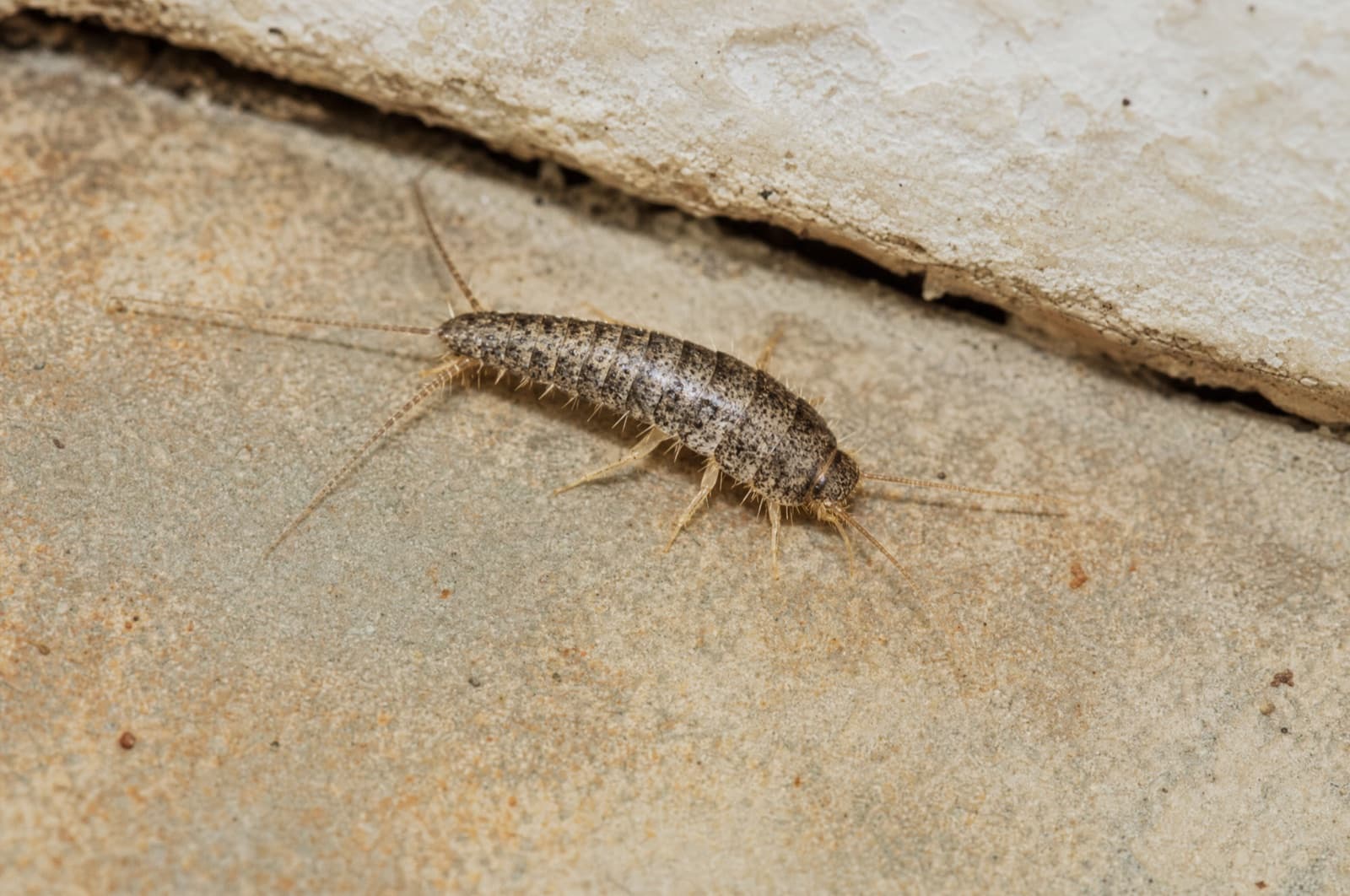
Small, silvery-grey, wingless insects seen in warm, humid spots like boiler rooms, attics near chimneys, or behind ovens
Tiny, irregular holes or surface grazing on paper, book bindings, or wallpaper
Could be something else: Similar paper damage can come from silverfish, booklice, or general age and moisture damage.
Fine, pepper-like droppings or shed scales accumulating in a warm, undisturbed storage area
Want firebrats gone?
This page only answers why it's here. Every removal step for this exact species — what to seal, what to set, what actually works — lives on its own dedicated guide.
Two questions, two pages
Here: why it turned up at all — the honest answer, blame removed.
There: the step-by-step removal guide for this exact species.
Already dealing with firebrat?
This page is about why it's there. Getting rid of it is covered at /top-diy-methods/firebrat.
Frequently asked
Sources(2)
- [1]UC Statewide IPM Program — Silverfish and Firebrats
Firebrat preference for hotter, humid conditions than silverfish, and starch-based diet
extensionverified 2026-07-17 - [2]NC State Extension — Silverfish and Firebrats
Firebrat habitat around heat sources and starchy food sources
extensionverified 2026-07-17
Written & reviewed by
VerifiedDaniel Brady
NH-Licensed Pesticide Applicator · License #782664 (NHDAMF, RSA 430)
Daniel Brady is the New Hampshire–licensed applicator behind Anchor Pest Services, a family-owned pest control company serving the Manchester area since 2017.
Last updated Jul 2026
Food, water, warmth, shelter — the usual four
If it's already inside, we handle the rest
Same-day inspections across southern and central New Hampshire.
- Family-owned in Manchester since 2017
- NH commercial applicator #782664, category F1
- We will tell you when the answer is do nothing
NH License #782664 · No obligation · We answer in person