
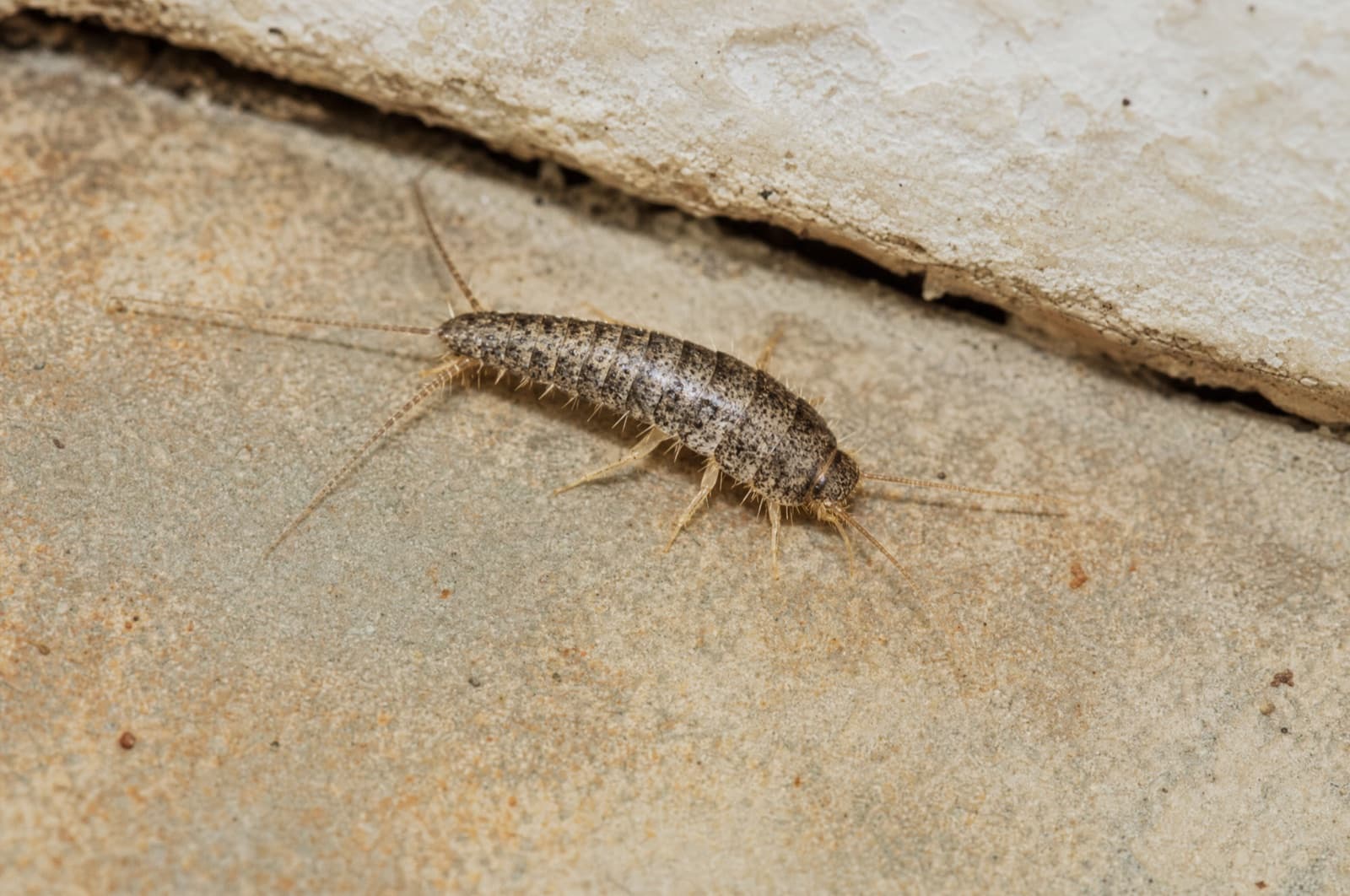
How to Get Rid of Firebrats
At a glance
- Difficulty: Intermediate
- Time: A weekend to improve ventilation around heat sources and seal cracks; several weeks for population decline
- Cost: Low — ventilation fans, caulk, and monitoring traps
- Success: Good once the heat-source microclimate is identified and addressed; slower if you're searching the wrong (cool/damp) areas
Can you DIY Firebrat?
The verdict on Firebrat DIY
A DIY win once you look in the right spot — hot and dry, not cool and damp.
The firebrat (Thermobia domestica) is a close relative of the silverfish, but it's drawn to the opposite microclimate: warm, dry locations near heat sources — furnaces, boilers, hot-water pipes, ovens — often thriving at temperatures of 90°F or higher, rather than the cool, damp basements and bathrooms silverfish prefer. Homeowners who search cool, damp areas expecting to find firebrats the way they would silverfish often miss the actual harborage entirely. They're harmless (no bite, sting, or disease) and eat starch, paper, and dry goods, so once you target the heat-source microclimate correctly, control is straightforward.
The 5 DIY methods — honestly graded
Every approach graded for this species, in IPM order — prevention first, chemistry late. Pick a method to see how it works, the steps, and what it actually takes.
Prevention / Exclusion
Works wellTargeting the heat-source microclimate is the core, most effective control for this species — the opposite lever from silverfish.
Firebrats require warm, dry conditions near heat sources to thrive. Improving ventilation and airflow around furnaces, boilers, and hot-water pipes lowers the ambient temperature enough to make the area less hospitable, removing their habitat rather than just chasing individual bugs.
Best for: The long-term, durable fix targeting the actual microclimate firebrats need
Improve ventilation around heat sources
Increase air circulation and ventilation in mechanical rooms, utility closets, and areas around furnaces, boilers, and hot-water heaters to reduce ambient heat buildup.
TipFirebrats favor temperatures of roughly 90°F or higher — even modest cooling and airflow changes can help.Seal cracks and store items airtight
Caulk cracks around baseboards and utility penetrations near mechanical areas, and store papers, cardboard, and dry goods in sealed containers rather than open boxes near heat sources.
Tools & materials
Why DIY falls short here
Not scare tactics — the specific, proportionate reasons a home attempt can stall for this species.
Looking in the wrong spot
Searching cool, damp areas — the silverfish playbook — instead of hot, dry zones near furnaces, boilers, and hot-water pipes means the actual harborage never gets addressed.
Ignoring the heat microclimate
Chemical treatments fail while the warm, dry conditions near heat sources remain unaddressed — the temperature, not the firebrats themselves, is the root cause.
Deep harborage near equipment
Firebrats hide in cracks and voids close to mechanical equipment, out of reach of surface treatments and casual removal, so a portion of the population survives visible cleanup.
How risky is it, really?
An honest read — most nuisance species are genuinely low risk, and we say so.
Firebrats are harmless — no bite, sting, or disease. The real-world impact is minor damage to paper, starched fabrics, and dry goods stored near heat sources, and their presence is a useful signal of a warm, dry microclimate near mechanical equipment.
- Damage to paper, starched fabrics, and dry goods near heat sourcesOccasional
The main practical harm — avoid storing paper or fabric items directly against furnaces or water heaters
Penn State Extension
- Bite, sting, or disease transmissionRare
Not documented — firebrats pose no direct health risk to people or pets
Virginia Tech Extension
- Indicator of a warm, dry microclimate near mechanical equipmentCommon
A practical flag for ventilation improvement around heat sources, not a health risk from the firebrat itself
Penn State Extension
Still Seeing Firebrats Near Your Utility Room?
A hidden mechanical-area hot spot can be hard to fully address on your own. Anchor Pest Services offers a full inspection across southern and central New Hampshire. Family-owned since 2017, NH license #782664.
Call a pro when…
- Sightings persist for weeks after consistent ventilation and sealing changes
- You suspect the issue is tied to equipment you can't safely access or modify
- A heavy, established population in utility or mechanical rooms
General Pest Control
You rarely need a pro for firebrats — this is a ventilation-and-sealing job that takes patience, similar to silverfish but targeting heat instead of dampness. The exception is a persistent, deep infestation near mechanical equipment or a heat source you can't easily modify yourself.
Keep them out
- Improve ventilation and airflow around furnaces, boilers, and water heaters
- Store papers and dry goods away from direct contact with heat sources
- Seal cracks near utility and mechanical room penetrations
Firebrats in New Hampshire
New Hampshire's long heating season means furnaces, boilers, and hot-water systems run for much of the year, creating a persistent warm, dry microclimate in utility and mechanical rooms that firebrats favor. Unlike overwintering fall invaders, firebrats don't have a strong seasonal entry pattern tied to frost — they're a year-round indoor issue most closely tied to how much your heating equipment runs.
Peak season
Year-round, most active during the heating season when furnaces and boilers run continuously
First-frost anchor
Manchester first hard frost ~Oct 19 (50%) / Oct 29 (80%), NOAA 1991–2020
Make sure it's a Firebrat
Two quick detours worth taking — confirm the ID, then learn what drew it in so it doesn't come back.
Frequently asked
Sources & further reading(3)
- [1]Virginia Tech Extension — Firebrats (ENTO-537)
Biology, heat-source microclimate preference, harmless status
extensionverified 2026-07-13 - [2]Penn State Extension — Bristletails: Silverfish and Firebrats
Silverfish vs. firebrat microclimate distinction, control recommendations
extensionverified 2026-07-13 - [3]UC Statewide IPM Program — Silverfish and Firebrats
Harmless status, general control recommendations
extensionverified 2026-07-13
Written & reviewed by
VerifiedDaniel Brady
NH-Licensed Pesticide Applicator · License #782664 (NHDAMF, RSA 430)
Daniel Brady is the New Hampshire–licensed applicator behind Anchor Pest Services, a family-owned pest control company serving the Manchester area since 2017.
Last updated July 2026
Other species you can tackle
Same category — the dot shows each one's DIY verdict at a glance (green = friendly, amber = doable with care, red = call a pro).
Professional Pest Control
Still Seeing Firebrats Near Your Utility Room?
A hidden mechanical-area hot spot can be hard to fully address on your own. Anchor Pest Services offers a full inspection across southern and central New Hampshire. Family-owned since 2017, NH license #782664.
- Microclimate diagnosis
- NH-licensed applicators (#782664)
- Free inspection — same-day service across southern NH
NH License #782664 · No obligation · We answer in person