
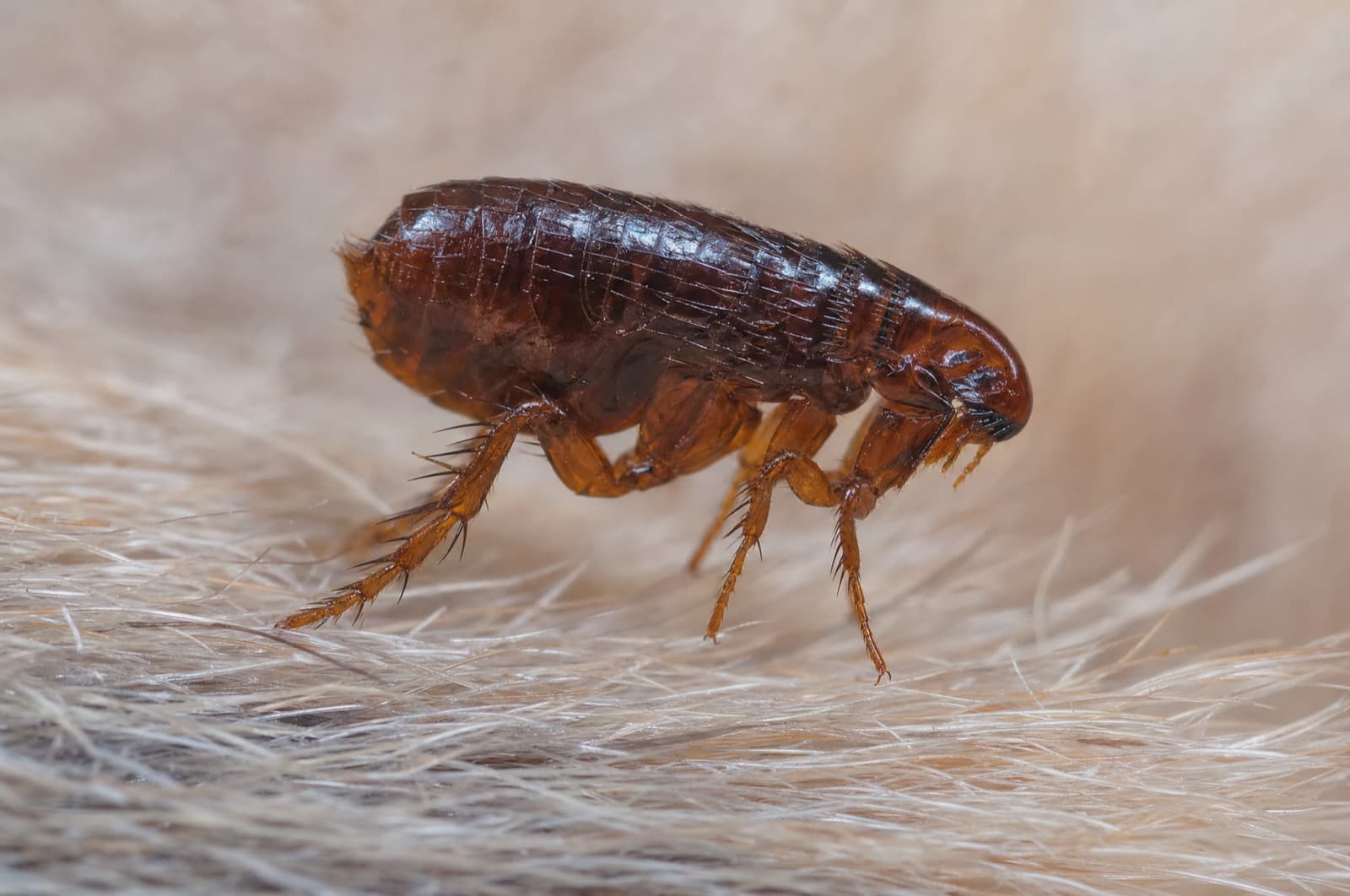
What Attracts Fleas to Your House?
At a glance
- Short answer: Fleas aren't attracted to your house. A pet or wild animal is, and it carries them in without either of you noticing.
- The verdict: You didn't attract it — you carried it in
The attractant verdict
Four possible answers to why this species turned up. Three stay unlit — and that's the argument: the honest answer could have been any of them, and for this species it wasn't.
Fleas aren't attracted to your house. A pet or wild animal is, and it carries them in without either of you noticing.
Our own previous page said fleas are "mainly attracted by two things: warmth and food," and that they "usually come from pets or wildlife" before finding "a cozy place" — a framing that still centers the house as the draw once the animal gets them there.
A dog, cat, or wild animal (commonly a stray, raccoon, or rodent denning nearby) that already had fleas on it before it entered — or came near — the house. The fleas themselves never traveled toward the structure; they traveled on the host.
“Fleas don't come for your house. A host brings them in, and the house just becomes wherever the fleas end up developing afterward.”
Why it's here, in full
The house doesn't attract fleas — a host does
Fleas locate hosts by detecting warmth, movement, and carbon dioxide at close range, and the U.S. EPA is direct that they're "attracted to light, movement, heat, and CO2 that hosts exhale" — cues that describe an animal, not a building. A house has no independent draw for a flea; a dog, cat, or wild animal that already carries fleas is what brings them in. Our old page's "warmth and food" framing skips past that step and describes the house as if it were the target once the animal is inside.
Once a flea-carrying host is indoors, adult fleas lay eggs directly on the animal, but the eggs aren't sticky and simply fall off wherever the host goes — a favorite chair, a car seat, pet bedding, carpet fibers. That's the point at which the population becomes a household matter rather than a pet matter, but it still traces back entirely to the host, not to anything the house did to attract fleas in the first place.
Why most of a flea problem is invisible
A commonly cited veterinary estimate holds that as much as 95 percent of a flea population at any given time exists off the host — as eggs, larvae, and pupae developing in carpet fibers, pet bedding, and floor cracks — rather than as visible adult fleas. Oklahoma State University Extension's flea control guidance describes this same environmental reservoir as the reason a flea problem can seem to explode even when only a couple of adult fleas were ever seen on the pet. That reservoir exists because of the host that introduced the fleas, and because carpet and bedding happen to be places flea larvae can develop — not because the house was attractive to fleas from the outside.
How to tell it's actually this species
Real signs only — a species with four honest tells gets four, and stops. Where a sign is weak on its own, we say so.
A pet scratching, biting at its skin, or losing hair more than usual, especially around the tail base and belly
Small dark specks ("flea dirt") in pet bedding or on light-colored flooring that turn reddish-brown when dampened
Could be something else: Flea dirt can resemble ordinary debris; dampening it to check for a reddish tint (from digested blood) is the more reliable test.
Small, itchy bites on ankles or lower legs, often after walking across carpet
Live fleas seen jumping on a pet or across light-colored carpet or flooring
Want fleas gone?
This page only answers why it's here. Every removal step for this exact species — what to seal, what to set, what actually works — lives on its own dedicated guide.
Two questions, two pages
Here: why it turned up at all — the honest answer, blame removed.
There: the step-by-step removal guide for this exact species.
Key takeaways
- Fleas don't come for your house. A host brings them in, and the house just becomes wherever the fleas end up developing afterward.
- Cleanliness isn't the deciding factor here — the actual vector is what matters.
- What actually matters: an animal host.
- If it's already inside, removal is a different question — see /top-diy-methods/flea.
Already dealing with fleas at home?
This page is about why they showed up. Treatment options for pets and the home are covered at /top-diy-methods/flea.
Frequently asked
Sources(2)
- [1]U.S. EPA — Controlling Fleas and Ticks Around Your Home
Fleas are attracted to host cues (light, movement, heat, CO2), not to household conditions
govverified 2026-07-17 - [2]Oklahoma State University Extension — Flea Control
Most of the flea population develops off-host in carpet, bedding, and floor cracks rather than as visible adults
extensionverified 2026-07-17
Written & reviewed by
VerifiedDaniel Brady
NH-Licensed Pesticide Applicator · License #782664 (NHDAMF, RSA 430)
Daniel Brady is the New Hampshire–licensed applicator behind Anchor Pest Services, a family-owned pest control company serving the Manchester area since 2017.
Last updated Jul 2026
A host brings fleas in — not your house
Dealing with a flea problem?
Same-day inspections across southern and central New Hampshire, with a straightforward read on how far the problem has spread.
- Family-owned in Manchester since 2017
- NH commercial applicator #782664, category F1
- We will tell you when the answer is do nothing
NH License #782664 · No obligation · We answer in person