
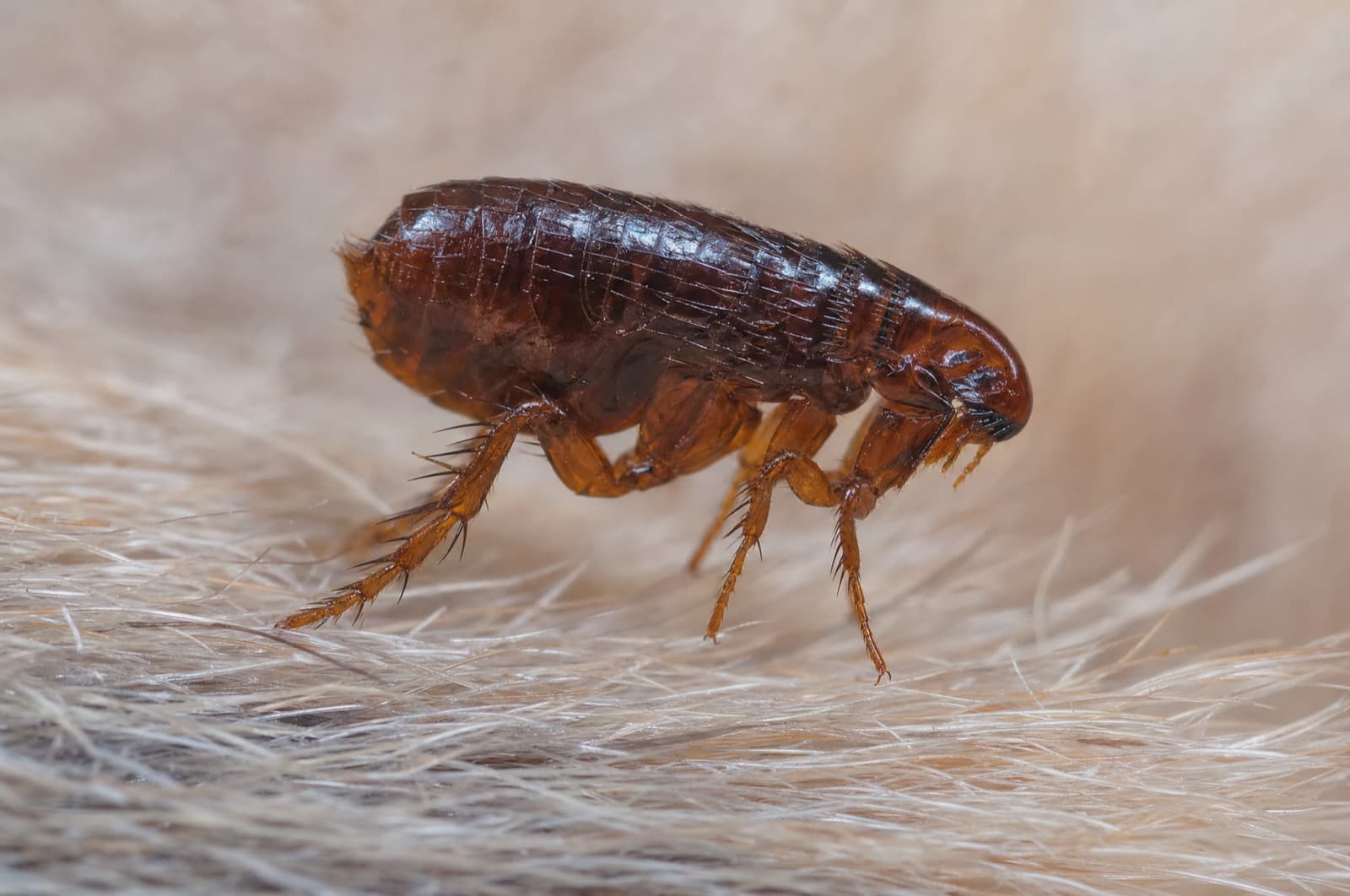
How to Get Rid of Fleas
At a glance
- Difficulty: Intermediate
- Time: Weeks, not days — a follow-up treatment around 7-10 days after the first is usually needed
- Cost: Low to moderate — vacuum, laundering, and a labeled premise product; pet treatment is a separate veterinary cost
- Success: Good with a simultaneous 3-part approach and a follow-up treatment; poor if only one component (pet, home, or yard) is treated
Can you DIY Flea?
The verdict on Flea DIY
Genuinely beatable at home — but only with a simultaneous pet, home, and yard attack, and patience measured in weeks.
As much as 95% of a flea population at any given time is in the environment — eggs, larvae, and pupae hidden in carpet, bedding, and yard soil — not on your pet, so the adults you see are only a fraction of the real population. The complete life cycle runs from about two weeks to several months depending on temperature and humidity, and pupae in their protective cocoons can resist insecticides for days to weeks. Treating the pet, the home, and outdoor harborage areas at the same time is genuinely within a homeowner's ability, but treating only one of the three is the classic DIY-failure pattern.
The 5 DIY methods — honestly graded
Every approach graded for this species, in IPM order — prevention first, chemistry late. Pick a method to see how it works, the steps, and what it actually takes.
Prevention / Exclusion
Works wellYear-round pet preventives are the highest-value long-term defense against fleas ever establishing.
Keeping fleas off pets in the first place, and limiting wildlife access to spaces under decks and crawlspaces, prevents the population from ever gaining a foothold in your home.
Best for: Every pet-owning household, as ongoing prevention
Use year-round vet-prescribed preventives
Keep all pets in the home on a year-round, vet-prescribed flea preventive, not just during warmer months.
Limit wildlife harborage
Reduce wildlife access to spaces under decks, porches, and crawlspaces, which can reintroduce fleas via visiting animals.
Tools & materials
Why DIY falls short here
Not scare tactics — the specific, proportionate reasons a home attempt can stall for this species.
Treating the pet OR the home, not both plus the yard
Eggs and larvae keep hatching in carpet and shaded yard areas regardless of what's applied to the pet — this is the #1 DIY-failure pattern for fleas.
Quitting after one treatment or using a 'bug bomb'
Protected pupae in cocoons can survive the first round and keep emerging for weeks afterward; foggers in particular miss eggs and cocoons entirely, which is why a 7-10 day follow-up is standard, not optional.
Expecting results in days
The complete life cycle runs from about two weeks to several months depending on conditions, so a plan that isn't sustained for several weeks will look like it 'isn't working' when it's actually just incomplete.
How risky is it, really?
An honest read — most nuisance species are genuinely low risk, and we say so.
Mostly itch-and-nuisance for people and pets, with real but proportionate secondary risks — this isn't a species that warrants alarm, but treating your pet's flea-allergy dermatitis and completing the full treatment matter for comfort and for your pet's health.
- Itchy bites / pet flea-allergy dermatitisCommon
The dominant symptom for both people and sensitive pets during an active infestation
Veterinary guidance; CDC
- Tapeworm transmission to petsOccasional
Pets can acquire tapeworms by ingesting an infected flea while grooming
Veterinary guidance
- Plague / Bartonella transmissionRare
Not a typical New Hampshire concern
CDC
Fleas Keep Coming Back?
A heavy infestation needs the home component treated with professional-grade product and follow-up timing. Anchor serves southern and central New Hampshire. Family-owned since 2017, NH license #782664.
Call a pro when…
- A heavy infestation that persists despite a simultaneous pet + home + yard attempt with a follow-up treatment
- Difficulty reaching or treating all carpet, cracks, and pet areas yourself
- You want professional-grade IGR product and scheduled follow-up applications
General Pest Control
Flea control is genuinely doable at home with a disciplined simultaneous approach. A pro adds the most value for a heavy, established infestation where the home component needs professional-grade product and follow-up, or when DIY rounds haven't broken the cycle.
Keep them out
- Keep all pets on a year-round, vet-prescribed flea preventive
- Vacuum thoroughly and often, especially carpet edges and pet resting areas
- Limit wildlife access under decks and crawlspaces
Fleas in New Hampshire homes
Flea activity in NH tracks warm, humid conditions — most infestations build through late spring into fall, when outdoor stages develop fastest, though a heated NH home can sustain an indoor flea population through winter even after outdoor activity drops off. Shaded, humid spots pets frequent — under decks, along fence lines, near doghouses — are the common outdoor reservoirs worth checking as part of the yard component of treatment.
Peak season
Late spring through fall outdoors; can persist indoors year-round in a heated home
Make sure it's a Flea
Two quick detours worth taking — confirm the ID, then learn what drew it in so it doesn't come back.
Frequently asked
Sources & further reading(3)
- [1]CDC — Flea Life Cycles
Life cycle length, pupae dormancy, plague/Bartonella rarity
govverified 2026-07-13 - [2]Texas A&M AgriLife Extension — Controlling Fleas
Vacuuming efficacy figures, simultaneous pet/home/yard treatment, nematodes
extensionverified 2026-07-13 - [3]Chewy — Life Cycle of Fleas (veterinary-reviewed)
Life-cycle stages, tapeworm transmission
industryverified 2026-07-13
Written & reviewed by
VerifiedDaniel Brady
NH-Licensed Pesticide Applicator · License #782664 (NHDAMF, RSA 430)
Daniel Brady is the New Hampshire–licensed applicator behind Anchor Pest Services, a family-owned pest control company serving the Manchester area since 2017.
Last updated July 2026
Other species you can tackle
Same category — the dot shows each one's DIY verdict at a glance (green = friendly, amber = doable with care, red = call a pro).
Professional Pest Control
Fleas Keep Coming Back?
A heavy infestation needs the home component treated with professional-grade product and follow-up timing. Anchor serves southern and central New Hampshire. Family-owned since 2017, NH license #782664.
- Professional-grade IGR treatment with follow-up
- NH-licensed applicators (#782664)
- Free inspection — same-day service across southern NH
NH License #782664 · No obligation · We answer in person